PP board is a sheet made from polypropylene, a thermoplastic used in several forms of rigid and semi-rigid products. In fabric organizers, a cut panel can help a base stay flat, support a side wall, or keep a divider upright. The term does not identify one thickness, internal structure, or load capacity.
For buyers, the key question is how the board works inside the finished organizer. A panel resting on a shelf faces a different task from one spanning an unsupported opening. Its shape, construction, covering, and connection to the fabric all affect the result. Understanding those details makes a material description useful for product selection.
Quick answer: what is PP board used for in organizers?
PP board provides shape and support where fabric alone would be too flexible. Depending on the design, it may form a removable bottom insert, sit inside a sewn wall pocket, or reinforce an internal divider.
Before approving an organizer, establish:
- Whether the board is solid, fluted, or another specified construction.
- Its dimensions, thickness, and position in the product.
- Which edges or surfaces support it during use.
- Whether it can be removed for cleaning or replacement.
- How the complete organizer performs with representative contents.
A material name helps identify the component. It does not replace a product specification or a finished-product evaluation.
What does polypropylene board mean?
Polypropylene board means a sheet whose main plastic material is polypropylene, often abbreviated PP. The word board describes the form; it does not guarantee a particular stiffness, density, surface treatment, or internal profile.
Material and construction are different details
A supplier can describe both a compact solid sheet and a hollow fluted sheet as PP board. They share a polymer family but distribute material differently.
For a commercial example, Coroplast describes its products as extruded twin-wall sheets based on a polypropylene copolymer. Its documentation also distinguishes optional modifications such as UV protection and other additives. Those features belong to specified products, not automatically to every polypropylene board. Coroplast product properties
When reviewing a quote, ask for both the material and the sheet construction. A description that says only “plastic board” or “PP insert” leaves important decisions unresolved.
PP board is not the same as a PP fabric
An organizer can contain polypropylene in more than one form. Its non-woven outer fabric and its rigid insert may both use PP, but they perform different jobs.
The fabric provides a flexible surface and can form pockets, seams, or a cover. The board provides a more stable panel where the design needs one.
Do not assume that a fabric specification also identifies the insert. A material list should separate the outer textile, inner lining, reinforcement, handles, and other components.
The abbreviation does not identify a certified grade
PP is a polymer name, not a claim about recycled content, chemical testing, food contact, or finished-product safety. Any such claim needs evidence for the actual material and intended use.
For an ordinary closet organizer, focus first on the properties relevant to storage. Adding unrelated material claims can make a listing sound technical without helping the customer choose a suitable product.
Where a buyer has a specific documentation requirement, include it in the inquiry before sample approval. A generic material declaration may not answer a more detailed request.
What is the difference between solid and fluted PP board?
Solid PP board has a substantially continuous cross-section, while fluted board contains channels between outer faces. The distinction affects how a panel fits, bends, folds, and transfers force inside an organizer.
Solid sheet
A solid sheet has no visible fluted channels through its cross-section. Its behavior still depends on grade, thickness, processing, and panel dimensions.
For a buyer, an important practical question is whether the sheet provides the required shape without making the product awkward to fold, pack, or handle. The answer should come from the proposed assembly rather than a material label alone.
Inspect cut edges and corners. A concealed solid insert still needs a shape that suits its fabric pocket, especially where repeated handling brings an edge into contact with the covering.
Fluted or twin-wall sheet
A fluted sheet uses separated faces joined by internal ribs. Looking at a cut edge reveals the channels and helps distinguish it from solid sheet.
Record the channel direction on the drawing. Rotating a panel can change how it behaves in the assembly, so two panels cut from the same sheet are not necessarily interchangeable in every orientation.
Coroplast’s conversion guidance explicitly records dimensions across and along the flutes and discusses direction when cutting and creasing. This is a useful reminder that orientation belongs in the specification. Its processing settings are product-specific and should not be copied as universal instructions. Coroplast conversion information
Other structures need their own description
Foamed, laminated, or otherwise modified sheets should be identified separately where offered. A photograph of a smooth face may not reveal what lies beneath it.
Ask the supplier to show the cross-section and explain the construction. If a quote changes from one structure to another, treat that as a material change requiring review.
Avoid selecting by thickness alone. A solid panel and a hollow panel can share a nominal thickness while containing different amounts and arrangements of material.
Where does a PP insert sit in a fabric organizer?
A PP insert may support the bottom, sides, or internal partitions of an organizer. Its position determines the useful measurements and the way it should be evaluated.
Removable base inserts
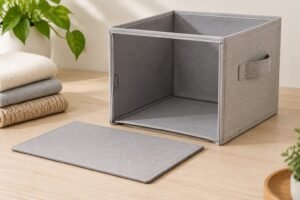
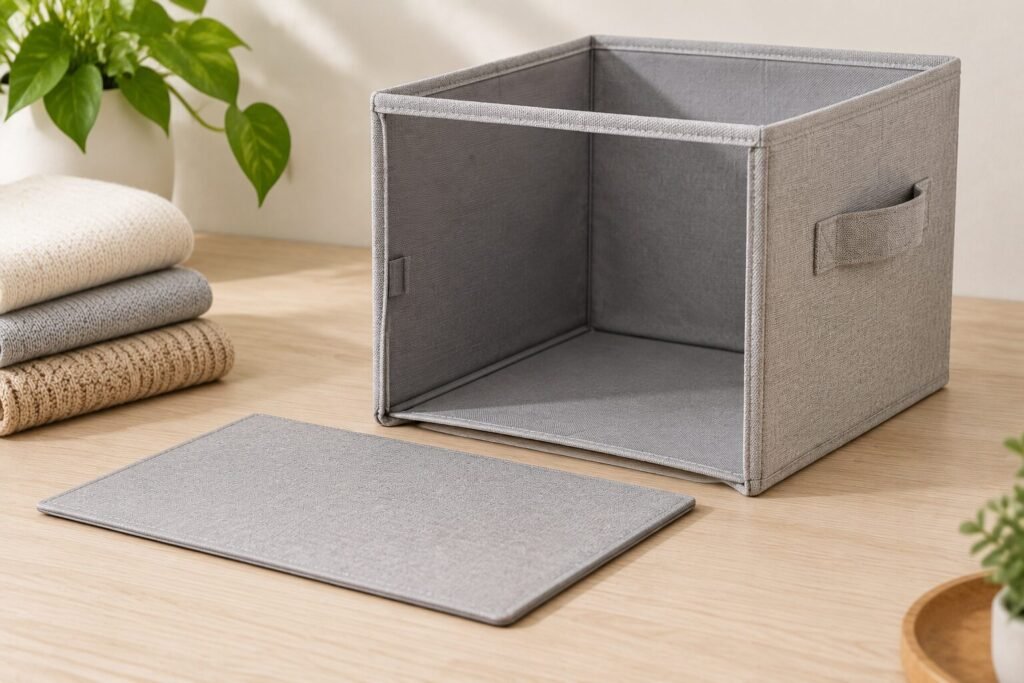
A removable base usually sits inside the organizer and helps maintain its bottom shape. Some designs place the panel in a fabric cover or sleeve.
Check how the base enters the product and how a customer removes it. A tightly fitted insert may be difficult to lift, while an undersized one may move and leave unsupported areas near the corners.
Look at the organizer when empty and when filled. The insert should perform its intended function in both states without preventing the product from closing or sitting properly.
Sewn-in side panels
Side panels can help a soft organizer remain upright. Their performance depends on how the fabric pockets locate them and whether adjacent panels or seams provide support.
An insert that is too short may leave a soft band near the upper edge. One that is too large may stretch the covering or concentrate pressure at a corner.
Examine the assembled wall rather than approving the loose panel alone. Wrinkles, distorted seams, or uneven corners can reveal a mismatch between the cut board and its textile enclosure.
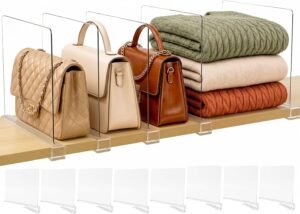
Internal partitions
A rigid insert can help a divider keep its position between compartments. The divider’s attachment to the surrounding organizer is just as important as the insert itself.
Check whether contents push against one side, both sides, or the upper edge. The panel may resist local contact while its fabric connection allows the whole divider to lean.
If customers can reposition the divider, evaluate the attachment after several changes. The board should not receive credit for a stability problem caused by a loose fastening or an oversized pocket.
Hanging organizer shelves
An insert in a hanging organizer may help a fabric shelf maintain its shape, but it operates within a larger suspension system. Hooks, straps, seams, and shelf supports all influence the result.
Record where the panel is supported and which areas span an opening. A board resting on a cabinet shelf faces different conditions from one carried only along parts of its perimeter.
Assess the complete hanging product in the intended installation. A loose board demonstration cannot establish the load capacity of the assembled organizer.
How does a PP board actually provide support?
A board provides useful support when its shape and stiffness suit the distance between supports and the way contents apply force. The surrounding product determines those conditions.
Supported bases and unsupported spans
Consider a fabric bin resting on a solid shelf. The shelf supports much of the base, so the insert may mainly keep the bottom flat and make handling easier.
Now consider a fabric compartment suspended between two side walls. Its insert must bridge a space while carrying contents, which creates a different design problem.
Describe the actual support arrangement in the brief. “Needs a strong base” is less useful than a drawing showing where the panel rests and where it spans an opening.
Distributed and concentrated contents
A stack of folded towels spreads contact over a broad area. A small heavy object can apply force to a much smaller part of the panel.
Even when the total weight is similar, the product may respond differently. Use representative contents when checking the sample, and record their arrangement.
This is especially relevant when a listing shows many possible uses. A product evaluated for light textiles should not automatically be presented as suitable for tools, books, or other dense contents.
Handling changes the task
A bin resting on a shelf and the same bin lifted by its handles are different situations. During lifting, the base, walls, handle attachments, and seams must work together.
Include normal carrying in the evaluation if the product is intended to be moved while filled. Watch whether the base shifts, corners press into the fabric, or the contents change the shape.
Do not assign the full product’s carrying capacity to the insert. A stronger panel does not automatically strengthen a handle seam or a wall attachment.
Does thicker PP board always make a better organizer?
Greater thickness can be relevant within a defined construction, but thickness alone cannot identify the better finished product. Structure, panel dimensions, support, and material grade also matter.
Compare like-for-like constructions
If two samples use different sheet structures, a thickness comparison is incomplete. Request enough information to understand what has changed.
For fluted sheet, nominal thickness does not describe every detail of the faces and ribs. For solid sheet, the grade and manufacturing variation still matter.
Compare the proposed inserts in the same organizer design. This makes it easier to observe whether a change improves the function that the buyer actually needs.
Consider space and handling
A thicker insert may require a larger pocket, altered seams, or different folding clearance. It can also change the packed dimensions of the finished organizer.
Check whether the product remains easy to assemble and collapse. Adding stiffness to one component can make another part of the design less convenient.
The useful specification is the one that meets the required function with acceptable handling and packaging. Choosing the largest number on a material list is not a complete selection method.
Define acceptable shape change
Some flexibility may be acceptable in a soft organizer, while a display-oriented product may need a more controlled appearance. Agree on what the product should look like under its intended contents.
For longer use, evaluate whether deformation develops while a load remains in place. A brief hand-bending demonstration does not answer how an assembled product maintains its shape over time.
Set the evaluation duration and conditions around the intended use. Avoid turning a short sample check into a claim that the organizer will hold a specific shape for years.
Is PP board waterproof, and can the organizer be washed?
Moisture resistance of the plastic component does not establish waterproofness or washability of the complete organizer. Water can interact with fabric, seams, adhesives, trapped spaces, and other parts of the assembly.
Separate material behavior from product care
Ask what the proposed sheet supplier documents about water exposure. Then examine how the sheet is enclosed and whether liquid can remain around it after cleaning.
A removable panel gives the user a different cleaning route from a permanently enclosed one. The care instructions should match the actual construction.
If the fabric requires separate care, state how to remove and reinstall the insert. Customers should not need to guess whether a hidden board can be taken out safely.
Think about drying as well as wetting
A product can look dry on the outside while moisture remains inside a pocket or layered assembly. Design and care evaluation should consider how water leaves the product.
For hollow sheet, inspect the open edges and the way they sit within the cover. Avoid assuming that a smooth outer face describes every path by which water may enter the assembled product.
A wipe-clean claim is narrower than a machine-washable claim. Choose wording that matches the care method actually assessed for the finished organizer.
Review the whole cleaning method
Specify whether cleaning involves a dry cloth, a damp wipe, removable textile washing, or another approved process. Include any drying and reassembly steps that affect use.
Do not infer tolerance of hot water, tumble drying, bleach, or solvents from the abbreviation PP. Those choices involve the complete product and its documented care requirements.
When no validated washing instructions are available, avoid promising machine washability in the listing. A buyer can request an appropriate care evaluation before making that claim.
PP board vs cardboard: which insert should a buyer choose?
The useful comparison is between two specified organizer constructions under the same intended use. PP board and cardboard can each provide structure, but their suitability depends on exposure, support, handling, and the finished design.
Start with the storage environment
For a dry indoor application, a paperboard insert may meet the design brief if the assembled product provides adequate shape and handling. Its suitability should be checked rather than dismissed because it is paper-based.
Where incidental moisture or damp cleaning is expected, ask how each proposed construction responds and dries. Coatings, coverings, edges, and connections can affect the result.
Avoid declaring one material superior in all conditions. The buyer needs a suitable organizer, not a material ranking detached from the use case.
Compare the finished appearance
Inspect flatness, corner definition, visible ridges, and fabric tension. Two inserts can produce different appearances even when both support the intended contents.
If the product is photographed empty for retail presentation, check that condition as well as normal use. An organizer that stands neatly only when overfilled may disappoint customers expecting the pictured shape.
For a coordinated range, compare repeatability across different sizes. A construction that works in a small bin may need changes when scaled to a wider panel.
Compare handling and packing
Review how customers assemble, remove, and store the insert. A foldable design may require a deliberate hinge or separate panels rather than bending a single sheet wherever convenient.
Check the packed form with the actual cover and accessories. The insert affects stack height, corner protection, and the sequence in which the product is folded.
Do not assume that one material always ships more cheaply. Compare the actual packed dimensions, product weight, protection needed, and saleable units per carton.
Compare evidence rather than adjectives
Ask both proposals to meet the same sample criteria. These may include installed shape, normal lifting, cleaning according to instructions, and repeated assembly if relevant.
Record the failure mode if one sample performs poorly. A torn sleeve, crushed corner, loose insert, and bent panel point to different causes.
This approach makes a PP board vs cardboard decision useful for purchasing. The result is a documented choice for a particular product, rather than a claim that one insert material always lasts longer.
What should a PP board specification include?
A useful specification identifies the sheet, its cut shape, and its role in the assembly. It should give the supplier enough information to reproduce the approved component without relying on a photograph or a vague description such as “heavy-duty board.”
Sheet identification
State that the component is polypropylene and identify the agreed construction. If a particular grade or supplier designation is part of the approval, record it clearly.
Where recycled content, color, or other modifications matter, describe the requirement separately and ask for supporting documentation. Do not treat an unverified sustainability statement as a substitute for material identification.
If the supplier proposes an equivalent material later, define who reviews the change and what evidence is required. Equivalence should address function and the agreed claims, not appearance alone.
Dimensions and tolerances
List the panel’s cut dimensions, thickness, corner shape, and any openings or folds. For fluted construction, show the required channel orientation on the drawing.
Include tolerances appropriate to the assembly. The allowable variation for a loose removable base may differ from the variation acceptable inside a tightly fitted sewn pocket.
Agree how measurements will be taken. A compressible or profiled sheet can produce confusing readings if different parties measure at different locations or apply different pressure.
Fit within the fabric enclosure
Show how much space the pocket provides and how the insert enters it. Account for seams, binding, hook-and-loop closures, or other features that reduce the usable opening.
Check the assembled corner rather than approving each component separately. A rounded board corner and a squared fabric pocket may work well together, but the relationship should be intentional.
Document whether the board is removable by the customer. A design that requires opening a sewn seam should not be described as having a removable insert.
Surface and edge requirements
Define the visible and concealed requirements separately. A concealed surface may not need a decorative finish, but its edges still need to suit the covering and handling conditions.
Where printing or adhesive bonding is involved, ask the converter to validate the actual material and process. Coroplast’s guidance notes that surface condition and suitable inks or adhesives matter for its sheets. That is not permission to assume any household adhesive will work on every PP board. Coroplast conversion information
Ask for a finished sample that includes the chosen covering and attachment. A bare sheet cannot reveal every issue that appears after assembly.
What do thickness, sheet weight, and panel weight tell you?
These measurements describe different aspects of the component. Thickness describes its depth, sheet weight per area describes how much material occupies a given area, and panel weight describes the mass of one cut part.
Keep units attached to every number
An unexplained weight on a quotation can refer to a full sheet, a square meter, or one finished insert. Ask the supplier to state the unit and the object being measured.
For example, a panel measuring 0.30 meter by 0.40 meter has an area of 0.12 square meter. If a hypothetical sheet weighs 500 grams per square meter, that area corresponds to approximately 60 grams before accounting for cutouts or attached materials.
This arithmetic illustrates how area and sheet weight relate. It is not a product specification, a recommended construction, or a calculation of load capacity.
The finished covered insert may weigh more because it includes fabric, binding, adhesive, or other parts. Compare bare panels with bare panels and complete inserts with complete inserts.
Use weight as a consistency check within a defined product
Once the construction and dimensions are approved, panel weight can be one useful incoming check. A substantial difference may prompt a closer look at dimensions, structure, or the material supplied.
It does not identify the cause by itself. A changed cut size and a changed sheet construction can both alter weight, and acceptable variation needs to be agreed with the supplier.
Do not reject or approve a panel on weight alone unless that is part of the defined acceptance plan. Combine the measurement with the relevant fit and function checks.
Read a cross-section alongside the numbers
For fluted sheet, a clear cross-section photograph can help purchasing teams understand the specified construction. It can show the channel orientation and help distinguish a hollow profile from a solid panel.
A photograph still cannot establish every dimension or performance property. Use it to make the specification easier to understand, alongside the drawing and measurements.
If a replacement sample has a noticeably different cross-section, ask what changed. Do not assume the same nominal thickness means the original approval still applies.
How should a buyer evaluate a PP-reinforced organizer?
Evaluate the finished organizer through the tasks customers will perform. The insert matters because of its contribution to those tasks, so the review should connect observations to the full assembly.
Check the product before loading
Assemble the product using the intended instructions. Inspect whether the base lies flat, the walls stand as expected, and the insert stays in its intended position.
Look for corners that press visibly through the fabric or panels that distort a seam. These may indicate a fit problem before any contents are added.
Record the sample identification and material version. Otherwise, later feedback may be compared against a different insert without anyone noticing the change.
Use representative contents
Choose contents that match the intended listing. Folded clothing, towels, accessories, and dense household objects create different demands.
Record the arrangement and the support beneath the organizer. A product tested on a solid shelf should not be assumed to perform identically when suspended or carried.
Observe the base, side walls, and connections separately. A panel may remain flat while the fabric wall bows outward, or the entire organizer may tilt because its support arrangement is uneven.
Include normal movement
If customers will pull the organizer from a shelf, test that action with representative contents. Check whether the insert shifts, the front wall distorts, or the base catches on the furniture.
If carrying is an intended use, include lifting and setting down by the specified handles. Review the whole product rather than assigning every change in shape to the board.
Do not introduce rough handling that the product does not claim to support and then describe it as a standard test. Agree on a relevant evaluation method and keep its limits visible.
Observe sustained use
For products expected to hold contents continuously, review shape after a defined period under the agreed conditions. Compare the loaded and unloaded condition.
Record what changes and where. A bend across an unsupported span, a compressed edge, and a panel slipping inside its sleeve call for different design responses.
Avoid converting a short observation into an unsupported lifespan claim. A sample review can identify a problem or support a defined acceptance decision without proving years of service.
Review cleaning and reassembly
Follow the proposed care instructions, then check drying, appearance, fit, and function. If the insert is removable, have a user remove and reinstall it without help from the design team.
Look for confusing orientation, inaccessible tabs, or openings that are too tight. A technically removable base may still be inconvenient in practice.
If care changes the product’s appearance or fit, revise the construction or the instructions before approving the claim. Customers should receive guidance that matches the product they buy.
How can you diagnose a sample that bends or loses shape?
Identify the location and conditions of the problem before requesting a thicker board. Shape loss can come from the insert, its support, its fit, or another component of the organizer.
The base sags in the middle
Check the unsupported span and where the contents apply force. Compare the actual installation with the support arrangement assumed in the brief.
For a fluted insert, verify that the panel orientation matches the approved drawing. Also check whether the sample uses the agreed construction rather than a visually similar substitute.
Possible responses include changing the support arrangement, panel geometry, or insert specification. The right change depends on the observed cause; thickness is only one variable.
The walls bow outward
Check whether the contents exceed the intended shape or press against an unsupported area. A wide side panel may behave differently from a narrow one even when the insert material is identical.
Inspect the sleeve and connecting seams. Excess space around an insert can allow movement, while an incorrectly fitted panel can distort the wall before loading.
Review the product’s intended contents and capacity description. A change in the use claim may be necessary if the sample was assessed for one category but the listing suggests a much broader range.
A corner wears through the fabric
Inspect the panel’s corner radius, cut quality, and position. Look for a small contact area that repeatedly presses against the covering during handling.
Check whether the insert shifts inside its pocket. Movement can concentrate wear in a location that appears protected when the product is standing still.
The solution may involve edge treatment, fit, a different cover construction, or a combination of changes. A stronger fabric alone may leave the underlying contact problem unresolved.
The insert is difficult to fold or remove
Confirm that the design actually intends that action. A removable flat insert, a deliberately hinged assembly, and a permanently enclosed panel need different instructions.
Check openings and seam allowances in the finished product. A panel that fits before sewing may not pass easily through the completed pocket opening.
Do not encourage customers to crease a board at an arbitrary point. If folding is part of the design, approve the fold location and evaluate repeated use in that configuration.
The delivered insert differs from the approved sample
First compare version labels, dimensions, and the written construction description. Check whether the difference affects a concealed component or a feature customers can see and handle.
Photograph the parts in the same orientation and under comparable lighting. For a covered insert, inspect the permitted removable components without damaging the product unnecessarily.
Ask the supplier to explain the difference before proposing a correction. A documentation mix-up, an intentional substitution, and inconsistent cutting require different responses.
Keep a record of the agreed resolution and update the reference sample only after review. Quietly replacing the original reference can make future comparisons less reliable.
How does the insert affect packaging and shipping?
The insert affects the packed shape, assembly sequence, and protection needed during transport. These details should be reviewed with the complete retail pack rather than estimated from the loose sheet.
Flat packing needs a defined sequence
Show which panels are removed, folded, or left in place. If the customer must install a base before use, the instructions should make its orientation clear.
Check whether the packed product springs open or puts pressure on the packaging. A neat hand-folded sample may not represent a repeatable production packing method.
For multipacks, ensure the inserts stay associated with the correct organizer sizes. Similar-looking panels can create confusion when several products arrive together.
Protect the component that actually needs protection
Inspect corners, exposed edges, and decorative surfaces after the agreed transport evaluation. A board inside a soft covering may still transmit pressure to the outer packaging or adjacent products.
Ask whether a protective element is necessary because of the product design or simply because it was used in an early sample. Packaging should have a clear purpose.
If the design changes, review the pack again. Altered panel thickness, corner shape, or folding position can change how the product fits in its carton.
Compare cost per saleable product
Check the complete pack configuration, not only the quoted sheet price. Include the finished organizer, separate inserts, assembly parts, instructions, and agreed packaging.
An inexpensive insert that complicates assembly or creates an inconsistent shape may not support the intended retail position. A more expensive component also needs a functional reason for its cost.
Request like-for-like comparisons and evaluate the actual sample. That keeps the purchasing discussion tied to observable differences rather than broad claims about material quality.
What environmental claims can you make about PP board?
Environmental claims should describe documented attributes of the actual component or product. The fact that an organizer contains polypropylene does not establish recycled content, local recyclability, or a lower overall environmental impact.
Recycled content requires a defined scope
Ask whether a claim refers to the board, a particular layer, the textile, or the complete organizer. Those are different statements and should not be blended together.
Request the evidence needed for the claim and the product version being purchased. A statement about an available material option does not prove that the ordered product uses it.
Where the supply changes, review the claim again. Appearance alone may not reveal a change in material source or formulation.
End-of-life depends on more than the polymer name
Consider whether customers can separate the insert from fabric, adhesives, metal parts, and other components. Also consider whether the relevant local collection system accepts that form of material.
Avoid promising curbside recyclability without checking the market and product construction. A material’s technical ability to be reprocessed does not mean every consumer can place the finished organizer in household recycling.
Keep disposal guidance specific to the market where it will appear. A universal instruction can be misleading when collection options differ.
Durability claims need product evidence
A reusable organizer can be evaluated for repeated assembly, handling, and cleaning. Describe those functions accurately rather than assigning an unverified number of years to the insert.
If a replaceable panel is part of the design, confirm that a replacement is actually available and that the customer can install it. A removable component alone does not create a repair program.
Environmental language is more useful when it explains a supported feature. Broad phrases such as entirely sustainable add little to a buyer’s understanding of the product.
How would different organizer projects specify a PP insert?
Different projects need different support arrangements and approval checks. These examples illustrate purchasing decisions; they do not represent Great Shine specifications or reported customer results.
A fabric bin for folded clothing
The bin will rest on a solid closet shelf and be pulled forward for access. The buyer’s main concerns are base shape, wall appearance, and whether the insert stays in place during normal handling.
The brief should show the shelf dimensions and the expected folded contents. The sample review should include pulling the filled bin forward and returning it to the shelf.
A removable base may suit the design, but its opening and fit need evaluation. The buyer should not choose the insert solely by comparing loose panels in a hand-bending demonstration.
A hanging closet organizer
This design creates fabric compartments below a hanging attachment. The insert’s job includes maintaining a useful shelf shape within that suspended system.
The brief should show the support at each panel edge, the intended contents, and the way the product hangs. The complete organizer should be evaluated in that arrangement.
If a shelf sags, inspect the board, fabric supports, seams, and suspension together. Replacing only the insert may not resolve a problem elsewhere in the system.
A foldable divider system
This project needs panels that hold a useful position during use and pack into a smaller form afterward. The design must define where movement occurs.
Separate hinged panels may need different evaluation from a single creased sheet. The buyer should review assembly, repeated folding, and the appearance of the cover around moving areas.
The final specification should preserve the approved folding arrangement. A later change in panel structure or orientation may require another sample review even if the product looks similar when open.
Frequently asked questions
What is PP board made of?
PP board is made primarily from polypropylene. The exact grade, additives, and construction depend on the specified sheet. A buyer should ask whether the proposed insert is solid, fluted, or another structure rather than treating the abbreviation as a complete specification.
Is polypropylene board the same as cardboard?
Polypropylene board is a plastic sheet, while cardboard is paper-based. Both can serve as organizer inserts, but the finished construction determines their suitability. Compare the intended support, exposure, handling, and sample performance instead of assuming that one material always produces a better organizer.
Is PP board the same as a non-woven fabric?
They describe different forms of material. A non-woven textile can form the flexible outer covering, while a PP board provides a more rigid insert. An organizer may contain both, and each component should have its own specification.
What thickness of PP board is best for storage boxes?
There is no universal thickness for every storage box. The answer depends on sheet construction, panel dimensions, support, and intended contents. Compare suitable samples in the actual product before approving a thickness or a load-related claim.
Can an organizer with PP board be machine washed?
Machine washability depends on the complete organizer and its validated care instructions. Fabric, seams, adhesives, closures, and enclosed spaces all matter. A moisture-resistant plastic insert does not by itself establish that the finished product can go into a washing machine.
Can PP board be folded?
Some sheet constructions can be converted into deliberately designed folding components. The fold position, material, and process need to suit the intended use. Do not assume that any panel can be repeatedly bent at an arbitrary point without affecting its function.
Does PP board make a storage box stackable?
An insert can help maintain shape, but stackability depends on the complete product and how loads transfer between stacked units. The walls, top structure, closures, and supporting surface also matter. A PP base alone does not establish a safe stacking limit.
How should a buyer compare PP board suppliers?
Compare clearly identified constructions and dimensions, then evaluate them in the same organizer design. Review fit, edge quality, repeatability, handling, and the documentation needed for any claims. Ask suppliers to identify changes rather than offering an undefined equivalent after approval.
Match the insert to the organizer’s job
PP board can provide useful structure inside a fabric organizer, but the material name is only the starting point. A purchasing decision becomes clearer when it connects sheet construction, panel support, fit, and sample performance.
Explore Great Shine’s custom closet organizers to review the product category. For a development discussion, provide the intended contents, installation arrangement, dimensions, and care expectations so the proposed insert can be assessed as part of the complete design.