
Custom Compression Packing Cubes Engineered for Your Brand.
Develop private label compression cube sets with a factory team that reviews the zipper path, gusset depth, fabric stability, size system and retail packaging before bulk production.
- Dual-zip structure planning
- Custom sizes and set combinations
- Logo and retail packaging
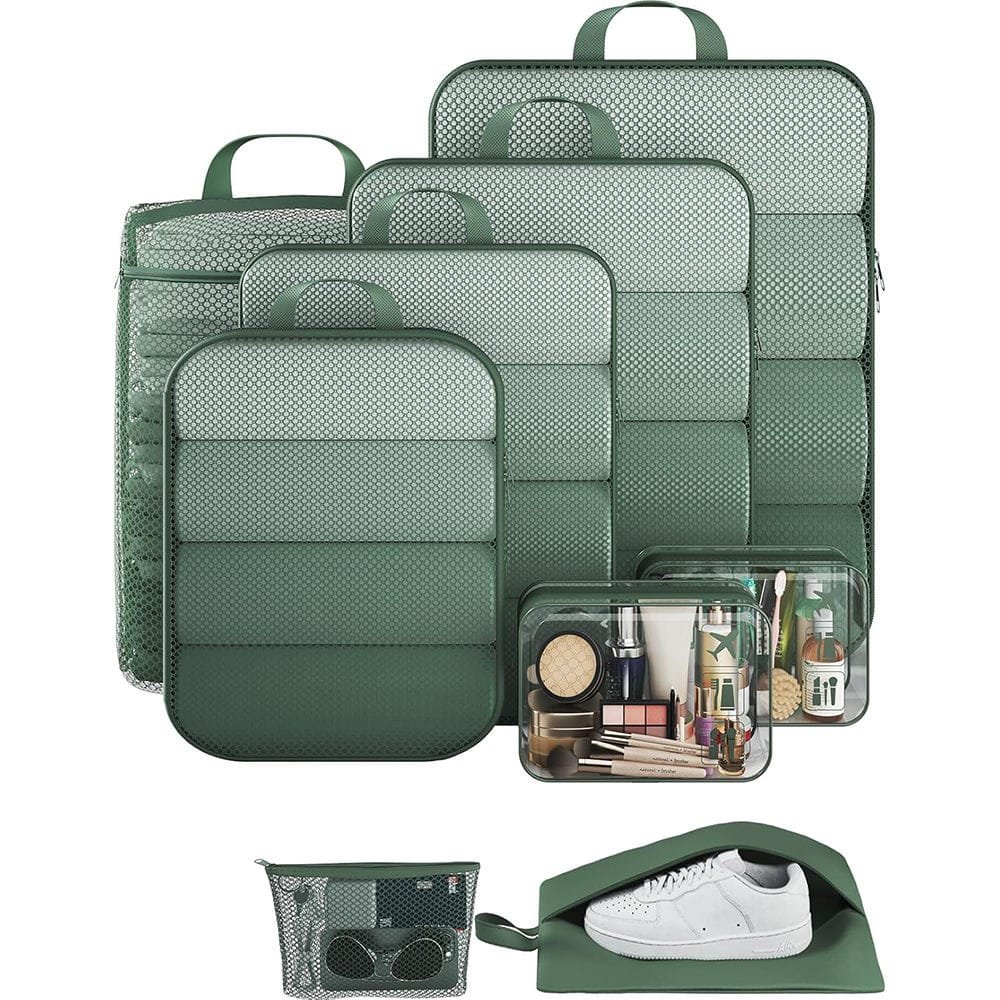
Gusset, zipper path, panels and reinforcement reviewed together.
Piece count and dimensions planned around the buyer’s luggage program.
Turn a reference or incomplete idea into a sample-ready specification.
Load, compress, operate and review the real product before bulk approval.
8 Reasons Brands Choose Great Shine for Compression Packing Cubes
Start with the complete value story, then open the engineering, sampling and quality evidence behind each reason.

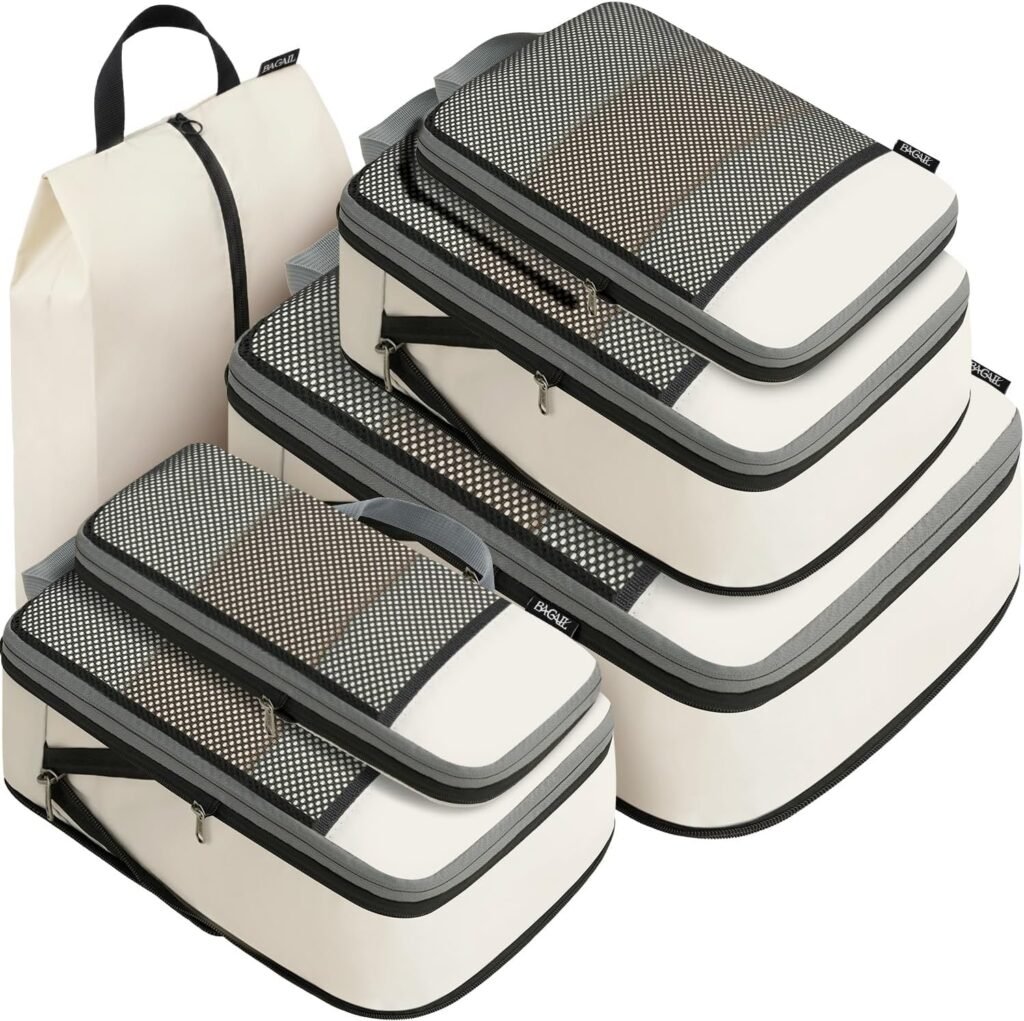
Compression Reduces Volume—Not Luggage Weight.
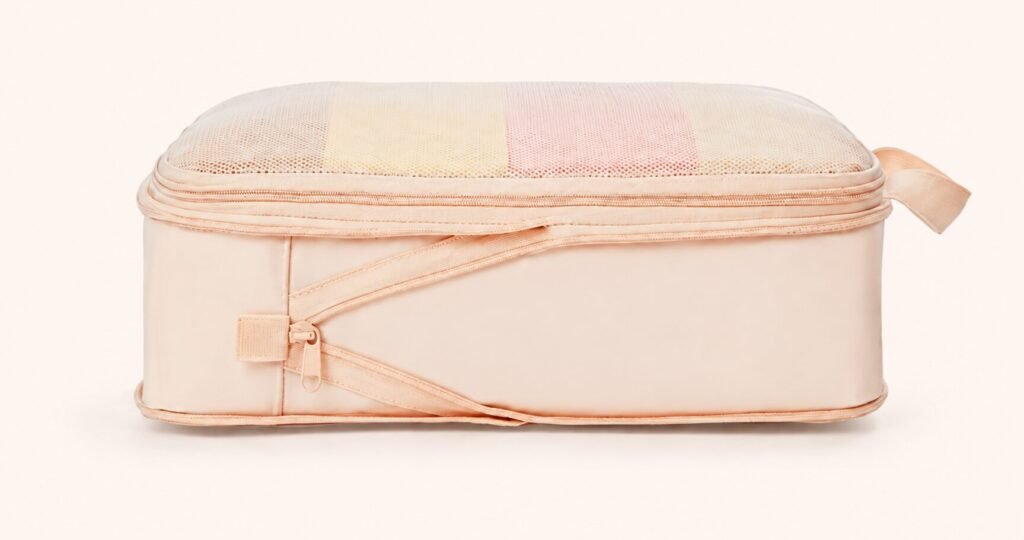
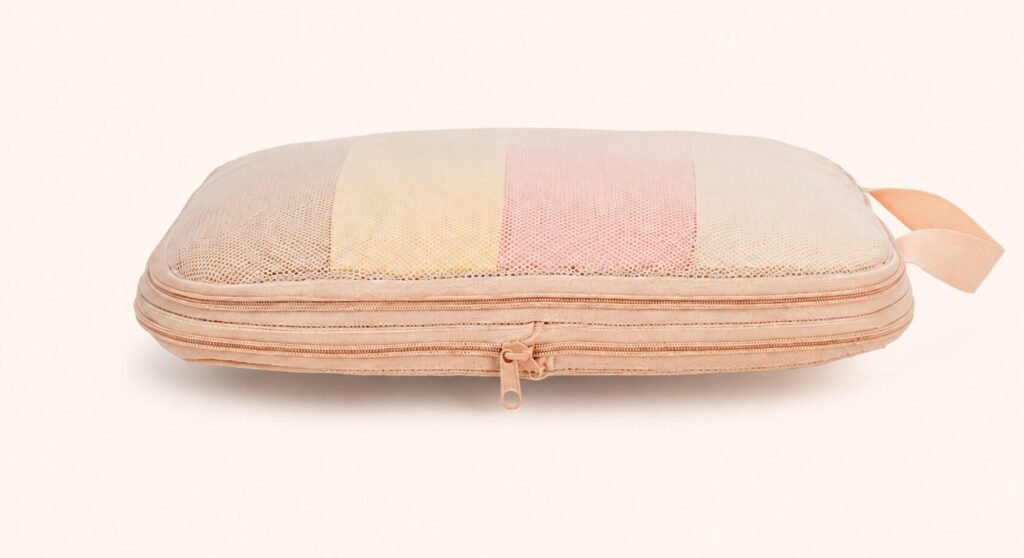
A standard packing cube organizes clothing. A compression cube adds a second zipper that closes an expandable gusset and reduces the packed thickness. The traveller gains a flatter, more controlled bundle, but the clothing still weighs exactly the same.
The result also depends on what goes inside. Soft knitwear, down and loosely folded garments respond differently from denim, shoes or rigid accessories. A responsible product page should explain that difference instead of treating one headline percentage as universal.
- Organization is the base function; volume reduction is the added function.
- Compression must remain usable at realistic fill levels.
- A smaller packed shape is only useful when it still fits the intended luggage layout.
- Overfilling transfers additional load to the zipper, gusset and seams.
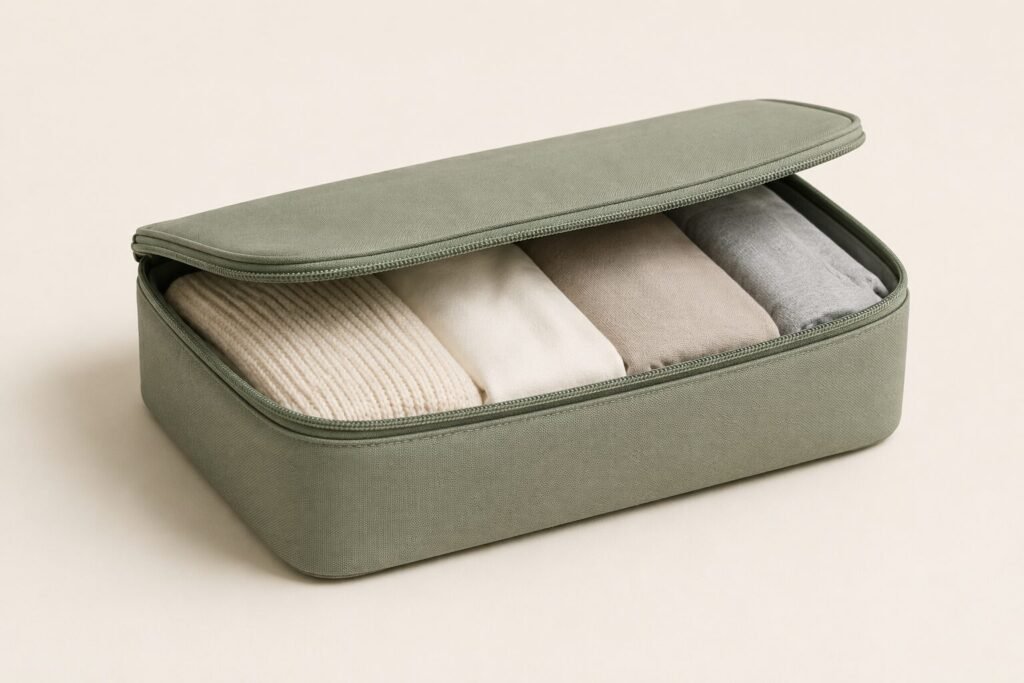
Organization First
One opening zipper, fixed depth and a simpler load path. The structure separates clothing without actively reducing the packed depth.
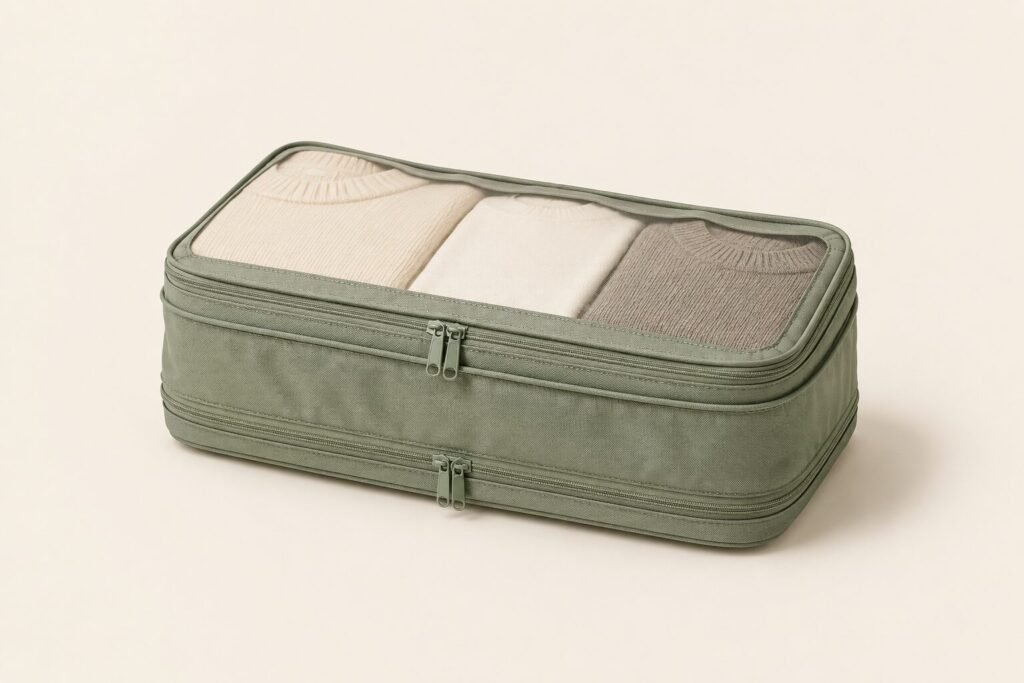
Organization + Volume Control
A second zipper closes the gusset. The fabric, zipper curve and seams must handle the added force without twisting the cube.
Why Compression Packing Cubes Fail Under Real Use
The most common problems appear only after the cube is filled and the second zipper starts transferring pressure through the complete structure.
The compression zipper jams at the corners.
A tight corner radius, unstable panel or excessive fill can push fabric into the slider and make the compression step frustrating.
The cube twists instead of compressing evenly.
If opposing panels stretch differently, the zipper closes but the finished bundle becomes skewed and difficult to stack.
Mesh and body fabric react differently.
A large flexible mesh panel improves visibility, yet it can stretch more than the woven shell when the compression load increases.
Seams open when the cube is overfilled.
Additional space invites users to pack harder. Pressure concentrates at gusset joins, zipper ends, corners and handle attachment points.
Each size behaves like a different product.
Simply scaling one pattern up or down can change the zipper curve, panel stiffness and visual balance across the complete set.
A headline percentage becomes impossible to defend.
Compression depends on the contents, initial depth, gusset and test method. One result cannot represent every packing situation.
A Compression Cube Is a Load-Bearing System.
The main opening zipper and compression zipper perform different jobs, but their load travels through the same panels, gusset, corners and seams.
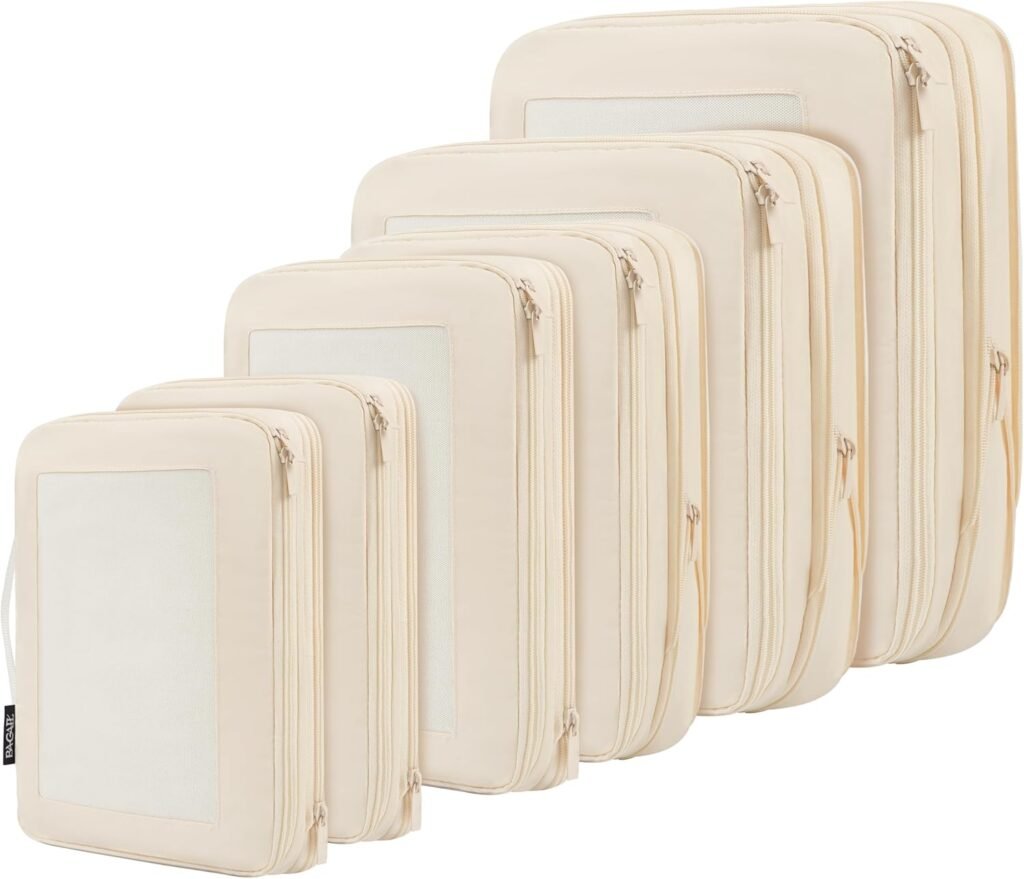
- 1 Main opening zipper
- 2 Compression zipper path
- 3 Expandable gusset
- 4 Corner reinforcement
How We Evaluate Compression Performance
A useful test states what was packed, how it was measured and whether the product remained usable after compression.
Record the size, fabric, mesh, zipper, gusset depth and approved construction.
List the garment types, quantity, folding method and initial product condition.
Record external length, width and depth at consistent measurement points.
Observe zipper effort, fabric trapping, corner behaviour and panel distortion.
Record the compressed dimensions and repeat the opening and closing sequence.
Filled cube · gusset open
Same contents · gusset closed
| Test Item | Before | After | Decision |
|---|---|---|---|
| External depth | Record sample value | Record sample value | Compare against project target |
| Zipper operation | Gusset open | Loaded closing cycle | Smooth / revise |
| Panel shape | Baseline profile | Compressed profile | Stable / distorted |
| Seam condition | Visual reference | Inspect stress points | Pass / investigate |
Choose the Right Compression Cube Structure
Use these as development starting points. Dimensions, panel layout, fabric, branding and packing can be changed when the target customer needs a different result.
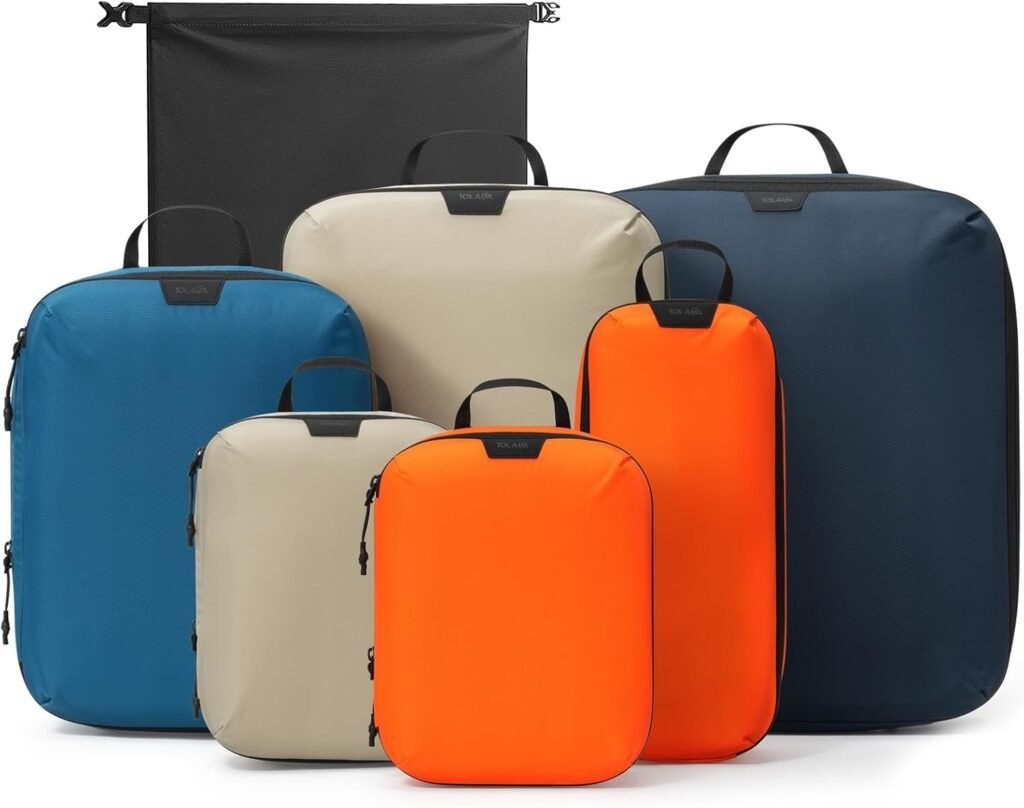
Lightweight Ripstop Set
Balances low packed weight with a woven shell suitable for travel and outdoor-oriented programs.
- Ripstop
- 2-Zip
- Custom Set
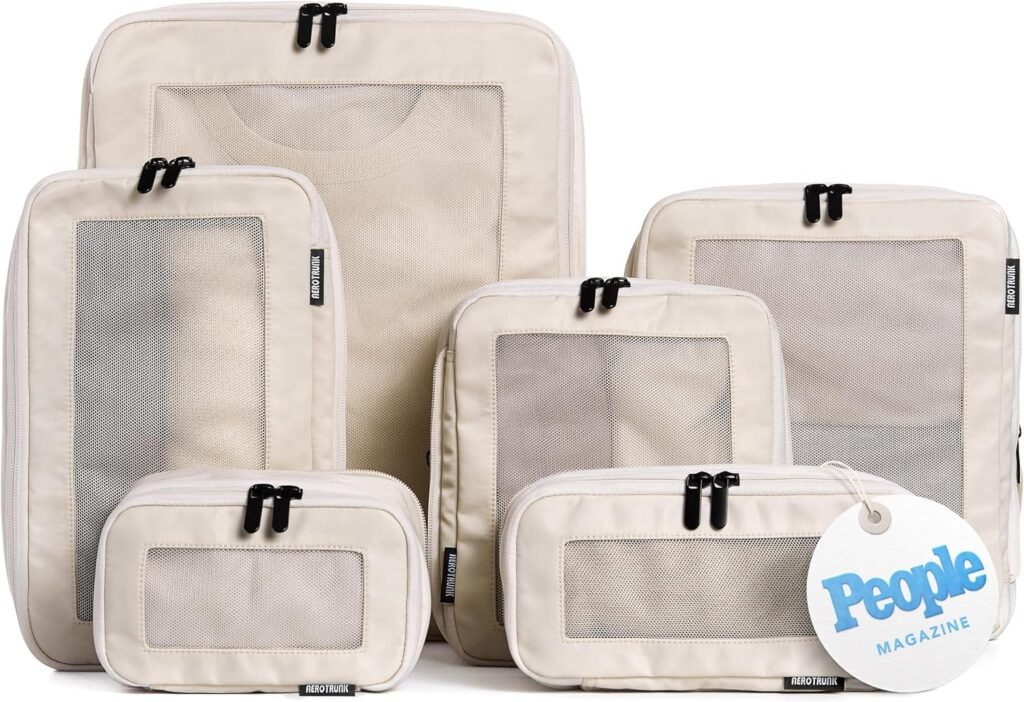
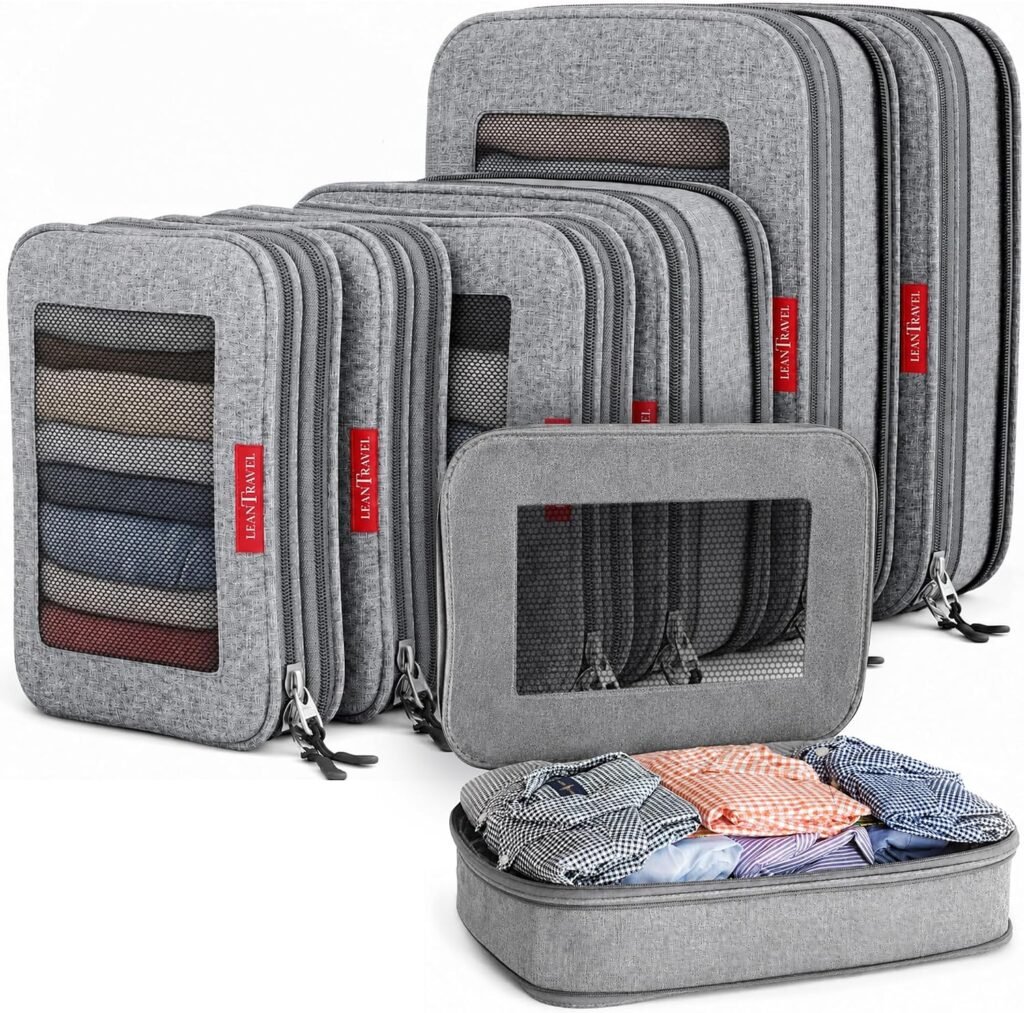
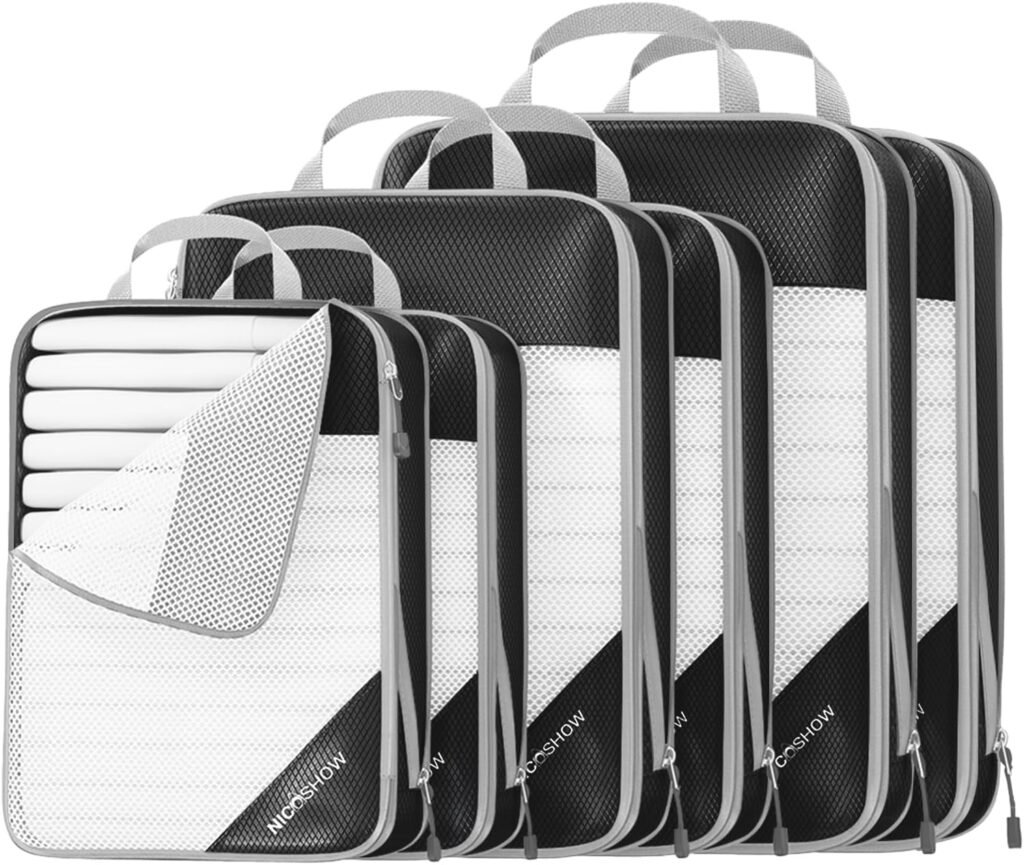
Mesh Panel Compression Set
Lets travellers identify contents quickly while the body and mesh are balanced for the intended load.
- Breathable
- Visible
- Retail
PU-Coated Compression Set
Creates a more covered visual direction where surface finish, privacy and structured presentation matter.
- PU Fabric
- Private Label
- Premium
Structured Compression Set
Uses more panel support to preserve a controlled shape for coordinated luggage and travel collections.
- Structured
- Custom Size
- Luggage
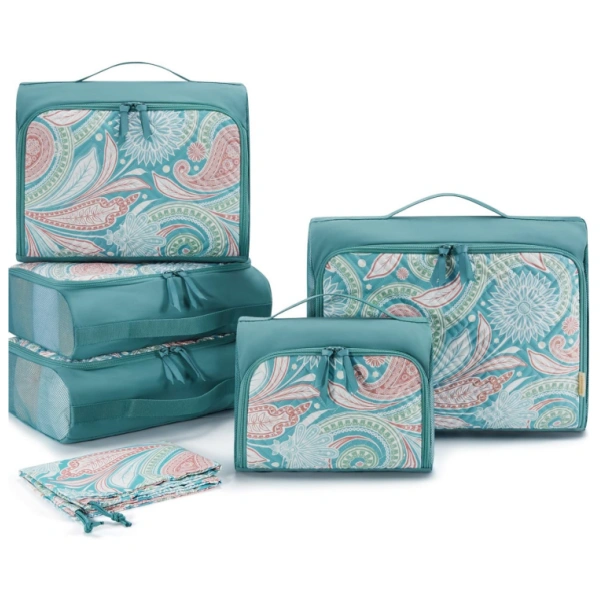
Quilted Premium Set
Adds a softer visual language for lifestyle, gifting or fashion programs while retaining functional compression.
- Quilted
- Color Program
- Gift
Compression Travel System
Combines compression cubes with shoe, laundry, toiletry or clear organizers for a broader retail story.
- Mixed Pieces
- Bundle
- Custom Pack
Choose the Compression Behaviour Before the Piece Count.
The starting question is not “two pieces or six?” It is how the product should behave when filled: how much panel control it needs, how the zipper should feel and what type of clothing it is expected to compress.
Compression Direction Selector
Select the expected contents and the most important product priority. The output describes a construction direction for sample development—not a universal performance claim.
Lowest WeightLightweight soft-garment structure
Use a light ripstop direction with controlled mesh area. Confirm that the loaded panels keep the compression zipper aligned.
Balanced ControlBalanced soft-garment compression structure
Start with a controlled gusset, stable woven shell and a mesh area sized for visibility without allowing the top panel to stretch unevenly.
Shape StabilityShape-controlled soft-garment structure
Add panel support where a flatter retail presentation matters, then confirm that the added stiffness does not make the zipper difficult to close.
Lowest WeightLightweight mixed-clothing structure
Reduce material weight carefully because denim and folded shirts can create uneven pressure across the same panel.
Balanced ControlBalanced mixed-clothing structure
Use moderate gusset depth, stable corners and a zipper curve tested with several garment types rather than one soft fill.
Shape StabilityStructured mixed-clothing system
Prioritize panel control and stackability while checking the weight and folded pack created by the additional support.
Lowest WeightLow-weight bulky-layer structure
A larger gusset may be useful, but lighter panels need careful alignment and stress-point review under a high-volume fill.
Balanced ControlBalanced bulky-layer structure
Match gusset range and zipper effort to sweaters or jackets, then verify seam and corner behaviour after repeated closing.
Shape StabilityHigh-control bulky-layer structure
Use stronger panel control for a flatter profile, with sample testing to prevent excessive user effort or trapped fabric.
Lowest WeightLightweight luggage-specific structure
Map the compressed dimensions to usable luggage space while keeping panel and trim weight aligned with the luggage program.
Balanced ControlBalanced luggage-specific structure
Develop the closed depth and corner profile around wheel housings, handle channels and the intended internal arrangement.
Shape StabilityStructured luggage-specific system
Prioritize repeatable shape and coordinated presentation for a proprietary luggage interior, then validate the physical fit.
Lightweight Architecture
Reduce material weight without losing zipper alignment
Review ripstop stability, mesh area and seam allowance before reducing panel weight.
Balanced Architecture
Control shape for mainstream travel use
Balance gusset range, visibility, zipper effort and a retail-friendly hand feel.
Structured Architecture
Preserve a flatter, more controlled profile
Use greater panel support where presentation and stacking matter more than minimum weight.
Luggage-Specific Architecture
Develop the compressed form around usable interior space
Check the closed depth and corner profile against wheel housings and handle channels.
| Compression Direction | Primary Engineering Question | Sample Check | Common Trade-Off |
|---|---|---|---|
| Lightweight | Can both zipper halves stay aligned with lighter panels? | Loaded corner operation and panel twist | Less structure may mean more deformation |
| Balanced | What gusset range remains easy for the target user? | Closing effort, profile and repeat operation | Moderate weight and moderate structure |
| Structured | How much support is needed without making compression difficult? | Panel recovery and compressed shape | More support can increase weight and packing volume |
| Luggage-specific | Does the closed form fit the usable internal geometry? | Physical placement in the reference luggage | More development work for a more specific fit |
This page focuses on compression mechanics. Compare three-, four-, six- and custom-piece programs on our complete custom packing cube set program →
Select Materials by Their Behaviour Under Compression.
Denier alone cannot predict whether a loaded cube will stay aligned. We review weave, coating, directional stretch, mesh recovery and how the panel behaves as the compression zipper closes.
POLYESTER
Stable baseline for controlled panels
Evaluate bias stretch and crease recovery so opposing panels do not pull the zipper route out of alignment.
RIPSTOP NYLON
Low-weight load control
Useful when weight matters, provided the chosen weave remains stable at the gusset and corner stress points.
PU-COATED
More covered panel behaviour
Coating can change stiffness, hand feel and fold recovery; test the loaded zipper instead of judging the flat fabric alone.
RECYCLED
Verify lot and performance consistency
Confirm the available material documentation, then test stretch, coating and compression behaviour for the exact specification.
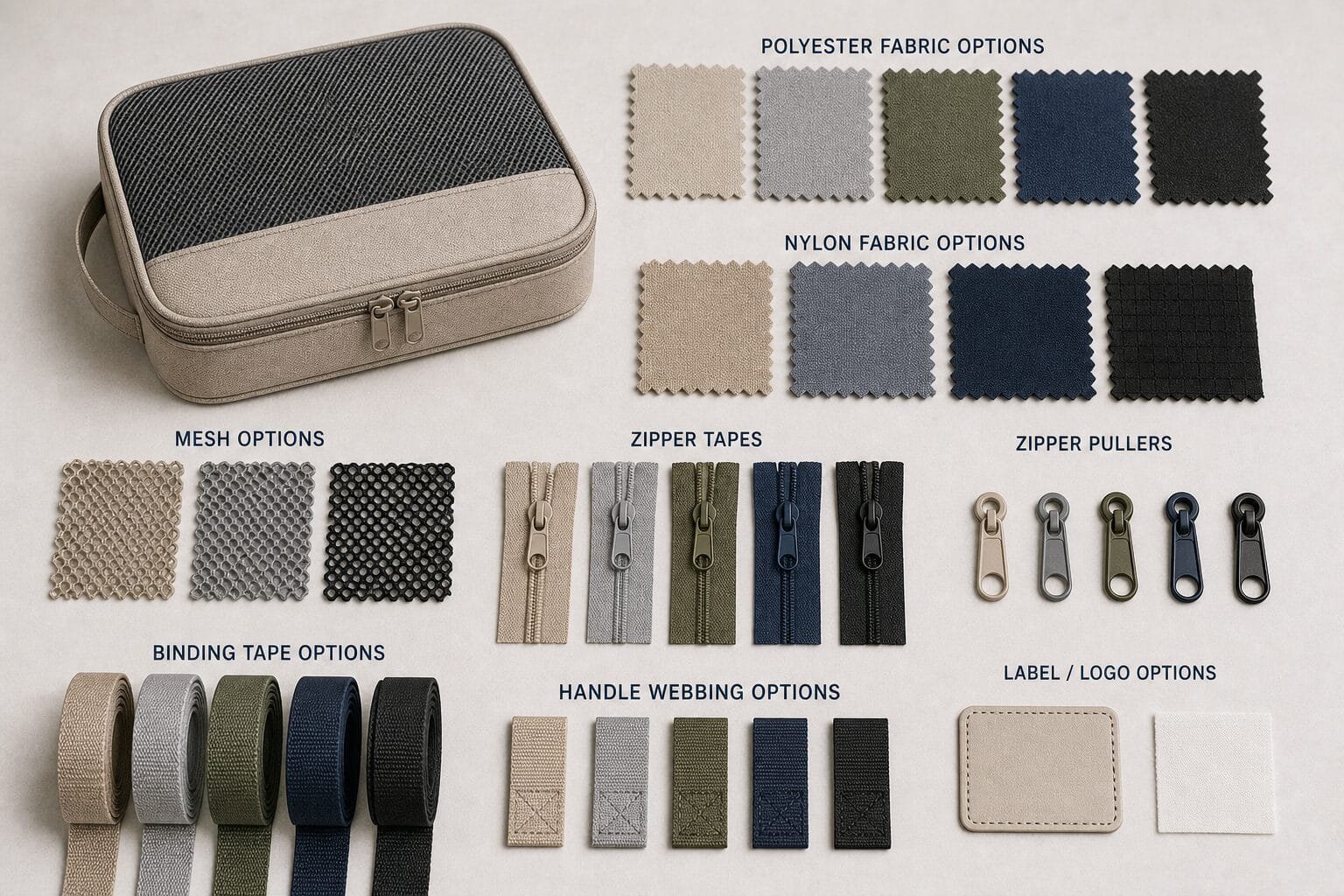
Review shell, mesh, zipper tape, binding and handle as one coordinated material system.
A larger mesh window may improve visibility and reduce weight, but it also changes panel stability. The correct answer depends on the size, compression depth, fill load and customer promise—not on one material name alone.
Compression Pressure Concentrates at the Zipper and Corners.
We look beyond the words “quality zipper” and review how the complete zipper route behaves when the product is loaded.
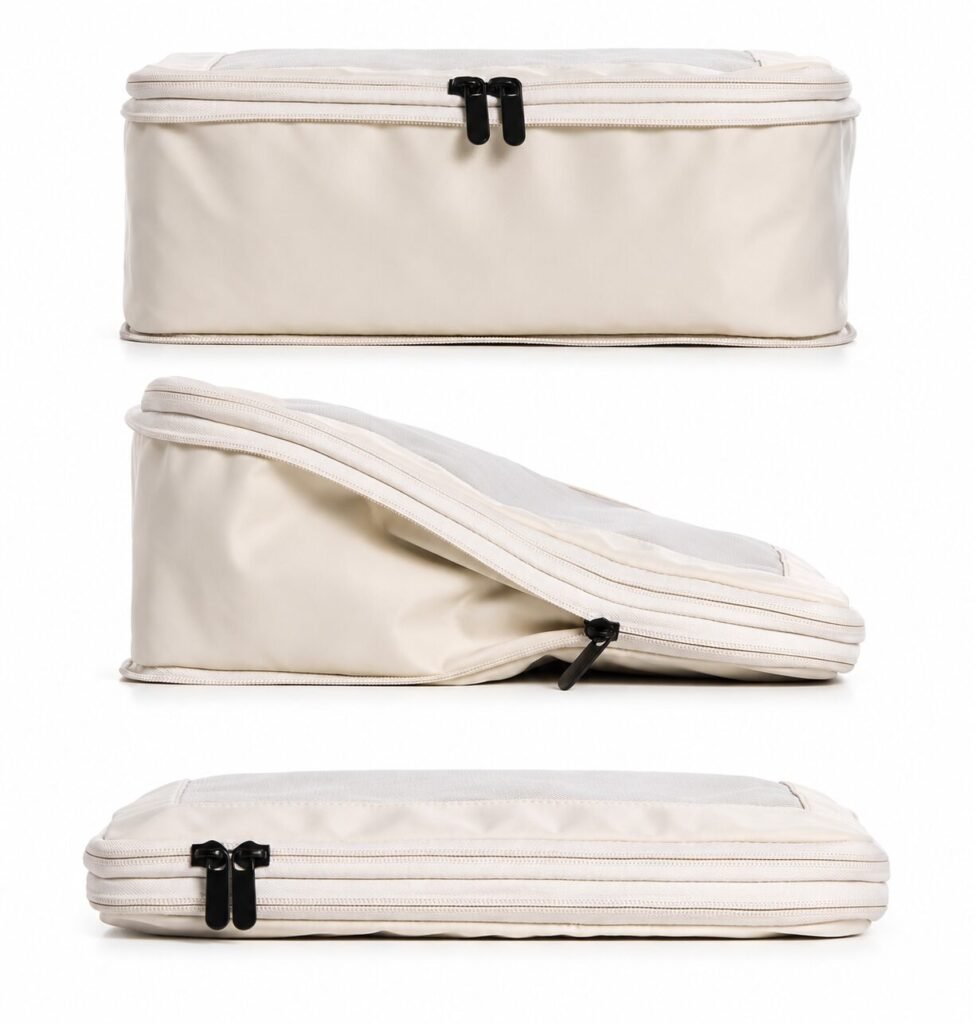
Loaded operation reveals issues that an empty product inspection can miss.
Curve Geometry
The radius must let the slider turn without trapping the shell or gusset.
Panel Stability
Stable panels keep both zipper halves aligned as pressure increases.
Seam Allowance
Controlled allowance and binding reduce loose fabric near the moving slider.
Reinforcement
Stress points are reinforced according to load direction—not decorated at random.
Every size should be operated in the filled condition. A curve that works on a small cube may feel different when transferred to a larger pattern with a longer zipper and heavier clothing load.
Turn an Incomplete Idea into a Sample-Ready Specification.
Design support connects the commercial idea to dimensions, structure, material, branding and packing decisions that a sample team can actually follow.
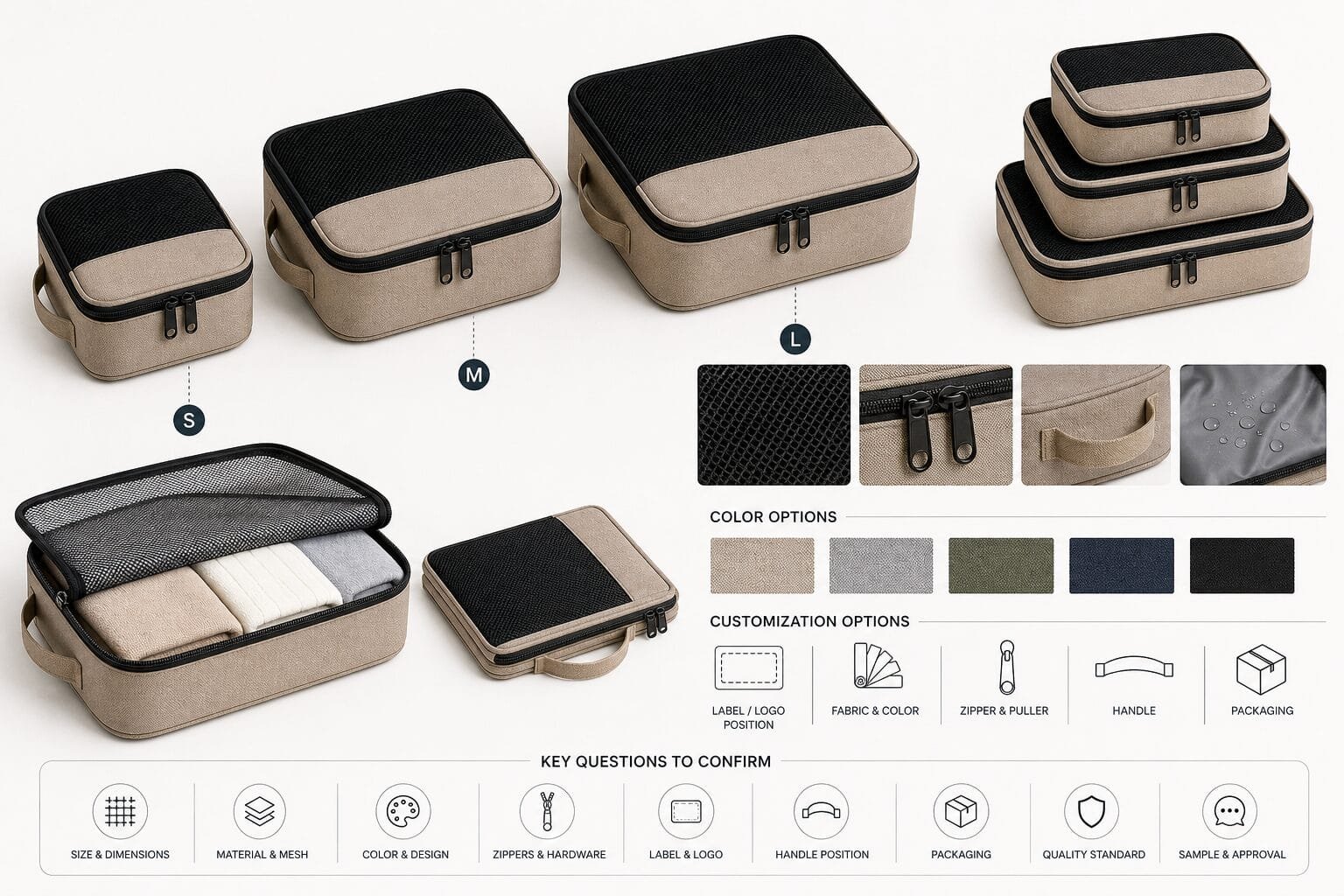
Clarify the market and unknowns
Record the customer, sales channel, luggage format, desired set, reference product, target quantity and price position. Mark missing decisions instead of guessing silently.
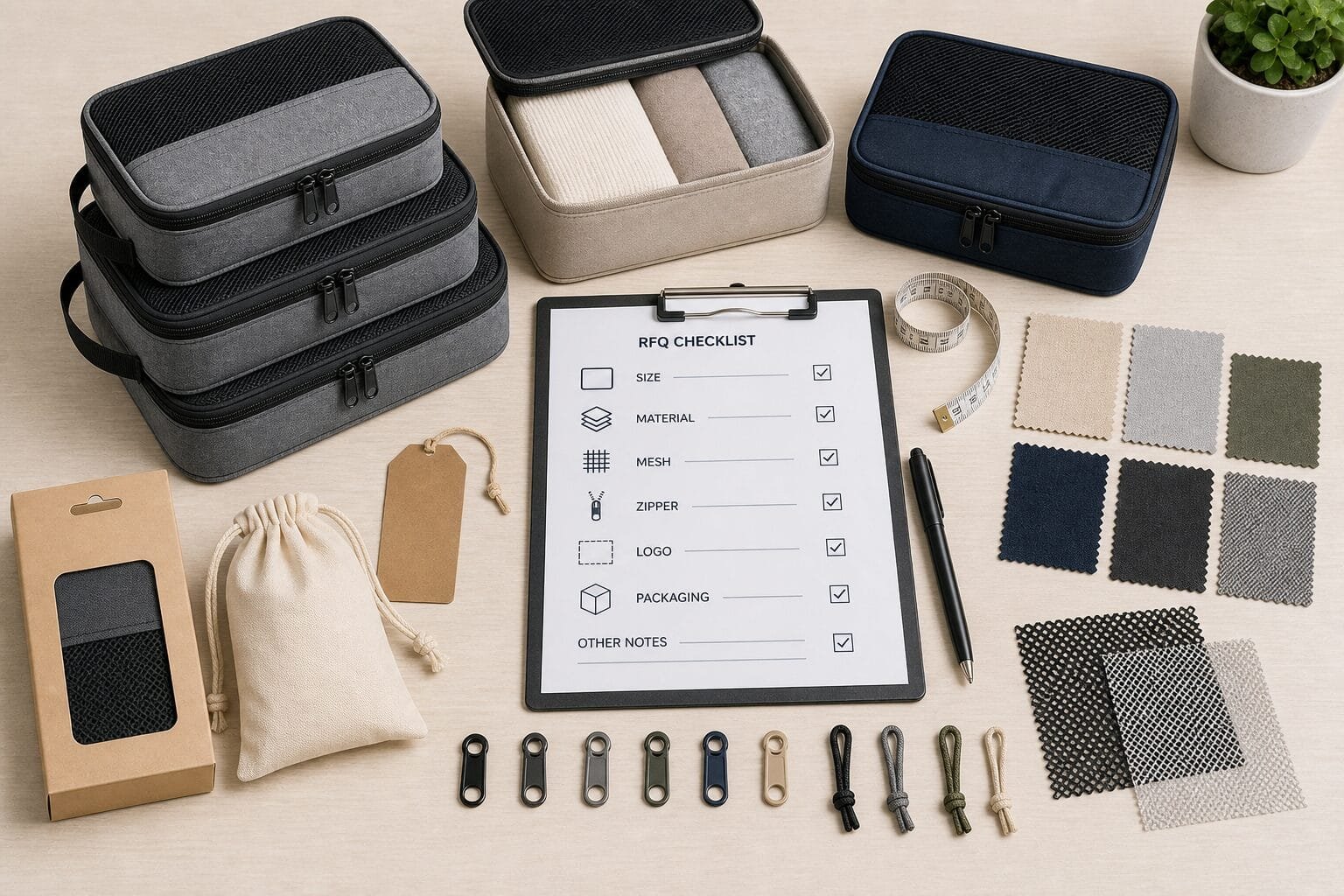
Resolve the engineering choices
Review set count, dimensions, gusset depth, fabric, mesh, zipper, reinforcement, logo, labels and packaging as connected decisions.
Approve the product with evidence
Load and compress every size, compare the set side by side, review branding and packing, then record revisions before approving the bulk reference.
Test the Real Product Before Bulk Production.
A rendering can confirm color placement and general appearance. It cannot show how the slider feels around a filled corner, whether the mesh stretches too far or whether a six-piece set nests efficiently in its retail pack.
The physical sample becomes useful when the buyer and factory review it against the same questions and record every approved revision.
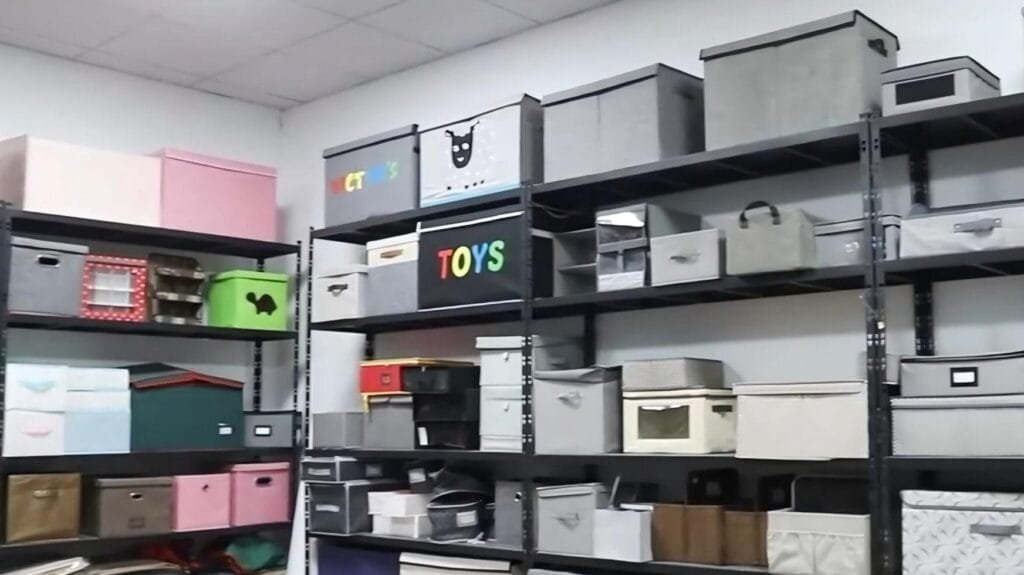
In-house sample review connects the design decision to a physical bulk reference.
Coordinate Your Brand Across Every Piece.
Compression cube sets place several sizes next to each other. A small difference in mesh shade, zipper tape, binding width or logo position becomes more visible than it would on a single pouch.
Shell, mesh, lining and trim direction
Chain, tape, slider and puller coordination
Print, embroidery, woven or rubber label
Size ID, care, composition and origin
Hang tag, insert, belly band or color box
Barcode, UPC or project-specific fulfilment label
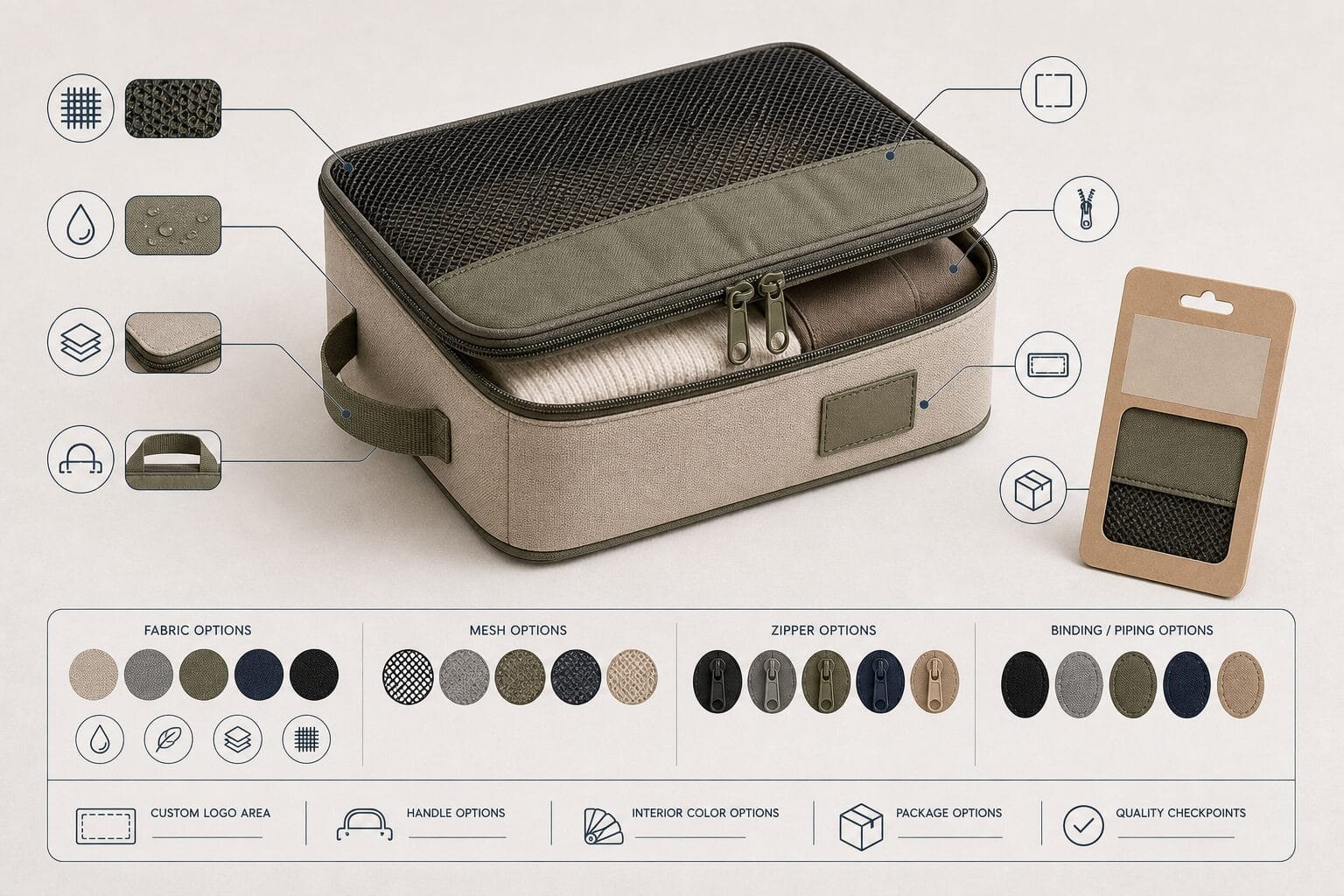
Coordinate product and packaging details as one brand system.
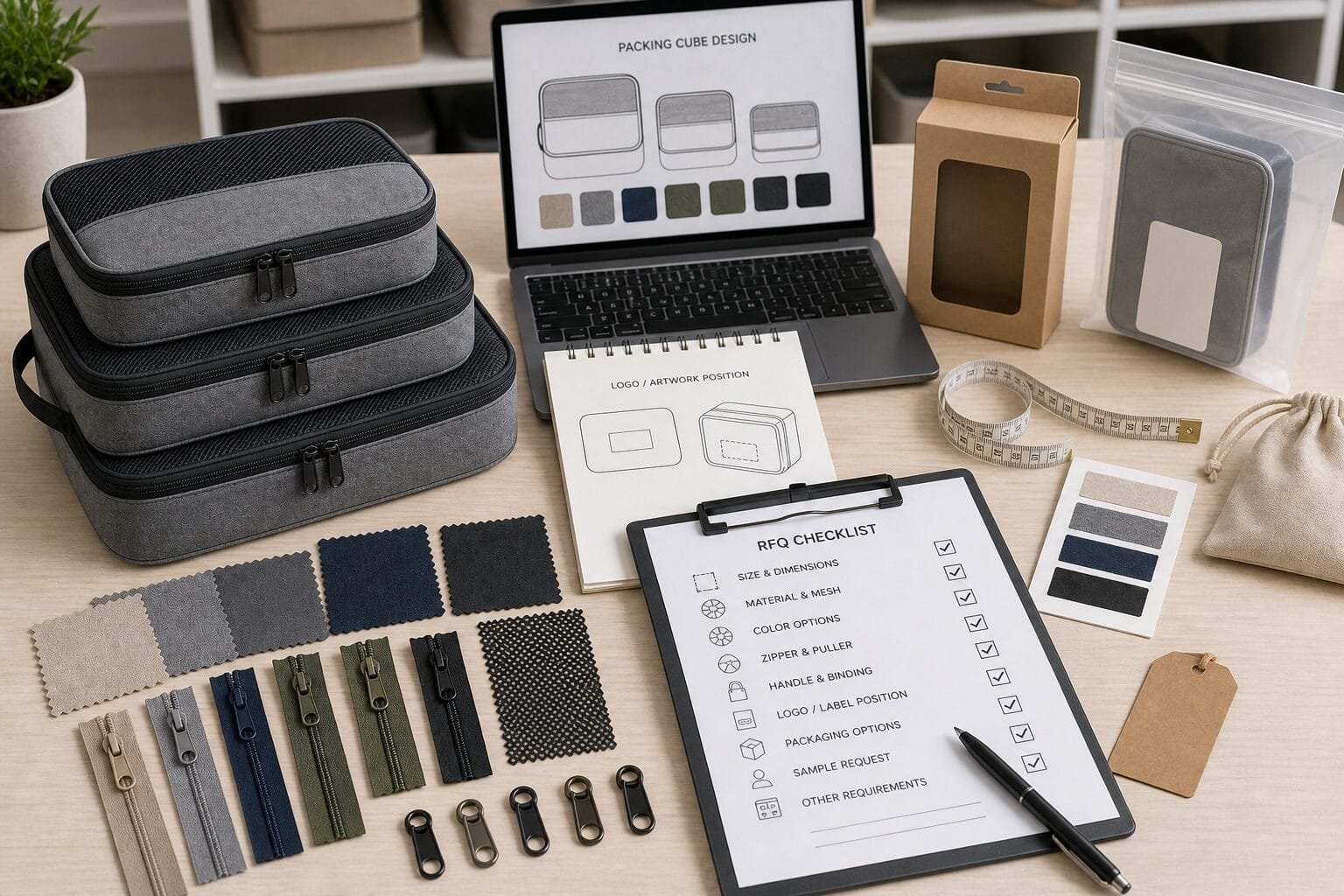
The approved specification creates a shared reference for production and inspection.
QC Checks Compression Performance—not Appearance Alone.
An empty cube can look correct while hiding a zipper curve, seam or panel problem. Inspection therefore needs product measurements, workmanship standards and functional checks linked to the approved sample.
01
02
03
04
05
06
Nest the Compression Set Before You Plan the Carton.
A product that reduces clothing volume can still create an inefficient retail pack. The folded gusset, zipper bulk, nested piece order and insert structure determine the real unit-pack and carton result.
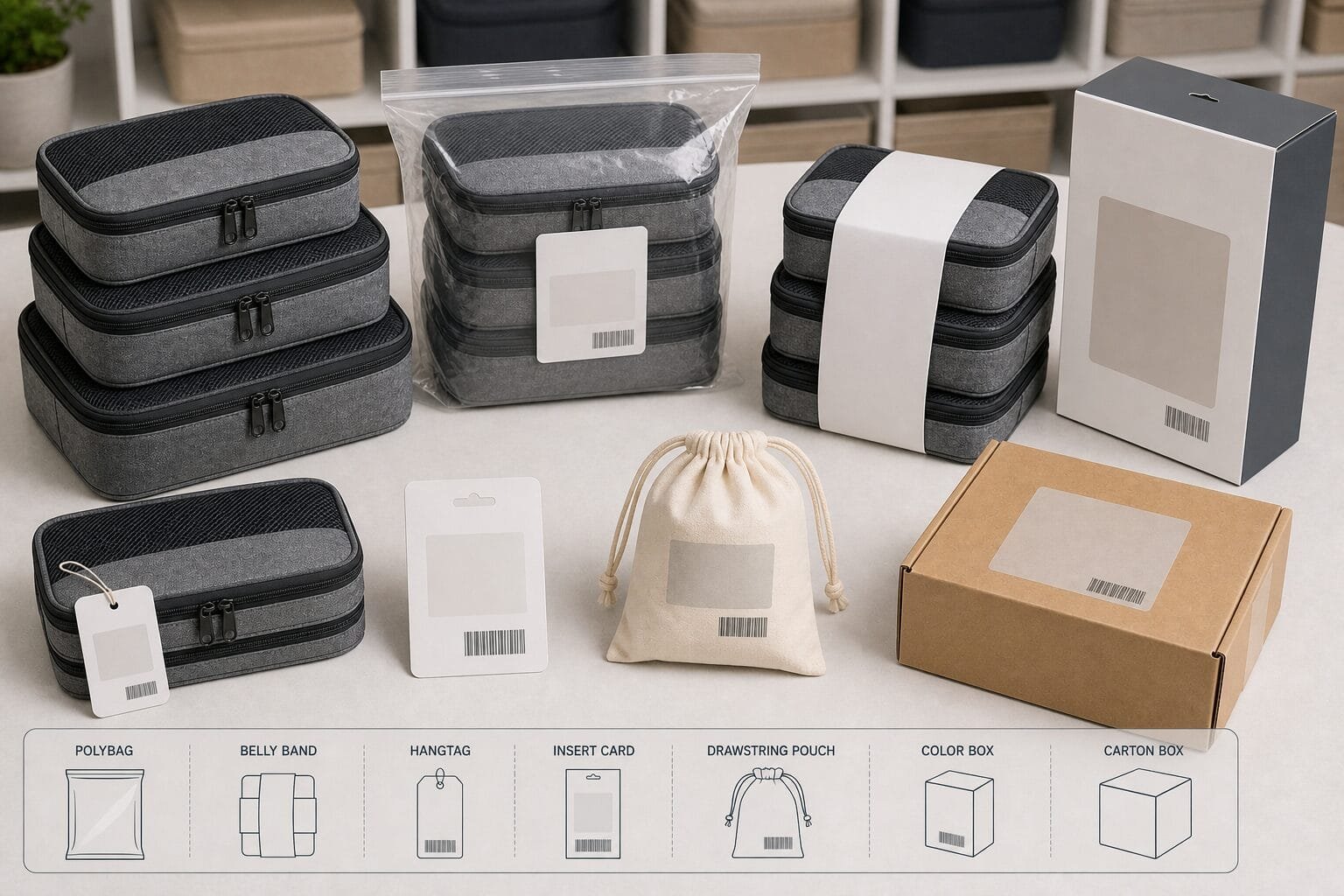
Approve the nested sequence, folded gusset, unit dimensions and master-carton plan together.
01
Control the Nested Sequence
Define which cube folds first, where the compression gusset sits and how zipper pullers are protected from marking adjacent pieces.
- Repeatable folding orientation
- Piece-by-piece nesting order
- No forced zipper bends
- Stable pack shape
02
Explain the Compression Function
Retail graphics should show the two zipper functions clearly without promising a result that the approved test cannot support.
- Main zipper identification
- Compression zipper instruction
- Realistic loading guidance
- Verified claim language
03
Verify Unit and Carton Volume
Measure the final packed set after inserts, labels and protection are added—not from an empty sample or early estimate.
- Finished unit dimensions
- Master-carton arrangement
- Gross and net weight record
- Transit protection review
Four Checks That Turn a Sample into a Repeatable Compression Product.
The factory story on this page is not a general tour. It shows the control points needed to reproduce zipper feel, compressed shape and set consistency after the approved sample moves into bulk production.
01 · Sample Construction Review
02 · Material & Component Reference

03 · In-Line Construction Control
04 · Function & Set Verification
Operate the compression route with the agreed fill—not only while empty
Compare twist, corner profile and panel control after closing
Review every size against the same color, trim and function references
Confirm folding sequence, unit dimensions and carton arrangement
See the Great Shine custom bag manufacturing overview → This page stays focused on compression-cube development and control.
From a Reference Product to a Retail-Ready Compression Set.
Use the following sequence to turn a compression-cube brief into an approval sample. Keep the fill contents and weight consistent, record the initial and compressed dimensions, review zipper operation and identify the sample version before making a compression claim.

A travel brand shares a reference cube, customer profile, target set count and preferred visual direction.
The team identifies overlapping sizes, a tight zipper curve and packaging volume that does not support the target channel.
Dimensions, gusset depth, panel balance, zipper route and nesting sequence are revised together.
Every size is filled, compressed and compared for operation, shape, branding and set consistency.
The approved physical sample, specification, inspection points and packing sequence become the shared production standard.
From Product Brief to Export-Ready Compression Cubes
Each stage produces a decision or physical reference that reduces ambiguity before the next stage begins.
Share Brief
Reference, market, set idea, quantity and timing.
Engineer Compression
Zipper path, gusset, panel and material response.
Confirm Details
Branding, packing and quotation basis.
Develop Sample
Physical product, loading review and revisions.
Approve Bulk
Sample, specification and inspection points.
Prepare Material
Material, color and component confirmation.
Produce
Cutting, sewing and in-line workmanship control.
Inspect Loaded Function
Zipper operation, shape, seams and measurement.
Verify Nested Pack
Folding sequence, unit pack and carton check.
Ship
Final release and export preparation.
Questions Buyers Ask Before Approving a Compression Cube
These answers focus on compression mechanics and sample decisions. General set-count, logo and wholesale questions are covered on the parent packing-cube program page.
A standard cube organizes clothing at a fixed depth. A compression cube adds a second zipper and expandable gusset so the filled product can be closed to a reduced depth. The added function creates extra demands on the zipper, panels, seams and user operation.
The result depends on the contents, initial fill, product dimensions, gusset depth, fabric and measurement method. We recommend confirming any numeric claim against a documented test on the approved project sample.
No. They can reduce the volume occupied by suitable clothing, but they do not change the physical weight of the packed items. Travellers still need to follow the carrier’s weight limit.
A tight radius, loose gusset fabric, panel misalignment or excessive fill can push material toward the slider. The curve, seam allowance, binding and loaded operation should be reviewed together during sampling.
Yes. The depth can be adjusted during pattern development, but it should be balanced with panel stability, zipper operation, the intended fill load and the compressed luggage arrangement.
Not automatically. Scaling one construction can change zipper length, curve behaviour, panel stiffness and user effort. Each size should be filled and reviewed against its own intended clothing load.
Mesh improves visibility and breathability, while a full-fabric panel provides more coverage and may behave differently under load. The correct balance depends on panel size, stretch, target weight and required shape control.
They can keep garments grouped and reduce movement, but tight compression may create creasing in some fabrics. The result depends on folding, fill level, garment material and how long the items remain compressed.
The inspection plan can include dimensions, filled zipper operation, corner behaviour, seam condition, panel shape and consistency across every size. Project-specific test conditions should be agreed before production.
Compare the loaded product before and after closing the gusset. Review opposing-panel alignment, corner profile, zipper waviness and whether the cube still stacks in the intended luggage position.
Record the exact sample, garment list, folding method, initial dimensions, compressed dimensions, zipper operation, panel condition, seam condition and the calculation used for any published performance statement.
It should not be assumed. Product dimensions, gusset depth, fabric and contents change the result. Verify representative sizes under the agreed method before applying a shared range or claim.
Check loaded capacity, main and compression zipper operation, closed shape, seam condition, panel stretch, handle load, branding consistency, nested folding and final unit-pack dimensions.
Visit the custom packing cube set program → for piece counts, size roles, mixed organizer sets and broader private-label planning.
Build Your Compression Packing Cube Set with Our Factory Team.
Send a reference image, an existing specification or even an incomplete idea. We can review the structure, sizing, material, branding and packaging direction with you.
- Set and size recommendation
- Compression structure review
- Material and trim direction
- Logo and packaging plan
- Sample development path

