Wholesale lunch bags are usually sourced by retail buyers, importers, promotional gift companies, private label brands, and distributors that need repeatable quality, clear customization, and predictable bulk order communication. Before requesting a quote, buyers should define the intended retail channel, target user, material direction, insulation structure, logo method, packaging format, expected order quantity, and QC requirements.
For a sourcing manager, the best RFQ is not only a price request. It should give the manufacturer enough information to recommend practical materials, estimate sampling complexity, check logo feasibility, and flag packaging or quality risks before bulk production. Great Shine supports custom bag development for wholesale and private label programs, including outdoor cooler and lunch bag related products through its outdoor cooler and shopping storage category, custom bag programs through its custom bag manufacturer service, and direct sourcing communication through the contact page.
Quick Wholesale Lunch Bag Buyer Checklist
Use this checklist before sending an inquiry to a lunch bag manufacturer or supplier:
- Product type: lunch tote, compact lunch bag, shoulder lunch cooler, foldable lunch bag, kids lunch bag, promotional lunch bag, or retail gift set.
- Target market: United States, Europe, Japan, South Korea, or another region with specific retail packaging and labeling expectations.
- Buyer type: retailer, importer, wholesaler, promotional buyer, private label brand, ecommerce seller, or distributor.
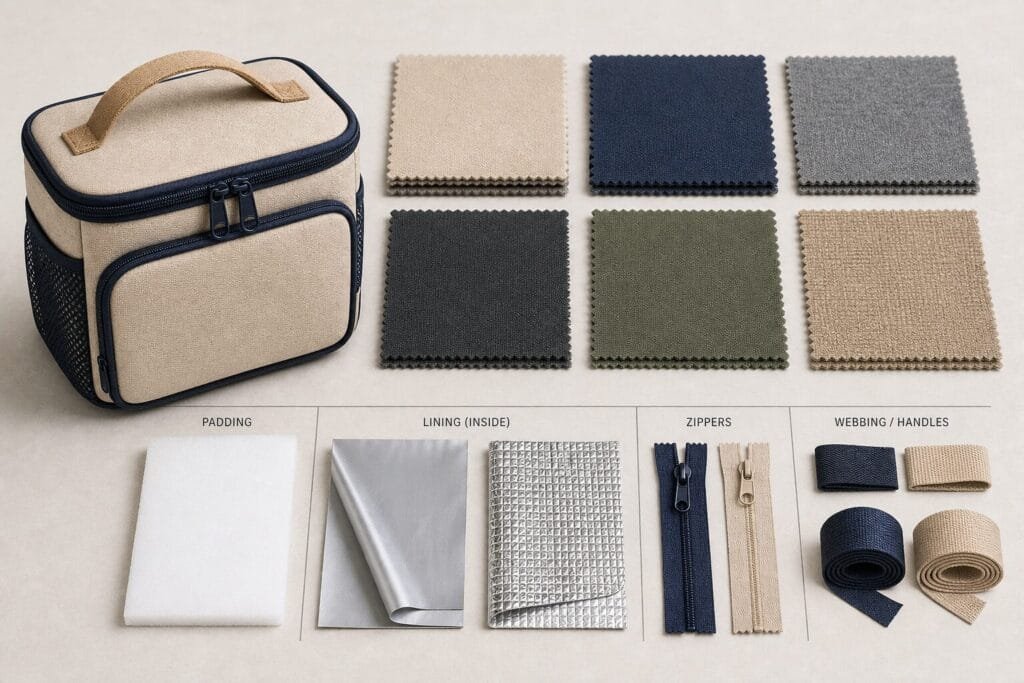
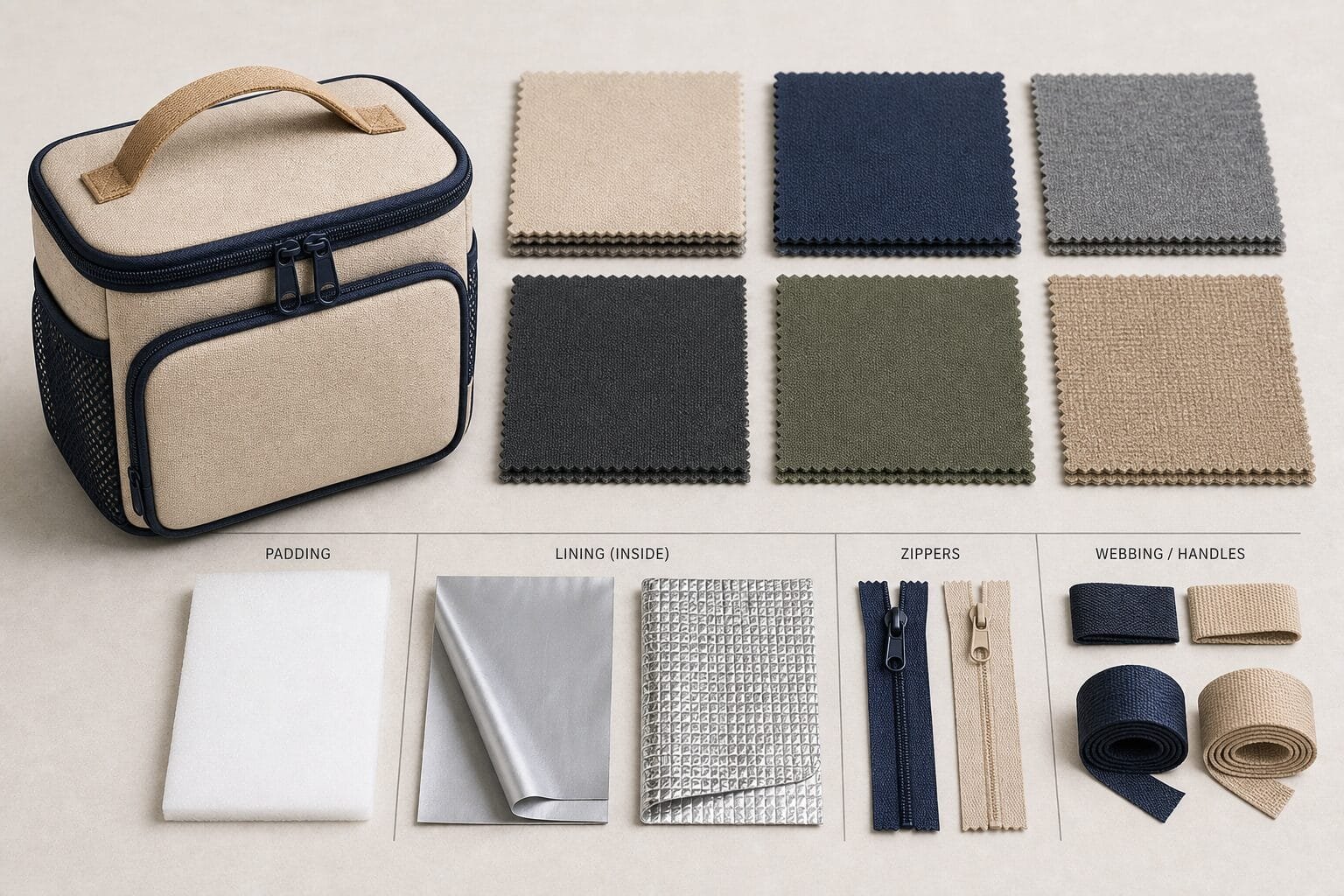
- Material direction: polyester, non-woven fabric, cotton canvas, RPET fabric if confirmed, PVC, PEVA, aluminum film, foam insulation, or other requested construction.
- Structure: handle style, zipper direction, pocket layout, gusset, shoulder strap, foldability, reinforced bottom, and opening size.
- Size requirement: finished dimensions, capacity target, meal box fit, bottle fit, and carton packing direction.
- Logo requirement: printed logo, woven label, rubber patch, heat transfer, embroidery, or other method to be confirmed by artwork and fabric.
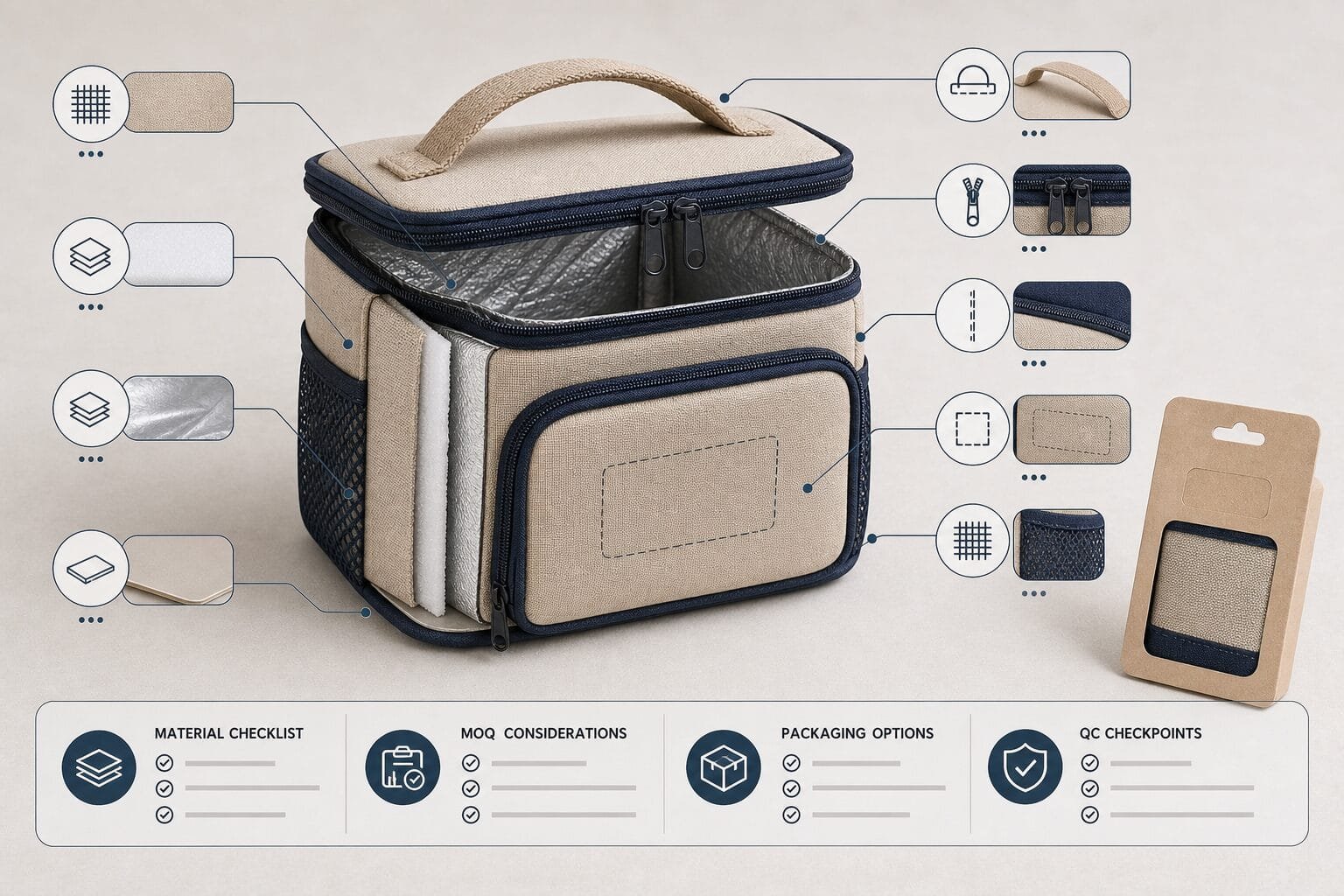
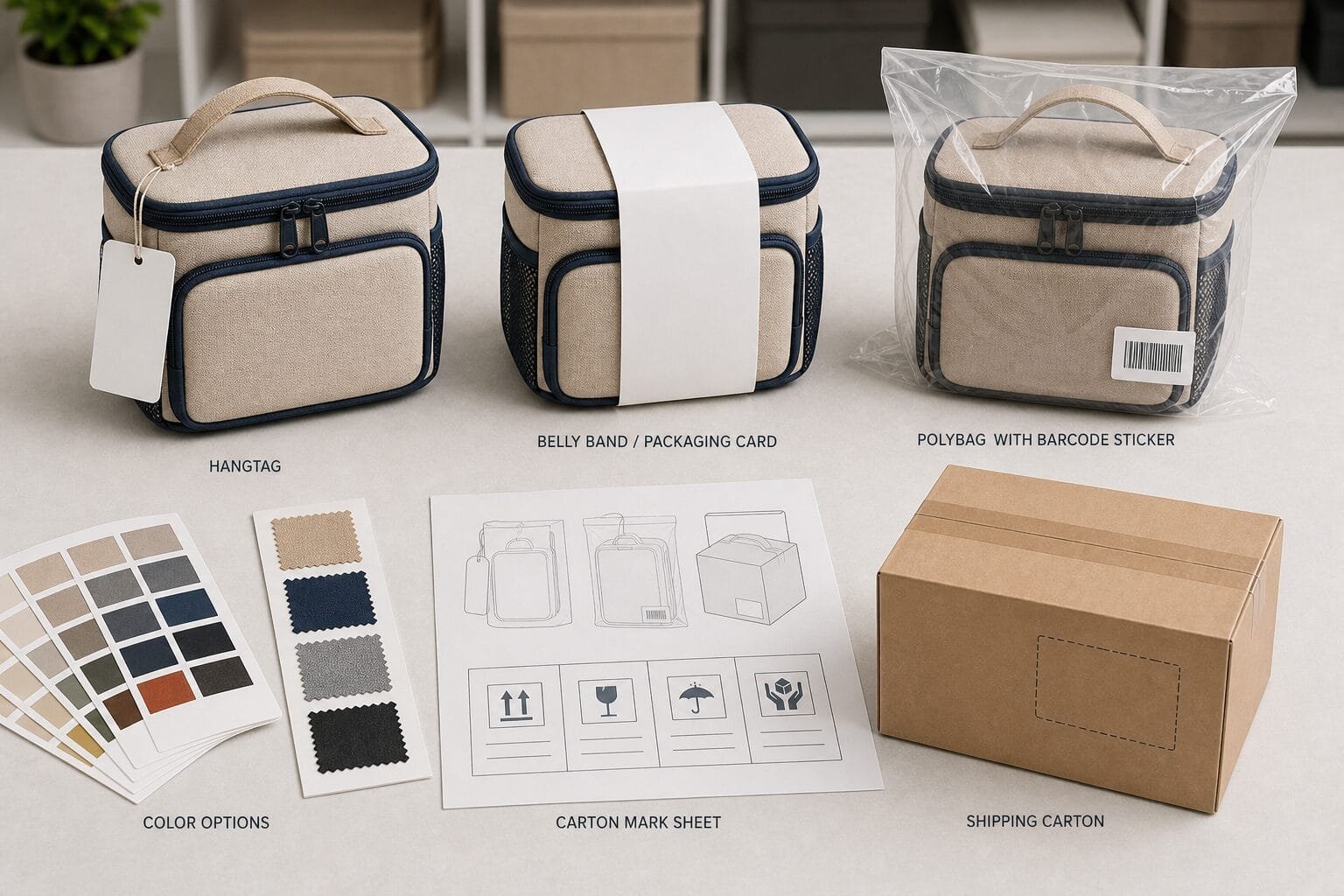
- Packaging: polybag, hangtag, paper band, insert card, retail sleeve, display carton, or custom packaging to be quoted.
- MOQ question: ask the supplier to confirm MOQ by material, logo method, color, and packaging instead of assuming one number fits every design.
- Sample request: confirm sample cost, sample timing, available stock reference, and whether the sample will match bulk materials.
- QC points: stitching, zipper, handle strength, lining attachment, print position, size tolerance, odor, carton marks, and packaging accuracy.
Material and Lining Decisions for Wholesale Lunch Bags
Material choice affects appearance, cost, durability, structure, print quality, and retail positioning. A lunch bag for a supermarket promotion does not need the same construction as a private label lunch tote for a premium retail shelf. Buyers should brief the supplier on the sales channel first, then choose materials that match that channel.
Outer fabric is the first visible buyer decision. Polyester is common for printed lunch bags because it can support a wide range of colors and patterns. Non-woven fabric may be considered for budget or promotional programs where simple structure is acceptable. Canvas can create a more natural retail look, but it may affect weight, cost, and logo method. PVC or transparent panels may be used for special designs, but buyers should confirm market requirements, material thickness, and packaging presentation before sampling.
The lining and insulation structure should be discussed separately from the outer fabric. Common lunch bag constructions may include aluminum film lining, PEVA lining, foam padding, or other insulated layers depending on the design. Buyers should avoid asking only for “the cheapest insulation.” Instead, explain the use case: office lunch, school lunch, grocery promotion, picnic set, gift-with-purchase, or retail lunch cooler. The manufacturer can then recommend a structure for sampling.
Material Comparison Table
| Material or Component | Common Buyer Use | Advantages | Points to Confirm Before Sampling |
|---|---|---|---|
| Polyester outer fabric | Retail and promotional lunch bags | Flexible color options, common for printed designs, suitable for many structures | Fabric weight, color matching, print method, hand feel, and abrasion expectations |
| Non-woven fabric | Budget promotional programs | Lightweight and cost-conscious for simple designs | Thickness, handle strength, print durability, and whether the structure matches the retail channel |
| Canvas or cotton-look fabric | Private label and lifestyle retail lines | Natural appearance and good shelf appeal for some markets | Shrinkage risk, color variation, logo method, and care expectations |
| Aluminum film lining | Insulated lunch bag interiors | Reflective appearance and common insulated-bag look | Thickness, attachment method, seam finishing, and buyer expectations for use conditions |
| PEVA lining | Lunch bags and cooler-style interiors | Smooth interior surface and common lining option | Thickness, color, odor control, cleaning expectations, and market requirements |
| Foam insulation layer | Insulated structures | Helps build padded structure and thermal separation | Foam thickness, lamination, bag shape, and whether performance claims need testing proof |
| Zipper, handle, and strap components | All custom lunch bags | Strong effect on user experience and return risk | Zipper smoothness, handle reinforcement, strap length, color matching, and puller design |
This table should not replace a sample. It helps buyers decide what to ask for, but the final choice should be confirmed through physical samples, artwork review, and supplier feedback.
MOQ, Custom Size, and Quote Questions
MOQ can change by fabric, color, print method, lining, hardware, and packaging. A custom lunch bag using a standard fabric and simple logo may have a different MOQ from a fully customized shape with special fabric color, printed lining, custom zipper puller, and retail packaging. For that reason, sourcing managers should ask MOQ as a structured question rather than requesting one generic number.
A better RFQ question is: “Please confirm MOQ for this lunch bag design by material, color, logo method, and packaging option.” This gives the supplier room to explain whether the limitation comes from fabric purchasing, printing setup, cutting efficiency, packaging production, or carton planning.
Custom size should also be defined with practical product use in mind. Buyers can provide finished dimensions, target lunch box size, bottle size, and preferred opening. If the bag needs to hold a bento box for Japan, a lunch container for the US market, or a compact meal set for office users in Europe or South Korea, send reference dimensions instead of only a photo. The supplier can then check whether the base width, height, zipper opening, and handle position are practical.
For OEM and ODM projects, include these quote details:
- Finished size or target capacity.
- Reference photo or sketch.
- Outer fabric preference and lining preference.
- Logo artwork file or logo size direction.
- Pantone or color reference if color matching is important.
- Packaging requirement and barcode or label needs.
- Target order quantity and expected repeat order potential.
- Target market and retail channel.
- Any required buyer inspection standard or restricted material question.
Logo, Private Label, and Packaging Options
Custom lunch bags often need more than a logo on the front panel. Private label buyers may need hangtags, woven labels, care labels, insert cards, barcode stickers, carton marks, and retail-ready packaging. Promotional buyers may prioritize logo visibility and delivery schedule. Importers and wholesalers may focus on carton efficiency, assortment planning, and stable repeat production.
Logo method should be selected after the material is chosen. Screen printing may suit many flat fabric panels. Heat transfer may work for certain logo effects and designs. Woven labels, rubber patches, embroidery, or zipper pullers may fit some private label concepts, but each method has cost, MOQ, artwork, and placement considerations. Buyers should send vector artwork when possible and ask the supplier to confirm print size, color limits, placement tolerance, and whether a pre-production sample is recommended.
Packaging should match both retail channel and landed cost goals. A lunch bag sold online may need protective packaging and clear product labeling. A retailer may need hangtag or shelf-ready presentation. A promotional program may require simple bulk packing. A private label brand may ask for custom paper cards or insert cards. Before confirming packaging, buyers should ask how each option affects carton size, unit weight, barcode placement, inspection, and packing labor.
QC Checklist Before Bulk Shipment
Wholesale lunch bags can look simple, but quality problems often come from small details: uneven stitching, weak handles, zipper friction, lining wrinkles, print misalignment, inconsistent size, or packaging mistakes. A clear QC checklist helps the supplier, buyer, and third-party inspector work from the same expectations.
Pre-Production Checks
Before bulk production, confirm the approved sample, material swatches, color reference, logo artwork, packaging layout, carton marks, and any buyer inspection criteria. If the approved sample uses substitute fabric or temporary accessories, record what will change in bulk production. This avoids confusion when the production sample and shipment are reviewed.
In-Process Checks
During production, focus on cutting accuracy, panel alignment, seam allowance, handle reinforcement, zipper position, lining attachment, and logo placement. Lunch bags often have multiple layers, so small deviations can affect shape and opening. Ask whether the supplier can provide production photos or an in-line inspection report if your company requires it.
Final Inspection Checks
For final inspection, review the finished bag against the approved sample and purchase order. Check dimensions, appearance, stitching, zipper function, handle strength by reasonable handling checks, lining condition, odor, logo position, packaging, barcode, carton marks, and assortment ratio. Do not make performance claims such as exact insulation time unless validated by agreed test methods and documented results.
A practical final QC list includes:
- Correct material, color, lining, and components.
- Finished size within agreed tolerance.
- Smooth zipper opening and closing.
- Handles and straps attached evenly and securely.
- Logo size, color, and position match approved artwork.
- Lining is clean, attached properly, and free from obvious damage.
- Stitching is even, with loose threads trimmed.
- Bag shape matches the approved sample.
- Packaging, labels, barcode, and carton marks match the order.
- Quantity, assortment, and carton packing are consistent with the purchase order.
How to Compare Lunch Bag Manufacturers and Suppliers
When choosing a wholesale lunch bag supplier, price matters, but it should not be the only decision point. A stronger supplier can help identify material conflicts, recommend logo methods, prepare more realistic samples, and reduce avoidable quality issues before shipment.
Ask potential manufacturers these questions:
Product Capability
Can you produce lunch bags, cooler bags, and related insulated storage products? Can you support custom size, custom color, logo, lining, zipper, handle, shoulder strap, and packaging? Can you develop from a reference sample, drawing, or buyer specification sheet?
Sampling and Development
What information do you need before sampling? Will the sample use final production materials or available substitute materials? What changes may occur between prototype sample, pre-production sample, and bulk production?
MOQ and Cost Drivers
Which part of the design affects MOQ most: fabric, color, logo method, lining, accessory, or packaging? Are there alternative materials or standard components that can make the project easier to source?
Quality Control
Which QC checkpoints are used for fabric, cutting, sewing, lining, logo, packaging, and final inspection? Can the supplier follow your company’s inspection checklist if provided before production?
Communication
Can the supplier explain tradeoffs clearly and ask for missing specifications before quoting? Fast pricing is useful, but accurate sourcing communication is more valuable for repeat wholesale programs.
RFQ Template for Wholesale Lunch Bags
Use the following structure when contacting a supplier:
“Hello, we are sourcing wholesale lunch bags for [target market/channel]. The product type is [lunch tote/insulated lunch bag/kids lunch bag/promotional lunch cooler]. Target size is [dimensions or reference item]. We prefer [outer material] with [lining/insulation direction], but we are open to supplier recommendations. Logo requirement is [method or artwork attached]. Packaging requirement is [polybag/hangtag/retail card/custom packaging]. Please confirm available material options, MOQ by option, sample process, packaging suggestions, QC points, and quote requirements.”
This style gives the manufacturer enough context to respond with useful sourcing advice instead of a vague unit price.
Request a Quote from Great Shine
If you are sourcing wholesale lunch bags for a retail, importer, promotional, or private label program, prepare your product size, material direction, logo artwork, packaging request, target quantity, and market requirements before sending an inquiry. Great Shine can review custom lunch bag and cooler bag requirements through its custom bag manufacturer service and related outdoor cooler and shopping storage products.
To start a sourcing discussion, send your RFQ through the Great Shine contact page with photos, drawings, or reference samples if available. The more complete your specification is, the easier it is for the supplier to recommend materials, packaging, sample steps, and QC confirmation points.
FAQ
What information should I provide when requesting wholesale lunch bags?
Provide the product type, size, target market, material direction, lining preference, logo artwork, packaging needs, quantity estimate, and any inspection or labeling requirements. A reference photo or sample can help the supplier understand the structure.
How do I choose the right material for custom lunch bags?
Start with the sales channel and target user. Promotional programs may prioritize cost and simple logo placement, while private label retail programs may need better structure, packaging, and appearance. Confirm outer fabric, lining, insulation layer, zipper, and handle details before sampling.
Is MOQ the same for every lunch bag design?
No. MOQ can vary by material, color, logo method, lining, accessory, and packaging. Ask the manufacturer to confirm MOQ by option so you understand which design choices affect the order requirement.
What packaging options are common for private label lunch bags?
Common options include polybags, hangtags, paper bands, insert cards, barcode labels, custom retail packaging, and export cartons. The best option depends on the buyer’s retail channel, budget, and labeling requirements.
What QC points matter most before bulk shipment?
Check material, size, stitching, zipper function, handle reinforcement, lining condition, logo placement, packaging accuracy, carton marks, and order quantity. Use the approved sample and purchase order as the inspection reference.
Can Great Shine support custom lunch bag sourcing?
Great Shine supports custom bag and outdoor cooler-related sourcing programs. Buyers should send specifications, artwork, packaging needs, and target quantity through the contact page so the team can review the project requirements.