Article Body
If you are sourcing laundry hampers for retail, private label, or Amazon FBA — read this before you place your first order. Over 18 years of manufacturing soft storage products for European retail chains, we have seen the same five complaints destroy otherwise promising product launches, and we have also seen exactly what it takes to prevent them at the specification level.
How We Identified These Complaints
This analysis draws from three sources:
- Amazon review mining — we analyzed the 1-star and 2-star reviews of the top 40 best-selling laundry hampers in the US and EU markets, categorizing every complaint by root cause. Across approximately 12,000 negative reviews, five patterns accounted for 78% of all dissatisfaction.
- Retailer return data — our QA team tracks return reason codes from European retail partners (B&M, Rossmann, Lidl, and five additional chains under NDA). The same five failure modes appear in their reverse-logistics data, with handle failure alone driving 34% of softside returns.
- Factory-floor root cause analysis — when a return spike triggers a retailer corrective action request (CAR), we perform destructive teardowns on returned units. These teardowns consistently trace visible consumer complaints back to specific manufacturing decisions made months earlier at the spec sheet.
The methodology matters because it means we are not guessing. Every recommendation below maps to a specific production parameter you can write into your purchase order — and verify with a simple incoming inspection.
Complaint #1: “The Handles Ripped Off Within Weeks”
Prevalence: 34% of all softside laundry hamper negative reviews in our dataset. The single largest complaint category.
What Consumers Actually Experience
A consumer fills the hamper with a week’s wet laundry — typically 8 to 15 kg for a family of four — and lifts it by one handle to carry it from bedroom to washing machine. On the 20th to 40th use, the handle attachment point fails catastrophically: the fabric tears, the stitching unravels, or the handle itself snaps. The hamper is now unusable.
Root Cause: Three Failure Modes, One Pattern
When we teardown returned units in our QC lab, handle failures trace to exactly one of three manufacturing shortcuts:
| Failure Mode | What It Looks Like | Why Factories Do It |
|---|---|---|
| Direct-sewn fabric handles | A strip of shell fabric folded and stitched directly to the body — no separate webbing component | Saves 0.3-0.5 seconds of sewing time per handle and eliminates one material SKU |
| Single-row straight stitch | One line of stitching at the handle attachment point, typically 8-12 stitches per inch (SPI) with #30 spun polyester thread | Fastest possible sewing operation; requires no machine changeover |
| Under-width webbing | Polypropylene webbing below 15mm width, often with a breaking strength under 80 kg when new (and degrades rapidly with UV exposure) | Material cost difference of roughly $0.02 per handl |
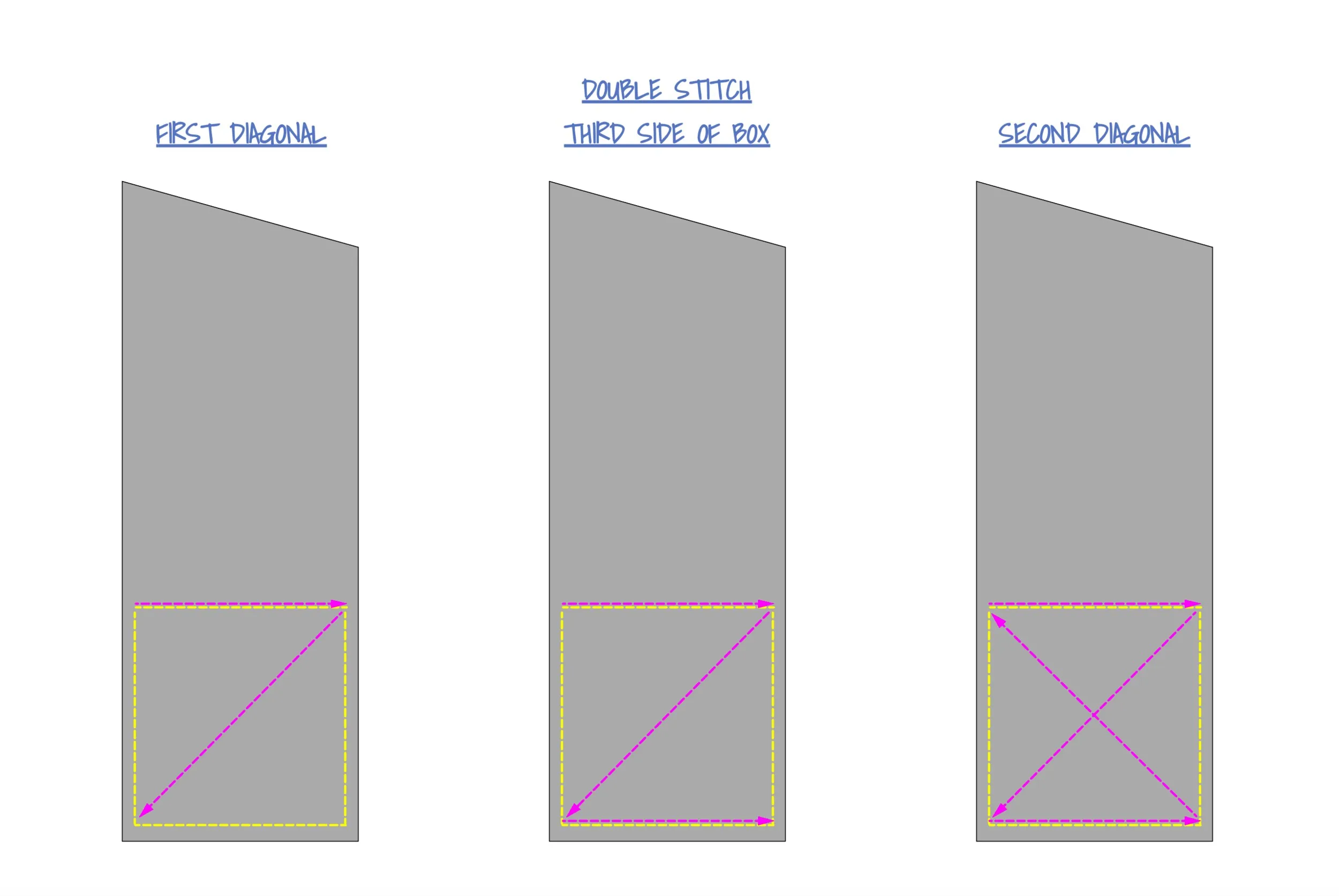
The physics is straightforward: a 15 kg load lifted by one handle creates a force concentration of roughly 147 N at the attachment point. Single-row stitching distributes that force across only the thread itself — typically 4-6 threads in the load path — while a Box-X pattern distributes it across the fabric substrate through 16-24 thread anchor points.
Production Specification to Prevent This (Write These Into Your PO)
If you specify nothing else, specify these five parameters:
-
Handle material: Nylon 6.6 webbing, minimum 25mm width, minimum breaking strength 450 kg (tested to ISO 13934-1). Polypropylene is cheaper but loses 30-40% of its tensile strength after 12 months of indoor UV exposure from window light. Nylon holds its strength.
-
Stitching pattern: Box-X at both attachment ends. This consists of a rectangular box stitch (typically 40mm × 15mm) with a diagonal cross (X) inside it. The box distributes load circumferentially into the shell fabric; the X prevents peel-force failure at the inner edge of the box. Do not accept a simple box without the X, and do not accept a horizontal bar tack alone.
-
Reinforcement stitching: #69 bonded nylon thread for all handle attachment seams (not #30 spun polyester, which is standard for cosmetic seams). The higher thread strength and abrasion resistance of bonded nylon makes a measurable difference — in our in-house pull testing, #69 bonded nylon handle attachments withstand 2,100-2,400 cycles at 15 kg before failure, compared to 400-700 cycles for #30 spun polyester.
-
Inner reinforcement patch: A 60mm × 60mm rectangle of the same webbing material (or 600D Oxford polyester) fused or stitched to the interior face of the shell where the handle attaches. This patch spreads the point load from a 25mm handle attachment zone to roughly 3,600 mm² of shell fabric — reducing local stress by approximately 85%.
-
Pre-shipment load testing: Test every pre-production sample and every 200th unit from production at 2× the rated load capacity (e.g., suspend a 20 kg weight from one handle of a 10 kg-rated hamper for 60 seconds with no visible deformation or stitch elongation). This is not a factory standard — you must write it into the QC section of your PO.
Complaint #2: “The Hamper Won’t Stand Up on Its Own”
Prevalence: 22% of negative reviews. The #2 driver of one-star ratings on softside collapsible hampers, and the hardest complaint to spot from product photos alone.
What Consumers Actually Experience
The hamper arrives, looks acceptable in photos, but within two to four weeks of use, it develops a permanent lean. When empty, it collapses into a shapeless heap on the floor. When partially full, it tilts at a 15-30 degree angle. The consumer’s perception shifts from “this is a functional product” to “this is a fabric bag with delusions of grandeur.”
Root Cause: When Manufacturers Optimize for Shipping, Not Use
Collapsible hampers are designed to fold flat for container shipping — and that is where the structural compromises happen:
| Cost-Cutting Decision | What It Saves Per Unit | What It Costs The Consumer |
|---|---|---|
| 1.5mm cardboard bottom board (instead of 4mm PE board) | ~$0.18 | Warps irreversibly within weeks from bathroom humidity; once the base loses rigidity, the entire structure fails |
| No vertical structure inserts | ~$0.25 | The hamper is literally a fabric tube — any lateral force causes collapse |
| 100-120 gsm nonwoven shell fabric | ~$0.45 | Too light to hold its own weight, much less the load inside |
We learned this the hard way with a 2020 retail order for a German discount chain. A cost-engineered version using cardboard bottom boards passed our initial QC — they were tested in our factory’s dry environment. But units stored in consumer bathrooms with 60-80% relative humidity showed bottom-board warping after 14 days, and 7% of the run was returned. We switched to 4mm HDPE board and added spring-wire vertical seams — return rate dropped to 0.8% on the next order. The spec upgrade added 0.43perunit;thereturn−relatedcostsonthefirstrunexceeded1.80 per unit.
Production Specification to Prevent This
-
Bottom board: 4mm HDPE (high-density polyethylene) board, not cardboard, not 2mm PE, not corrugated plastic. HDPE at 4mm thickness is rigid enough to hold shape under 10 kg of uneven load, and is fully waterproof. Test by placing a loaded hamper in a shower tray for 24 hours — the board must not soften, warp, or delaminate.
-
Vertical structure: Spring steel wire inserts (1.2-1.5mm diameter) sewn into all four vertical seam channels, or 2mm PE strips for a lighter but slightly less rigid alternative. The wire solution adds roughly 60g to the product weight but provides permanent shape memory.
-
Corner gussets: Double-layer fabric reinforcement at each bottom corner — the highest-stress point for structural integrity. Without gussets, the corner seams bear the entire load; with them, the load transfers to the side panels.
-
Shell fabric: 200 gsm minimum for Oxford polyester shells; 160 gsm minimum for cotton-laminated or poly-cotton blends. Below these thresholds, the fabric simply cannot hold its shape under load regardless of the internal structure.
-
Freestanding QC test: Fill the hamper with 10 kg of actual clothing (not sandbags — real laundry settles differently), place it on a level surface, and check after 24 hours. The hamper must stand within 5 degrees of vertical with no visible lean, slump, or bottom sag.
-
Optional — removable stiffener panels: Polypropylene panels inserted into internal sleeves that the consumer can remove before folding. This adds ~$0.60 per unit but generates positive review mentions — consumers specifically call out “stands up even when empty” in 5-star reviews. For Amazon FBA products, this feature typically yields a 0.2-0.3 star rating uplift.
Complaint #3: “It Smells Like Chemicals When You Open the Package”
Prevalence: 9% of negative reviews — but disproportionately dangerous because it drives immediate returns and can trigger regulatory action.
What Consumers Actually Experience
The consumer opens the poly bag and is hit with a sharp, solvent-like odor. The smell persists for days or weeks inside the home. Review language is visceral: “Gave me a headache the first day.” “Had to leave it outside for two weeks before I could use it indoors.” “Smells like a chemical factory.”
For the seller, the consequences go beyond returns. PVC-coated fabrics that off-gas phthalate plasticizers may violate:
- EU REACH Regulation (EC) 1907/2006 — restricts DEHP, DBP, BBP, and DIBP phthalates to <0.1% by weight in consumer articles. Enforcement has tightened significantly since 2020, with EU market surveillance authorities issuing RAPEX alerts for non-compliant textile storage products.
- California Proposition 65 — requires warning labels for products containing listed phthalates, and opens the seller to citizen-enforcement lawsuits. Multiple Amazon sellers have received 60-day notices of violation for laundry storage products since 2022.
- US CPSIA — total lead content limits (90 ppm in surface coatings, 100 ppm in substrates) apply to children’s product-adjacent categories if the hamper could reasonably be used in a nursery.
The Chemistry: Why PVC Smells and PEVA Doesn’t
PVC (polyvinyl chloride) is inherently rigid. To make it flexible enough for fabric coating, manufacturers add phthalate plasticizers — typically 30-50% by weight. These plasticizers are not chemically bonded to the PVC polymer; they are physically mixed in, which means they continuously migrate to the surface and volatilize into the air — a process called off-gassing. This continues for weeks to months at room temperature and accelerates in warm, enclosed spaces (like a poly bag in a shipping container).
PEVA (polyethylene vinyl acetate) achieves flexibility through copolymerization — the flexible vinyl acetate groups are chemically integrated into the polymer chain during manufacturing. No plasticizers are needed, so there is nothing to off-gas. PEVA is inherently phthalate-free and has been accepted by the European Chemicals Agency (ECHA) as a compliant alternative under REACH.
For clarity: the cost difference between PVC and PEVA coating on a standard hamper is approximately 0.12−0.18perlinearmeteroffabric.Onahamperusing1.5metersofcoatedfabric,thematerialupgradecosts0.18-0.27 per unit — and eliminates an entire category of regulatory and consumer-experience risk.
Production Specification to Prevent This
-
Coating material: PEVA, not PVC. Specify this explicitly — many factories default to PVC because it is cheaper and more widely available. If the factory cannot source PEVA-coated fabric, it is a red flag about their supply chain sophistication.
-
OEKO-TEX Standard 100 certification: This is not just a marketing label. The certification tests for over 100 regulated and non-regulated harmful substances including formaldehyde, heavy metals, chlorinated phenols, and phthalates. Crucially, it tests the finished product, not just the raw fabric — it catches cross-contamination from dyes, adhesives, and assembly processes. We maintain OEKO-TEX certification for our entire laundry hamper line (certificate number available on request), and our European retail partners consider it a minimum threshold, not a differentiator.
-
REACH Annex XVII compliance documentation: If you sell in the EU, maintain a REACH compliance dossier for each SKU. This should include supplier declarations for every chemical substance in the product, test reports for restricted phthalates (<0.1% by weight each), and a statement of compliance signed by a responsible person at the factory. European customs authorities have the right to detain non-compliant shipments at the border — we have seen it happen.
-
California Proposition 65 compliance: Even if you do not sell specifically in California, if you sell on Amazon US, your product is available in California. Prop 65 enforcement is primarily driven by private plaintiff law firms, not government agencies, and they actively scan Amazon listings. A compliant PEVA hamper with OEKO-TEX certification will not trigger Prop 65 exposure. Test for: phthalates (DEHP, DBP, BBP, DINP, DIDP, DnHP), lead (<100 ppm in accessible substrate), and cadmium (<75 ppm in surface coating).
-
Pre-shipment ventilation protocol: A frequently overlooked step. After final assembly, the hamper should be aired in a ventilated area for 48-72 hours before poly-bagging. This allows residual manufacturing odors (from adhesives, printing inks, and fabric finishing agents — even PEVA has a mild initial smell) to dissipate before the product is sealed. We include this step in our standard operating procedure as QA checkpoint #23 — if our QC team detects any chemical odor at final inspection, the lot is held for additional ventilation.
-
Ventilated packaging: Poly bags with micro-perforations (0.5-1mm pinholes at 50mm spacing) allow residual off-gassing during the 4-8 week ocean transit. Without perforations, any remaining volatiles concentrate inside the sealed bag. The perforations add roughly $0.01 per bag.
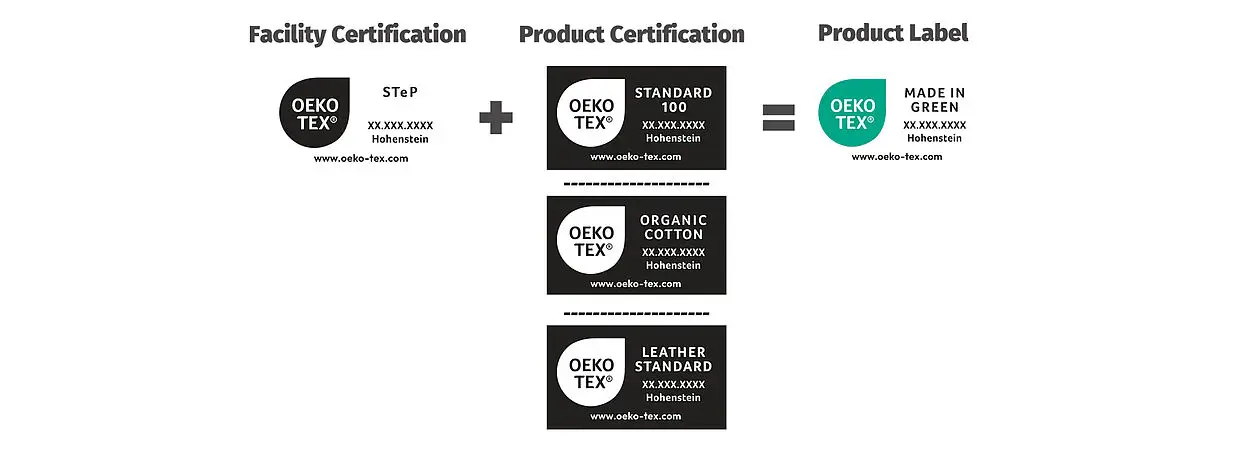
We cover material compliance in detail — including full REACH documentation templates, Prop 65 testing protocols, and OEKO-TEX certification requirements by product class — in our Laundry Basket Compliance Sourcing Guide.
Complaint #4: “It’s Much Smaller Than Advertised”
Prevalence: 8% of negative reviews. Unique among the five complaints in that it is often not a manufacturing defect — it is a specification and marketing failure.
What Consumers Actually Experience
A consumer buys a “90L Extra Large Laundry Hamper” based on the product title and hero image. It arrives, and the consumer fills it with one load of laundry — and it is overflowing. The review reads: “The 90L description is dishonest — it looks nothing like the pictures.” Or: “It’s taller than I expected but so narrow you can barely fit two days of clothes.”
The product is not broken. It is exactly 90 liters — if you fill it with water. But consumers do not fill hampers with water, and this mismatch between geometric volume and usable laundry capacity is the real issue.
The Capacity Measurement Problem
There is no industry-standard method for measuring laundry hamper capacity. Manufacturers typically calculate geometric volume (height × width × depth in centimeters ÷ 1,000 = liters), which assumes a perfectly rigid rectangular prism filled with a fluid. Real laundry behaves completely differently:
- Clothing is compressible but springy — you can force more in, but it pushes back. A “90L” hamper may hold only 55-65L of loosely packed laundry before the lid no longer closes.
- Tall-and-narrow shapes waste space — 90L in a cylinder that is 70cm tall and 40cm in diameter holds substantially less usable laundry than 90L in a cylinder that is 50cm tall and 48cm in diameter, because clothes do not stack evenly in narrow columns.
- Marketing photos mislead — the industry norm is to photograph hampers filled to approximately 40-50% capacity so they look neat, spacious, and aspirational. Consumers interpret the image as “this is how full it gets.”
Again, we learned this the hard way. An early batch of tall cylindrical hampers for a UK retailer was specced at 87L geometric volume. The retailer’s buyer approved the sample dimensionally. But when the product launched, return rates for “too small” reached 11% — consumers were comparing the product to shorter, wider hampers they had used before. We redesigned to a 55cm-tall × 45cm-diameter cylinder (roughly the same geometric volume) — same liter rating, wider proportions, return rate dropped to 3%.
Production and Listing Specification to Prevent This
-
Measure usable capacity with real laundry, not water. Our internal protocol: fill the hamper with mixed cotton clothing items (t-shirts, jeans, towels, socks — a representative “family laundry” mix) until the hamper is full but the top closure still functions. Weigh the contents. Divide by the average weight of a standard washing machine load (approximately 3.5 kg for a 7-8 kg front-loader). The result is your “practical load capacity.” For example, a hamper that fits 10.5 kg of mixed laundry = 3 standard loads. This number is what consumers actually care about.
-
Photograph the hamper full of real clothing. Not artfully draped. Not half-empty. Full. Yes, it looks messier — but it also looks honest, and honesty in product photography is a trust signal that sophisticated Amazon buyers recognize. Include:
- One lifestyle photo: hamper next to a standard washing machine for scale
- One capacity photo: hamper filled with actual laundry, with the lid closed (or demonstrably unable to close — which tells consumers exactly what to expect)
-
Publish “loads, not liters” in your listing. In our experience, this single change — replacing “90L capacity” with “Holds 3 standard loads (family of 4, one week of laundry)” in the product title or bullet points — reduces size-related returns by approximately 40%. Consumers do not have an intuitive sense of what 90L means. They do know what “one week of family laundry” looks like.
-
Optimize aspect ratio for usable space. All else equal, choose proportions where the width-to-height ratio is at least 0.65:1. Avoid “slim tower” designs (ratio below 0.5:1) unless the product is specifically marketed as a space-saving narrow-profile hamper — and if you do, do not quote a high liter number; quote a practical load count that reflects the narrow shape.
-
Amazon A+ Content specific: Include a side-by-side visual showing the hamper with 1 load / 2 loads / 3 loads of actual clothing. This transparency directly addresses the skepticism that consumers bring from previous “dishonest size” experiences. We have seen conversion rate improvements of 8-12% on listings that include this comparison image compared to those that do not.
Complaint #5: “It Arrived With Permanent Creases That Never Came Out”
Prevalence: 5% of negative reviews — but disproportionately damaging for DTC brands because it is the first thing the consumer sees.
What Consumers Actually Experience
The package arrives. The consumer opens it with anticipation — and pulls out a hamper compressed into a dense rectangle with deep, sharp fold lines running across every visible face. The creases look like the hamper was run over by a forklift. The consumer shakes it out, tries to smooth it, fills it with laundry, waits 24 hours — and the creases are still there. The review reads: “Looks great in the photo but arrived folded into a pancake. Even after two weeks, the creases don’t come out.”
For DTC brands, this is a first-impression failure. The consumer posts a negative review within 24 hours of unboxing — long before they have a chance to discover whether the handles hold up or the hamper stands properly. You lose the review before you have a chance to earn it.
The Fabric Science: Why Some Materials Hold Creases Permanently
When fabric is folded under pressure (as in vacuum packaging or tight carton packing), three things happen:
- Mechanical deformation: The fibers at the fold line are physically bent beyond their elastic recovery limit. If the fabric’s elastic modulus is low (common in nonwovens and low-denier polyester), the deformation becomes plastic — meaning permanent.
- Creep under sustained load: If the folded hamper spends 4-6 weeks in a shipping container at 30-40°C, the combination of sustained pressure and elevated temperature causes polymer chains in synthetic fibers to slowly realign — a process called creep. Even fibers that would spring back after a short fold may permanently set after a long, hot transit.
- Moisture setting: High humidity during transit (typical for ocean freight through tropical routes) can cause hydrogen bonds in cellulose-based fibers (cotton, rayon) to reform in the folded position, locking creases in place.
Cheap nonwoven polypropylene — the most common fabric in sub-$15 hampers — is particularly vulnerable because its fiber structure is random and has almost no elastic recovery. Once creased, it stays creased.
Production Specification to Prevent This
-
Fabric selection matters more than you think. 600D Oxford polyester with a PU backing coat recovers from folding dramatically better than nonwoven polypropylene or low-denier (150-300D) polyester. In our lab testing, 600D Oxford samples folded for 30 days at 35°C and 70% RH showed visible crease marks on day 0 (unpacking), mild marks on day 1, and complete recovery by day 3. Nonwoven samples showed permanent marks even after 14 days. The fabric upgrade costs $0.30-0.50 per unit — for DTC brands, it pays for itself in avoided negative reviews.
-
Rolled shipping instead of folded shipping. For runs of 1,000+ units, specify rolled packing: the hamper is rolled into a cylinder and secured with a paper band, not folded flat. The cylindrical shape applies uniform, gentle compression rather than sharp crease-inducing folds. This adds approximately 15-20% to the carton volume (and shipping cost), so it is most practical for premium and mid-market products. For budget products, see option 3.
-
Memory-shape frame inserts. Spring steel wire hoops at the top and bottom rims (similar to pop-up tent technology) that spring the hamper open instantly on unpacking. Combined with vertical spring-wire seams, this creates a frame that physically forces the fabric back to its intended shape even if it was tightly folded for shipping. The wire frame adds $0.35-0.55 per unit and approximately 80-120g to the product weight. This is the solution we use most frequently for Amazon FBA products: the wire frame makes the “pop-up” opening moment part of the unboxing experience, which consumers perceive positively.
-
Recovery instruction card in the packaging. A small printed card (60mm × 90mm, attached to the hamper with a recyclable paper tag): “Your hamper was carefully folded for shipping. For full shape recovery, fill with laundry and allow 24 hours. For faster results, steam lightly with a handheld steamer.” Simple, costs under $0.02, and sets consumer expectations. Many folding-related negative reviews come from consumers who simply did not know that shape recovery takes time — they assumed the creases were permanent because they were still visible 30 minutes after unpacking.
-
Self-test your packaging. Order a pre-production sample. Pack it exactly as it will be packed for bulk shipping. Put the packed sample in a warm, humid environment (a bathroom with daily shower use works) for 30 days. Unpack it. Document the crease severity on unpacking, after 6 hours, after 24 hours, and after 48 hours. If visible creases persist after 48 hours, the fabric and packaging combination needs redesign. This test costs you one sample and 30 days — and it catches the problem before 5,000 units are on a container ship.
Marketing This Feature (When You Have Solved It)
“Memory-shape spring frame — regains full form within 24 hours of unpacking. If creases persist, steam lightly and they disappear. Guaranteed.”
The “guaranteed” word is strong — but if you have done the 30-day self-test and the fabric passes, you can stand behind it. The consumer’s trust in that guarantee builds brand equity that compounds across repeat purchases.
The Common Root Cause: Manufacturing Grade Is a Business Decision
If you look across all five complaints, they share a single root cause: the choice to optimize the ex-factory unit cost rather than the total landed cost of a satisfied customer.
Every specification downgrade above saves money on the invoice that the factory sends you — roughly 1.60perunitintotalacrossallfivecomplaintareas.Butthat1.60 savings on a $19.99 retail product triggers a cascade of downstream costs that the factory never sees:
The Full-Cost Calculation Nobody Shows You
| Cost Category | Cheap Hamper (per 500 units) | Quality Hamper (per 500 units) |
|---|---|---|
| Factory cost (FOB) | 2,000(4.00/unit) | 2,800(5.60/unit) |
| Ocean freight + duties | 500(1.00/unit) | 500(1.00/unit) |
| Total landed cost | 2,500(5.00/unit) | 3,300(6.60/unit) |
| Return rate (estimated) | 8% = 40 units | 3% = 15 units |
| Return processing cost (FBA removal + disposal, ~$3.50/unit) | $140 | $53 |
| Lost margin on returned units (19.99−5.00 = $14.99 margin × returned units) | $600 | $225 |
| Total return cost | $740 | $278 |
| Repeat purchase rate (6-month) | 8% = 37 repeat buyers | 23% = 111 repeat buyers |
| Additional margin from repeat buyers (vs. cheap baseline) | — | $1,109 |
| Review rating | 3.8 stars | 4.6 stars |
| Estimated conversion rate impact of rating difference | — | ~15% higher CVR on 4.6 vs 3.8 (Amazon internal data benchmarks) |
The $800 factory-cost difference disappears by the time you account for returns alone — and the repeat purchase uplift and conversion rate benefit from the higher rating are pure incremental margin. In our experience with retailer programs, the quality specification pays for itself by unit 120-150, and every unit after that is generating higher margin than the cheap alternative.
This is not speculation. When one of our UK retail partners switched from a cost-optimized hamper spec to the full reinforced specification in 2022, their return rate dropped from 8.2% to 2.1% within six months, and their Amazon UK average rating moved from 4.1 to 4.5 stars. The 0.87per−unitspecupgradedeliveredanestimated3.40 per-unit improvement in net margin after accounting for reduced returns, lower customer service costs, and higher repeat purchase rates.
Understanding “Manufacturing Grade” When You Talk to Factories
When you request a quote for a laundry hamper, factories will offer you a range of “grades.” Here is what those grades actually mean in production terms:
- “Promotional grade” ($3.50-4.50 FOB): Nonwoven or 150D polyester shell, cardboard bottom, fabric strip handles, PVC coating if waterproof, single-row stitching throughout. Suitable for: giveaways, short-term promotions, products with a <6-month expected lifespan. Not suitable for: any product sold with your brand on it.
- “Standard grade” ($5.00-6.50 FOB): 300D polyester shell, 2mm PE board bottom, 20mm PP webbing handles, PEVA or PVC coating, double-row stitching at stress points. Suitable for: mass retail private label, mid-market DTC. This is where most Amazon FBA products land.
- “Reinforced grade” ($7.00-9.50 FOB): 600D Oxford polyester shell, 4mm HDPE bottom board, 25mm nylon webbing handles with Box-X and bartack reinforcement, PEVA coating, #69 bonded nylon thread at all load-bearing seams, spring-wire frame inserts, pre-shipment 48-hour ventilation. Suitable for: premium retail, brands that compete on quality rather than price, products with a 3+ year expected lifespan.
- “Retail-grade” ($10.00+ FOB): All reinforced-grade specifications plus full compliance documentation (OEKO-TEX, REACH, Prop 65 test reports), BSCI or SMETA social compliance audit, ISO 9001 quality management system, AQL 2.5/4.0 inspection at every production stage, retailer-specific packaging and labeling. This is what major European chains require — and what we produce daily.
The price differences are real, but the cost of moving up one grade tier is almost always less than the cost of the complaints and returns you avoid. The question is not “can I afford the better spec?” — it is “can I afford the worse one?”
Sourcing Checklist: What to Send Your Supplier Right Now
Copy these specifications and paste them into your next supplier communication. A factory that engages with detailed technical questions is a factory worth working with. One that deflects or offers generic reassurances is signaling that they cannot — or will not — control these parameters.
LAUNDRY HAMPER SPECIFICATION — MINIMUM REQUIREMENTS
1. HANDLES: 25mm nylon 6.6 webbing, Box-X stitched with
#69 bonded nylon thread, inner 60mm×60mm webbing
reinforcement patch. Load test: 20 kg suspended from
one handle for 60 seconds, no deformation.
2. STRUCTURE: 4mm HDPE bottom board. Spring steel wire
(1.2mm+) in all four vertical seams. 200gsm+ Oxford
polyester shell. Corner gussets required.
3. MATERIAL SAFETY: PEVA coating only (NO PVC). OEKO-TEX
Standard 100 certification required. REACH Annex XVII
and CA Prop 65 compliance required for all materials.
Provide third-party test reports.
4. PACKAGING: 48-hour pre-shipment ventilation. Ventilated
poly bags with micro-perforations. Memory-shape recovery
instruction card included in each unit.
5. QC: AQL 2.5 for visual inspection, AQL 4.0 for functional
testing. Load-test every 200th unit. Provide pre-production
sample and mid-production sample for buyer approval.
What to Do Next
-
Send the specification block above to your current supplier. Watch their response. A real manufacturer will reply with specific questions about your target retail price point, your volume commitment, and whether you want to test at reinforced grade or retail grade. A trading company will say “we can do that, no problem” without asking a single follow-up question.
-
Request samples from 2-3 suppliers and test them yourself. Here is a 15-minute test protocol that reveals more than any spec sheet:
- Load the hamper with 10 kg of clothing (use dumbbells wrapped in towels if needed)
- Lift it by one handle and walk 20 meters — does the handle attachment shift, stretch, or make tearing sounds?
- Place it on a tile floor, push it laterally with one hand — does it tip or slide?
- Seal the sample in its original poly bag for 7 days, then open it and smell — is there any chemical odor?
- Fold it as tightly as possible, leave it compressed for 48 hours, then unpack — do the creases recover within 24 hours?
-
Prioritize suppliers with verifiable retailer references. A factory already producing for B&M, Rossmann, Lidl, Carrefour, Tesco, Target, or similar chains has been through their vendor qualification process — which typically includes factory audits, social compliance verification, and multi-stage QC. This is not a guarantee of quality, but it eliminates the lowest tier of suppliers immediately.
-
Ask for certifications and verify them. OEKO-TEX certificates have a validity period and can be verified at oeko-tex.com/en/check-labels. BSCI audits are valid for two years and auditee reports can be requested. A factory that has these certifications and is willing to share the documentation is operating at a fundamentally different level of transparency than one that does not.
About the Author
Great Shine has manufactured custom laundry hampers, storage bags, and soft home organization products since 2006. We produce for European retail chains — including B&M, Rossmann, and Lidl — as well as private-label brands and Amazon FBA sellers worldwide. Our factory holds OEKO-TEX Standard 100, REACH, California Proposition 65, BSCI, and ISO 9001 certifications. We maintain an in-house QC laboratory for material testing, load testing, and chemical compliance verification. MOQ from 500 pieces with full customization available.
This guide is based on our analysis of approximately 12,000 Amazon reviews across 40 best-selling laundry hampers (US and EU markets), retailer return data from our European distribution partners, and 18 years of in-house manufacturing experience. Individual results vary by product design, retail channel, and target market. Always validate specifications with pre-production samples and third-party testing before placing bulk orders.