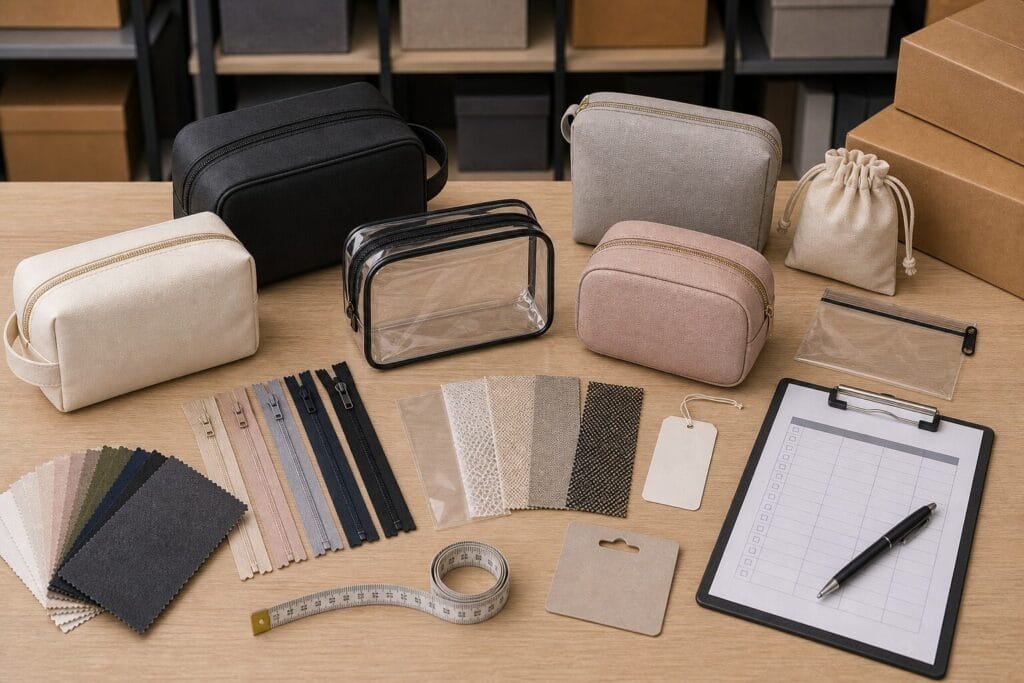
Choosing a custom makeup and toiletry bags manufacturer is not only a price comparison. Retail buyers, beauty brands, hotel groups, travel brands, importers, and private label teams need a supplier that can understand product structure, material selection, lining, pockets, clear panels, logo methods, packaging, sampling, and quality control before bulk production starts.
This guide explains how to evaluate a manufacturer before sending an RFQ. It focuses on practical sourcing questions that help buyers compare suppliers, avoid vague specifications, and prepare cleaner custom makeup bag or toiletry bag projects for retail, promotional, travel, beauty, and hospitality programs.
For related product directions, Great Shine’s pages for custom cosmetic bags for beauty brands and custom toiletry bags for hotels show how product function, branding, and packaging can change by buyer scenario.
Start With the Buyer Scenario
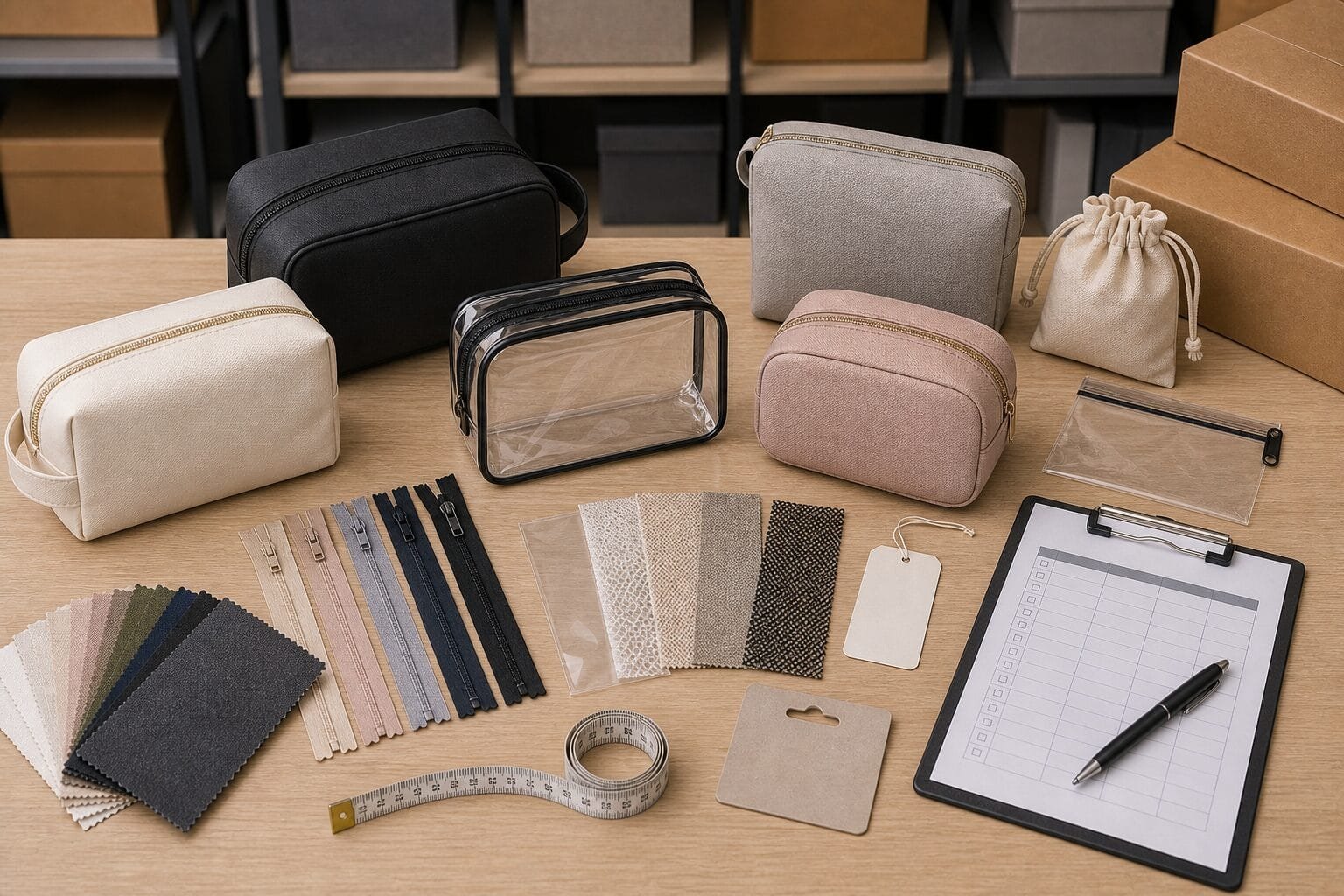
The first step is to define who will buy or use the product. A beauty brand sourcing a makeup pouch, a hotel group ordering amenity toiletry bags, a travel retailer developing hanging organizers, and a promotional buyer ordering simple pouches may all use similar sewing processes, but their requirements are not the same.
Beauty brands often care about appearance, color consistency, logo placement, lining feel, pouch shape, and retail packaging. Hotel and travel buyers may care about capacity, hanging hooks, transparent panels, washroom use, compact packing, and amenity set compatibility. Retail buyers may need barcode labels, SKU separation, display packaging, and repeated size consistency. Importers and wholesalers may need a supplier that can support several styles or colors in one program.
Explain the sales channel and use case before asking for a price. A manufacturer can recommend better materials, structures, and packaging when they understand whether the bag will be sold on a retail shelf, packed into a hotel room program, used as a travel organizer, or offered as a private label beauty accessory.
Confirm Category Experience
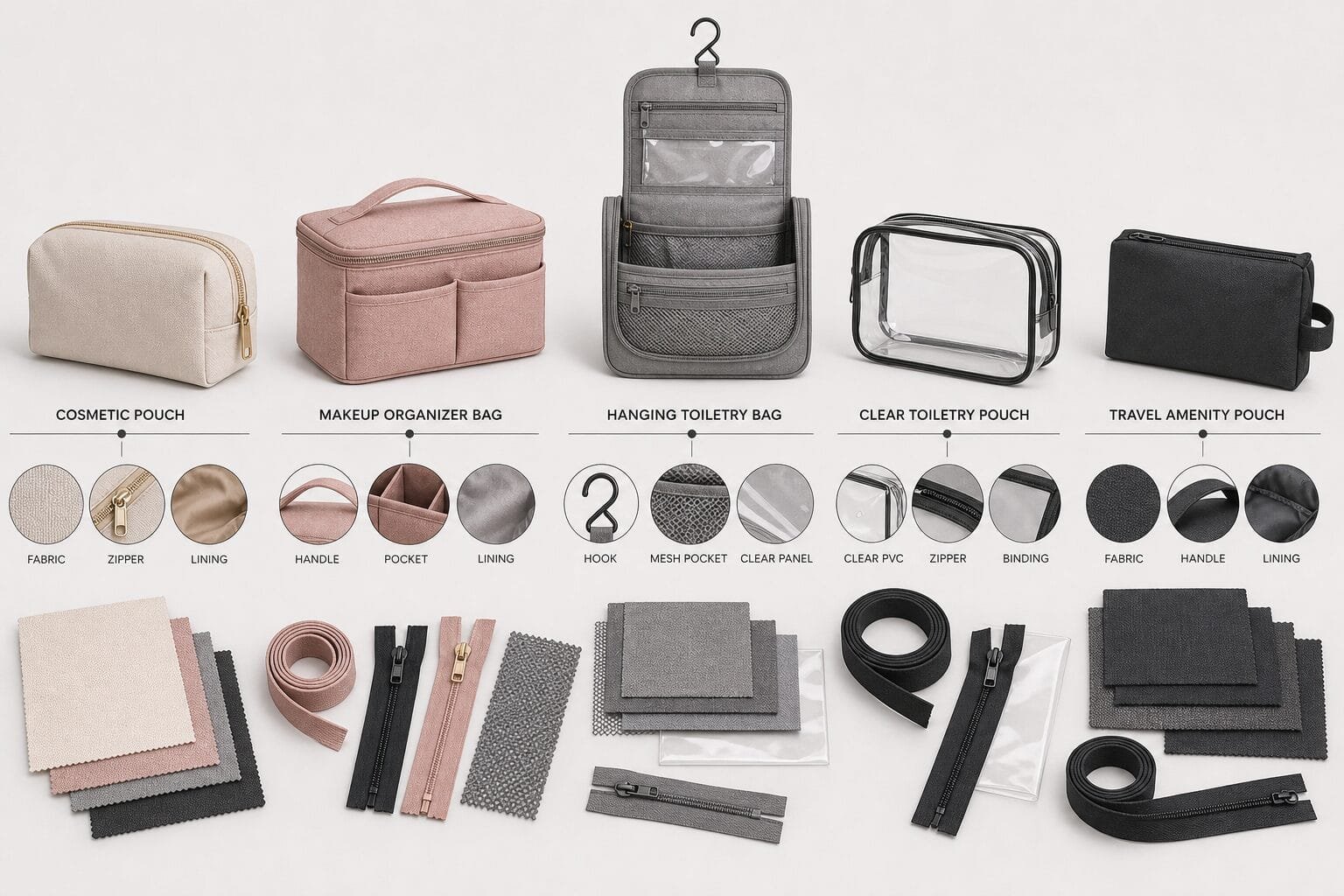
Makeup bags and toiletry bags overlap, but they are not identical. A custom makeup bag may need cosmetic brush pockets, a structured opening, inner lining, a flat base, or a wipe-clean surface. A toiletry bag may need larger compartments, a hanging hook, mesh panels, a clear window, bottle storage, or a fold-out design. A supplier should be able to discuss these details clearly.
Ask whether the manufacturer has made similar product structures before. Category experience affects pattern making, zipper route, pocket placement, lining construction, handle design, folded packing, and inspection points.
Useful questions include:
- Which makeup bag and toiletry bag structures do you normally produce?
- Can you work from a reference sample, drawing, photo, or tech pack?
- Do you have existing ODM structures that can be reviewed?
- Which parts can be customized without changing the full pattern?
- Can you support related product sets, such as cosmetic pouches, brush bags, clear toiletry pouches, and hanging organizers?
For broader custom development, Great Shine’s custom bag manufacturer page is relevant because many soft bag categories follow similar steps: sample review, material selection, logo planning, packaging approval, and final QC.
Compare Product Structures Before Comparing Prices
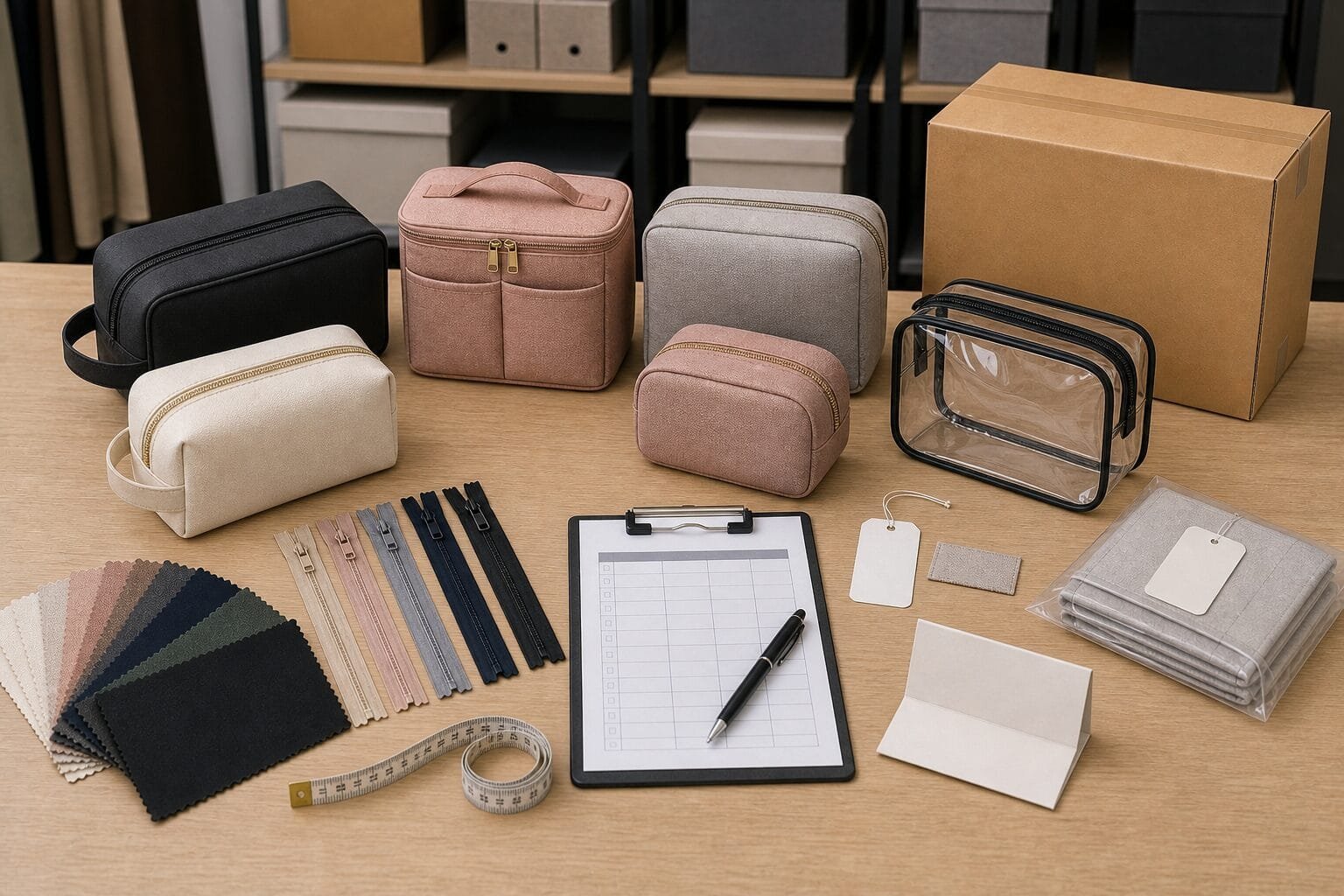
A price without structure details is not very useful. Buyers should define the product type first, then compare suppliers based on the same specification.
| Product Direction | Common Structure Points | Questions to Confirm |
|---|---|---|
| Simple makeup pouch | Fabric body, zipper, lining, logo area, optional inner pocket | Does the pouch need to stand upright or stay soft and foldable? |
| Cosmetic organizer bag | Compartments, brush pockets, elastic loops, dividers, lining | Which pocket layout and size tolerance are required? |
| Clear toiletry pouch | Transparent panel, zipper, binding, seam finish, handle | What clear material appearance and edge finish should be approved? |
| Hanging toiletry bag | Hook, fold-out panels, mesh pockets, bottle compartments | How should hanging support, pocket spacing, and folded size be checked? |
| Travel amenity pouch | Compact size, simple closure, insert card, set packaging | Will it be packed alone or with hotel/travel amenities? |
When suppliers quote different structures, the prices cannot be compared fairly. Send clear notes on size, compartment count, zipper direction, handle, hook, lining, pockets, and packaging so each supplier quotes the same project.
Review Material, Lining, and Component Options
Material choice affects product appearance, durability expectations, printing, folding, weight, packaging, and user feel. Buyers should ask suppliers to explain practical material options instead of choosing only by material name.
Common directions include polyester, nylon-style fabric, Oxford fabric, cotton or canvas-style fabric, mesh, clear PVC-style panels, TPU-style clear material, PEVA-style material, lining fabric, foam padding, binding tape, zippers, sliders, hooks, and handles. Exact choices should match the product use case and buyer requirement.
Do not claim a bag is waterproof, leakproof, food-safe, recycled, certified, or tested unless the exact material and order have valid proof. If a buyer or retailer requires documents, include that requirement in the RFQ before sampling.
Ask these material questions:
- Which fabric and lining options fit this product structure?
- Can the supplier provide swatches before sample development?
- Will the selected material affect logo method or color matching?
- Does the clear panel need a specific thickness, softness, or appearance?
- Are the zipper, slider, hook, and handle options suitable for the intended use?
Check OEM and ODM Support
Buyers should clarify whether the project is OEM, ODM, or a mix of both. OEM projects usually start from the buyer’s defined design, reference sample, drawing, or detailed specification. ODM projects usually start from supplier-developed structures that can be customized with material, color, logo, label, and packaging changes.
OEM is better when a brand needs a specific pocket layout, size, opening style, bottle compartment, hanging function, brush section, or packaging format. ODM is useful when a buyer wants to review existing supplier options and move faster into sampling.
Ask the manufacturer:
- Can you develop from our sample, drawing, or annotated reference photo?
- Do you have existing structures close to our target makeup or toiletry bag?
- Which changes require a new pattern?
- Which changes can be made through material, color, logo, or packaging updates?
- Can you quote both OEM and ODM routes for comparison?
For private label planning, Great Shine’s OEM/ODM private label bag manufacturing page explains how product development, logo methods, packaging, and sample approval fit together.
Evaluate Logo, Label, and Packaging Capability
Private label buyers often need more than one logo placement. They may need woven labels, sewn labels, rubber patches, zipper pull customization, printed panels, hangtags, insert cards, barcode labels, retail boxes, polybags, or carton marks. The right method depends on the material, product shape, and sales channel.
Ask which branding methods are practical for the selected surface. A soft pouch may support a sewn label or printed panel. A clear toiletry pouch may rely more on hangtags or packaging. A hanging toiletry organizer may need branding in a visible area that does not interfere with folding or pocket use.
Packaging should be discussed before final sample approval. A product can look correct as a loose sample but still fail retail requirements if the folded size, insert card, barcode position, carton packing, or SKU separation is not confirmed.
Confirm:
- Logo method, size, color, and placement
- Label, hangtag, insert card, and barcode requirements
- Individual packing, folded size, and carton packing method
- Retail shelf, e-commerce, hotel room, or promotional packaging needs
- Mixed color, mixed size, or multi-SKU carton rules
Ask MOQ, Sampling, and Quotation Questions Clearly
MOQ, sample cost, sample timeline, and production timeline should be confirmed per project. They can vary by material availability, color, logo method, packaging version, order quantity, and whether the project uses an existing structure or a new pattern. Do not assume one standard answer for every makeup or toiletry bag.
Useful questions include:
- Is MOQ calculated by style, size, color, logo, or packaging version?
- Does custom packaging have a separate requirement?
- Can different colors or sizes be combined in one program?
- What information is needed before sample development?
- Which sample details are final, and which are only for structure review?
- What changes usually require a new sample?
- What must be approved before bulk production starts?
A clear sample plan may include a structure sample, material or swatch confirmation, logo sample, packaging sample, and final pre-production sample. Each step should have a defined approval purpose.
Build a QC Checklist Before Bulk Production
Quality control should match the actual product structure. A simple makeup pouch does not need the same checks as a hanging toiletry organizer or clear travel pouch. Define inspection points before production instead of relying on a vague “good quality” requirement.
Common QC points include:
- Overall dimensions, pocket size, folded size, and capacity direction
- Fabric color, surface appearance, lining, mesh, and clear panel condition
- Stitching, seam alignment, binding, loose threads, and edge finish
- Zipper, slider, puller, hook, handle, and closure function
- Pocket placement, divider fit, brush loop spacing, and bottle compartment layout
- Logo size, position, color, label placement, hangtag, and insert card
- Packaging format, barcode label, carton mark, SKU separation, and carton quantity
If your company has inspection standards, retailer packaging rules, or destination-market document requirements, share them early. The supplier cannot safely assume which checks or documents your buyer will require.
RFQ Checklist for Buyers
Use this checklist before sending an inquiry to a custom makeup and toiletry bags manufacturer:
| RFQ Field | What to Send | Why It Matters |
|---|---|---|
| Product type | Makeup pouch, cosmetic organizer, clear toiletry pouch, hanging toiletry bag, travel amenity pouch, or set | Helps the supplier judge structure and pattern work |
| Use scenario | Beauty retail, hotel, travel, e-commerce, promotional, wholesale, or private label | Affects material, packaging, and inspection priorities |
| Size and structure | Dimensions, pocket count, zipper route, handle, hook, mesh, clear panel, or compartments | Drives sampling and quotation accuracy |
| Material direction | Fabric, lining, mesh, clear material, padding, binding, zipper, or open to suggestion | Controls appearance, cost, and production route |
| Branding | Logo artwork, label type, color, size, and position | Prevents wrong logo method or placement |
| Packaging | Polybag, hangtag, insert card, retail box, barcode, carton marks, and SKU split | Impacts retail readiness and shipment planning |
| Quantity | Estimated order quantity and size/color breakdown | Helps supplier discuss MOQ and pricing logic |
| QC requirements | Measurement, function, packaging, inspection, and market document requirements | Keeps sample approval aligned with bulk production |
Warning Signs When Comparing Manufacturers
Be careful if a supplier quotes immediately without asking about size, material, structure, logo, packaging, or quantity. A fast quote may be based on assumptions that change later. Also be careful with vague material descriptions, unsupported certification claims, unclear MOQ logic, weak sample communication, or pressure to start bulk production before artwork and packaging are approved.
A useful supplier should ask questions, explain tradeoffs, and document the approved specification. For example, they should be able to explain which changes need a new pattern, which materials fit the intended use, and which packaging choices affect folded size or carton planning.
When to Request a Quote from Great Shine
Request a quote when you have a product direction, reference photos, target dimensions, material preference, logo requirement, packaging idea, and estimated quantity. If some details are still open, explain the sales channel and target market so the supplier can recommend practical options.
Great Shine can review custom makeup bags and toiletry bags together with related soft storage products, including cosmetic pouches, travel organizers, clear toiletry pouches, amenity bags, packing cubes, and fabric storage items. Send your requirements through the contact page with reference images, size notes, material direction, packaging needs, and target market.
FAQ
What should buyers ask a custom makeup and toiletry bags manufacturer first?
Ask about category experience, product structures, material options, custom size support, logo methods, packaging formats, sampling steps, MOQ logic, and QC checkpoints.
What information should be included in a makeup or toiletry bag RFQ?
Include product type, target dimensions, material direction, pocket and compartment needs, logo artwork, packaging style, estimated quantity, target market, and inspection requirements.
Can one manufacturer make both makeup bags and toiletry bags?
Often yes, if the supplier has experience with soft bag construction, lining, zipper, pocket, clear panels, hanging hooks, labels, packaging, and related travel or beauty storage products.
How do buyers compare OEM and ODM options?
Use OEM when the buyer has a defined design, drawing, or reference sample. Use ODM when the buyer wants to start from supplier-developed structures and customize material, color, logo, and packaging.
What QC checks matter for custom makeup and toiletry bags?
Important checks include dimensions, fabric appearance, stitching, lining, zipper function, pocket placement, handle or hook details, logo placement, packaging accuracy, and carton marking.
Request a Quote
If you are evaluating a custom makeup and toiletry bags manufacturer for a retail, beauty, travel, hotel, promotional, or private label program, send Great Shine your product type, reference photos, target size, material direction, logo and packaging needs, estimated quantity, and destination market through the contact page. A clear RFQ makes supplier feedback faster and more useful.