Hey there, I’m Grace Ji. If you’ve been in the storage and organization space for a while, you’ve probably watched shoe storage evolve from a handful of clunky plastic racks into a whole category of niche products, each built for a different space, audience, and price point.
I’ve been in this industry for 16 years. I started as a fabric sourcing assistant, showing up on factory floors at 6 a.m. to audit production lines, and worked my way up to leading full-cycle development for over 100 new storage items — everything from fabric selection and structural optimization to final prototype testing. Today, I run my own manufacturing brand, GreatShine, with an in-house R&D and production team focused entirely on high-quality custom storage solutions.
Over the years, I’ve partnered with dozens of global brands on their shoe storage lines. I’ve seen quiet bestsellers that stayed top-rated for years, and I’ve seen trendy flops that crashed and burned over tiny, avoidable manufacturing mistakes most trading companies will never tell you about.
Today I’m breaking down 7 of the most in-demand shoe storage products right now: where the real market demand is coming from, who each one actually serves, and the factory-level pitfalls every sourcer and product developer needs to watch for. No marketing fluff — just what I’ve learned from 16 years making these products firsthand.
1. Shoe Rack for Closet
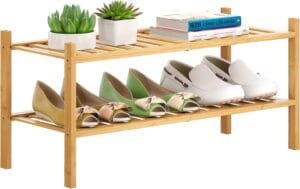
This is the workhorse of the category — a long-term staple that never really goes out of style.
Market & trend: Closet organization is a steady, evergreen demand, especially in North America and Europe where built-in closet systems are common. In recent years, we’ve seen a big shift away from fixed-size racks toward adjustable, stackable, and multi-tier models that fit custom closet layouts. Mid-range tiered metal racks with fabric shelves consistently perform well for both online retailers and big-box stores.
What to watch for on the factory side:
The number one shortcut here is tube thickness. A lot of low-cost suppliers use steel tubing thinner than 0.3mm — it looks fine in photos, but it bends and warps after a few months of holding heavy shoes. We learned this the hard way back in 2015: a US client pushed hard for a lower price, we cut the wall thickness to match, and over 10% of the shipment arrived deformed at the port. We ended up remaking the whole order at our cost.
Also check the shelf fabric weight and edge finishing. Anything below 120g non-woven fabric will fray and sag within a year. For assembled racks, count the hardware — cheap factories will skimp on screws and caps to save pennies, leading to high return rates.
2. Over the Door Shoe Organizer
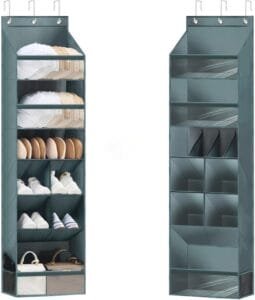
If there’s a “renter’s favorite” in this category, this is it.
Market & trend: Demand is extremely stable in apartment-dense markets — the US, UK, and Germany especially — where people can’t drill holes in walls. What used to be a shoe-only product has expanded fast: brands now add mixed-size pockets for accessories, cleaning supplies, even skincare. Multi-functional door organizers have grown roughly 25% year over year for us since 2022.
What to watch for on the factory side:
The hooks make or break this product. Literally.
Plastic hooks get brittle in cold weather and snap — I’ve seen entire shipments returned because hooks broke during winter shipping. Thin metal hooks scratch door paint. The sweet spot is rubber-coated metal hooks, sized to fit standard 1 3/8 inch interior doors. So many factories use one-size hooks that are either too narrow or too wide, and clients don’t catch it until customers complain they can’t hang them.
Also double-stitch the pocket tops. Fill a pocket with a pair of heavy boots, and weak stitching will tear clean through within months. We upgraded all our standard designs to reinforced bar tacks a few years ago, and our client return rates on this item dropped by 80%.
3. Under Bed Shoe Storage
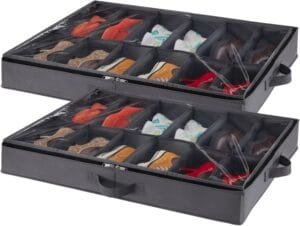
This is the “forgotten space” hero — and a quiet seasonal winner.
Market & trend: Driven by small apartments and seasonal shoe rotation, this product spikes every fall in North America, when people stow away summer sandals and pull out boots. Models with clear viewing windows, sturdy side handles, and collapsible frames are the fastest-growing designs. European buyers also prefer slim profiles to fit low platform bed frames.
What to watch for on the factory side:
Fabric weight and internal support are everything here.
A lot of trading companies will quote you a rock-bottom price using 80g non-woven fabric. It feels thin and flimsy right out of the bag, and after being dragged across a floor a few times, it tears. For a product that sits under a bed and gets pulled in and out, 150g non-woven is our baseline recommendation.
The internal cardboard supports matter too. Cheap uncoated cardboard absorbs moisture and softens over time, so the whole thing collapses after a few months. Look for water-resistant coated cardboard inserts. And always confirm the height — if it’s taller than 15cm, it won’t fit under most standard platform beds. We had a client miss this once, and they couldn’t sell 30% of their stock.
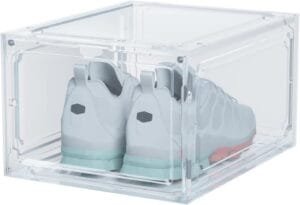
4. Shoe Storage Box
The classic, no-frills staple — and still one of our highest-volume items.
Market & trend: Basic stackable shoe boxes are an evergreen product across every market. The big shift lately is material: all-plastic PP boxes are still popular, but kraft paper eco-friendly models are growing fast in Europe and parts of the US, driven by sustainability trends. Clear-lid mixed-material boxes also keep gaining ground over fully opaque ones.
What to watch for on the factory side:
Two mistakes happen here all the time.
First, thickness. Thin PP plastic below 0.3mm cracks when you stack more than 3 layers. Suppliers will advertise “10-layer stackable” on the listing, but the product can’t actually hold that weight. Always ask for load test data.
Second, sizing. So many sourcers order a “universal” box without testing men’s US size 12+ shoes. Regular 33cm-long boxes won’t fit large sizes, and you’ll end up with a flood of 1-star reviews saying “doesn’t fit my shoes.” We always advise clients to offer two SKUs: standard and large. It adds a tiny bit of inventory complexity, but cuts down on returns dramatically.
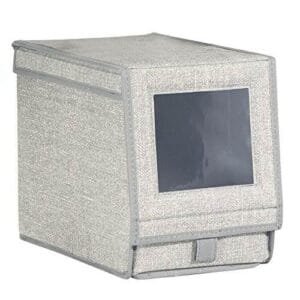
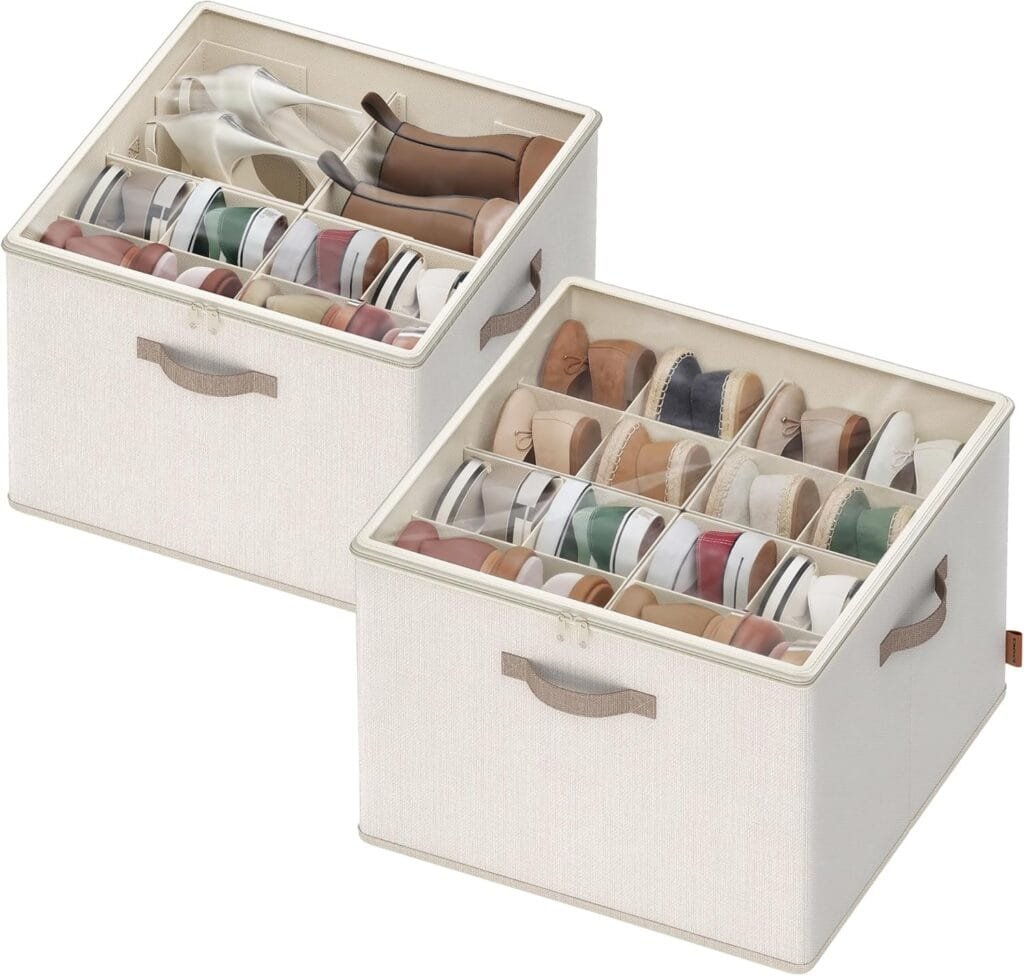
5. Drop Front Shoe Box
If there’s a viral star of shoe storage right now, this is it.
Market & trend: Driven by TikTok and home décor content, front-opening shoe boxes exploded around 2022 and haven’t slowed down. The appeal is obvious: you can see your shoes, grab them without unstacking the whole pile, and they look like a display piece. Younger consumers and sneaker collectors love them, and the premium price point means better margins for brands. We’ve tripled our production capacity for this item in the last two years.
What to watch for on the factory side:
Everyone copies the look — very few get the mechanics right.
The hinge is the weakest point. Thin plastic hinges snap after a few hundred opens. We tested more than a dozen hinge designs before landing on a reinforced structure that passes 10,000+ open/close tests. The magnetic closure is another detail: too weak and the door won’t stay shut; too strong and it’s hard to open with one hand.
Also, pay for PET transparent panels, not cheap PVC. PVC yellows over time, especially in sunlight, and it fails EU REACH regulations. I know a brand that had an entire container seized at customs because they used non-compliant PVC to save 20 cents per unit. It’s never worth it.
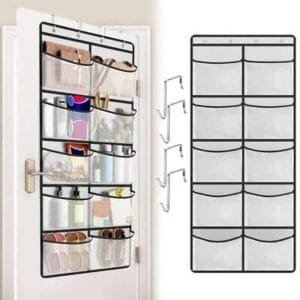
6. Clear Hanging Shoe Organizer
This is the closet vertical-space solution, and a favorite for small reach-in closets.
Market & trend: Steady, consistent demand, especially among female consumers and people with small bedroom closets. It’s also a very common add-on item for closet organization bundles — a lot of our clients will pair this with hanging closet organizers and shelf dividers as a set.
What to watch for on the factory side:
Material safety is non-negotiable here.
Clear PVC pockets are cheap, but they have that strong chemical smell when you open the package, and they leach plasticizers. For any market with strict product safety rules (US CPSIA, EU REACH), you need to specify phthalate-free PEVA or PET. We had a new client come to us a few years ago after their previous supplier’s PVC organizers failed lab testing — they lost an entire season of sales.
Also check the pocket edge finishing. Sharp, untrimmed clear plastic scratches easily and can even cut fingers. Heat-sealed, rounded edges are the mark of a quality factory.
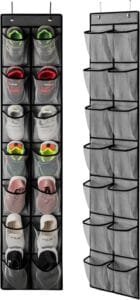
7. Mesh Shoe Organizer
The breathable, casual option — perfect for sneakers and everyday shoes.
Market & trend: Demand has been climbing steadily, driven by athletic and casual shoe culture. People don’t want to trap stinky sneakers in a sealed plastic box. Mesh designs work for entryways, closets, even gym spaces. Washable, foldable mesh models are gaining traction as consumers look for easier-to-clean storage.
What to watch for on the factory side:
This looks like a simple product, but the small details separate good from bad.
First, mesh density. Too loose, and shoe toes poke through and deform the pockets. We use a tight 120g mesh for all our standard models — it’s breathable but supportive.
Second, edge binding. Mesh frays like crazy if it’s not properly bound. Early in my career, we had a whole production run with terrible fraying because we skipped a double-stitch binding step. We had to rework every single unit. Never skip binding on mesh products. And add a rigid base insert if it’s a freestanding model — otherwise it slumps over as soon as you put shoes in it.
Wrapping Up
After 16 years in this business, my number one rule is: there’s no “best” shoe storage product — only the right one for your audience.
- If you’re serving budget, mass-market shoppers: stick with proven basics like closet shoe racks and standard shoe boxes. They never go out of style.
- If you’re targeting young, social-media-savvy buyers: drop front shoe boxes and clear hanging organizers are still on a strong upward trend.
- If your market is renters and small apartments: over the door and under bed storage will always have a loyal audience.
- If you want a niche, functional differentiator: breathable mesh organizers stand out in a crowded market.
And one last piece of factory advice: don’t chase the lowest quote. The difference between a $1.80 unit and a $2.00 unit is usually tube thickness, fabric weight, or hinge quality — the exact things that cause returns, bad reviews, and lost customers. A slightly higher cost at the factory almost always saves you money in the long run.
If you’ve got questions about custom shoe storage development, material selection, or you’ve got a manufacturing horror story of your own, drop it in the comments. I love talking shop with fellow people in this industry.
Thanks for reading,
Grace
Founder, GreatShine