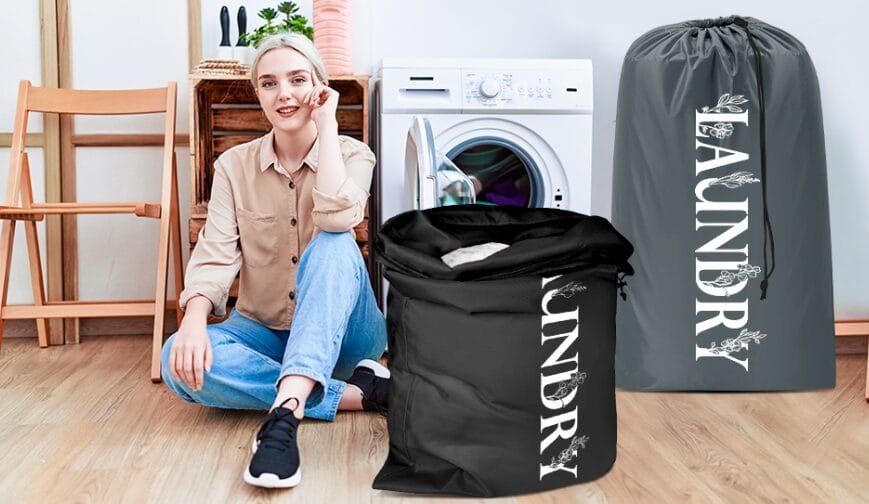
Packing cubes and travel organizers often appear in the same retail category, but they solve different buyer problems. Packing cubes mainly help shoppers sort clothing inside luggage. Travel organizers cover a broader group of products, including toiletry bags, cosmetic organizers, shoe bags, tech pouches, laundry bags, document pouches, cable bags, and hanging organizers. For retail buyers, the right sourcing decision depends on product positioning, shelf strategy, target price, packaging, and reorder potential.
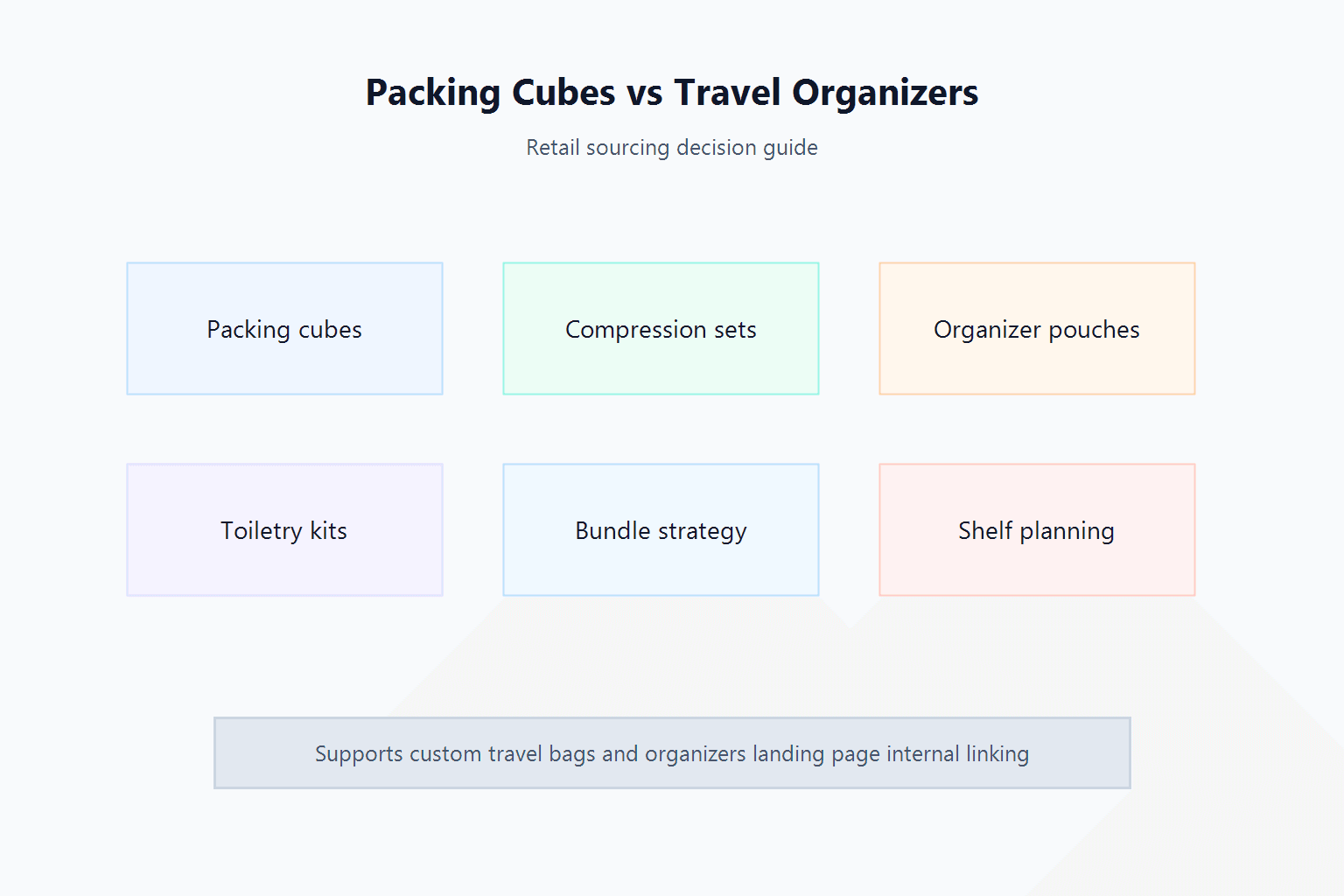
If you are planning a private label travel accessories line, use this comparison as a starting point and connect your product planning to Great Shine’s custom travel bags and organizers manufacturer page. That landing page supports the wider category this content cluster is designed to strengthen.
How Packing Cubes Fit Retail Programs
Packing cubes are usually sold as sets. Buyers often source them in multiple sizes, color families, fabric weights, and packaging formats. A basic set may include small, medium, and large cubes. A more complete set may add a shoe pouch, laundry pouch, compression cube, or toiletry bag.
Packing cubes work well when the retail message is simple: organize luggage, separate clothing, and make packing easier. They are easy to understand in ecommerce images and can be bundled for higher perceived value. They also support color variation, mesh panel options, zipper upgrades, and private label packaging.
Key sourcing details include fabric weight, mesh quality, zipper movement, seam strength, handle placement, size grading, set configuration, folding method, and carton packing. If compression is part of the product promise, the structure and zipper path need more careful sampling.
How Travel Organizers Fit Retail Programs
Travel organizers cover a wider product range. This can include toiletry bags, cosmetic pouches, tech organizers, shoe bags, garment pouches, laundry bags, jewelry organizers, passport pouches, and hanging travel kits. These products give retail buyers more ways to build a collection around different use cases.
The main advantage is variety. A retailer can build a travel wall, ecommerce bundle, or seasonal promotion with products that serve different packing moments. The tradeoff is complexity. Each organizer type may require different materials, linings, pocket layouts, zippers, labels, and packaging.
For private label buyers, travel organizers may offer stronger differentiation than basic packing cubes. A toiletry organizer can have compartments, a hook, lining, and more visible branding. A tech pouch can use elastic loops, mesh pockets, and structured panels. A shoe bag can focus on ventilation and easy packing.
Comparison Table for Retail Buyers
| Sourcing Question | Packing Cubes | Travel Organizers |
|---|---|---|
| Main buyer use | Sorting clothing inside luggage | Organizing specific travel items |
| Typical format | Multi-size sets | Individual SKUs or coordinated bundles |
| Development complexity | Lower to medium | Medium to higher depending on structure |
| Branding area | Front panel, zipper pull, label, packaging | Product panel, label, patch, zipper pull, insert card |
| Packaging options | Polybag, belly band, insert card, box | Polybag, hangtag, card, box, retail display packaging |
| Best retail fit | Luggage, travel basics, ecommerce sets | Travel lifestyle, beauty, tech, hotel, gift, and private label lines |
This table is not a fixed rule. It helps buyers decide which product type should lead the program and which items can become add-ons.
When to Source Packing Cubes First
Packing cubes are a practical starting point when the buyer wants a clear, easy-to-explain travel organization product. They are useful for ecommerce because product images can quickly show sizes, colors, and set contents. They also work for promotional programs and private label launches where a simple SKU structure is preferred.
Source packing cubes first if the target buyer is luggage, travel, or general retail; the SKU should be set-based; packaging needs to explain the product quickly; or you want color and size variations without changing the core structure too much.
When to Source Travel Organizers First
Travel organizers may be a stronger first choice when the buyer wants more product differentiation. A toiletry bag, tech organizer, or hanging pouch can be designed around a specific user scenario. These products may also support stronger private label storytelling because the structure is more visible and functional.
Source travel organizers first if your retail channel needs a more distinctive product, if you want to build a collection around beauty, tech, business travel, family travel, or hotel use, or if your buyer expects pockets, compartments, lining, hooks, or special packaging.
Bundle Strategy
Many retail programs work best when packing cubes and travel organizers are sourced together. A basic travel set may include packing cubes, a shoe bag, a laundry pouch, and a toiletry organizer. A premium set may add tech storage, cosmetic pouches, or garment packing accessories.
Bundling requires specification control. Make sure color, zipper, label, fabric direction, and packaging design are consistent across the set. Ask the manufacturer to quote each item separately and as a bundle so landed cost can be evaluated clearly.
RFQ Details to Prepare
Before requesting a quote, prepare the product list, target sizes, material direction, color plan, logo method, packaging route, estimated quantity, and target market. If you are unsure whether packing cubes or organizers should lead the program, ask the supplier to recommend a route based on your sales channel.
Great Shine can support related travel storage products through its custom travel bags and organizers manufacturer page. Use that page as the internal product reference when planning a collection that includes both packing cubes and travel organizers.
FAQ
Are packing cubes considered travel organizers?
Yes. Packing cubes are part of the broader travel organizer category, but they are more specific. They focus mainly on clothing and luggage organization.
Which product is easier for a first private label launch?
Packing cubes are often easier because they can use a set structure and clear size grading. Travel organizers may require more design decisions but can offer stronger differentiation.
Should retail buyers source both together?
Often yes. A coordinated travel organization collection can include packing cubes plus toiletry, shoe, laundry, cosmetic, or tech organizers.