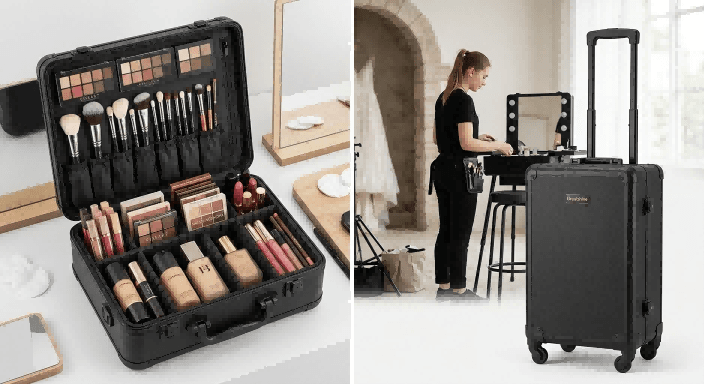
Choosing a custom travel bag manufacturer for a private label program is not only a price comparison. A useful supplier should help you turn a retail idea into a repeatable product line with the right material, structure, logo method, packaging, sample process, and quality-control checkpoints. For buyers building a travel accessories collection, the decision also affects how consistently future SKUs can be developed.
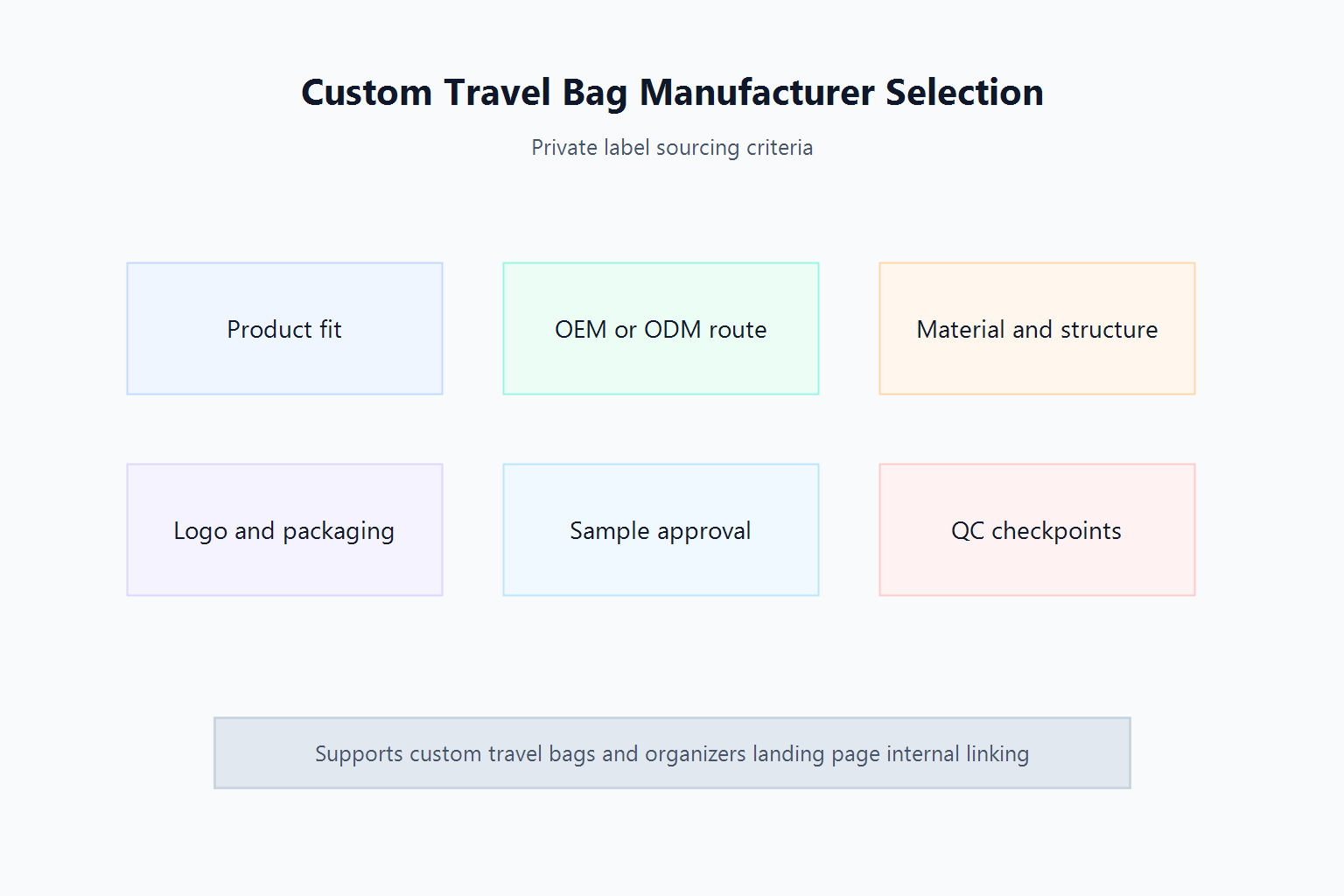
If your program includes packing cubes, toiletry bags, laundry pouches, cosmetic organizers, shoe bags, tech pouches, or foldable travel storage products, start with a manufacturer that understands the wider category. Great Shine’s custom travel bags and organizers manufacturer page is the main landing page for this product group and should be the first internal reference when planning a private label travel bag project.
Start With Product Fit
A factory that can sew a simple pouch is not automatically the right partner for a private label travel line. Travel products have different use cases, packing methods, materials, and retail expectations. A packing cube set may need mesh panels and size grading. A toiletry organizer may need lining, pockets, and hanging details. A shoe bag may need ventilation, easy cleaning, or compact folding. A laundry bag may need lightweight fabric and clear packaging.
Before choosing a supplier, define the product family. Are you launching one hero SKU or a complete organizer collection? Will products be sold online, in retail stores, as promotional travel gifts, or as part of a luggage or apparel bundle? A manufacturer with related category experience can help you avoid treating every item as a separate one-off sample.
Compare OEM and ODM Support
Private label buyers usually work through either OEM or ODM routes. OEM is suitable when you already have a tech pack, dimensions, materials, artwork, and packaging requirements. ODM is useful when you want to adapt an existing supplier-developed structure with your own color, logo, packaging, or size adjustments.
Ask the manufacturer which route fits your current stage. If you only have a reference image and target market, an ODM starting point may reduce development time. If you have a detailed specification and buyer standard, OEM gives you more control. In both cases, confirm what can be customized and what must be tested or approved during sampling.
Check Material and Structure Knowledge
Travel bags and organizers often use polyester, nylon, Oxford fabric, mesh, PEVA, clear panels, lining materials, zippers, webbing, elastic, labels, and carton packaging. The supplier should be able to explain tradeoffs without making unsupported claims. A lightweight packing cube may need a different fabric direction from a structured toiletry bag or a clear cosmetic organizer.
Useful questions include:
- Which material options fit the target price band and retail positioning?
- Which fabric weight or lining direction is practical for this product type?
- Which zipper, mesh, handle, pocket, or binding details affect cost and usability?
- Which logo method is suitable for the selected material?
- Which packaging format fits ecommerce, retail shelf display, or wholesale distribution?
Avoid relying only on material names. Always request swatches or samples when hand feel, transparency, stiffness, or color matching matters.
Review Branding and Packaging Capability
Private label programs usually need more than a printed logo. Buyers may need woven labels, heat transfer logos, screen printing, zipper pull details, hangtags, insert cards, barcode labels, polybags, belly bands, carton marks, or retail-ready packaging. The manufacturer should help place the logo where it remains visible after folding, packing, and daily use.
Packaging should be quoted clearly. A low product price can become less useful if packaging, labels, cartons, or barcode requirements were not included. For multi-SKU travel organizer lines, keep packaging rules consistent across products. This helps retail presentation and reduces artwork approval mistakes.
Confirm Sampling and QC Process
A private label travel bag order should not move to bulk production until the sample confirms the key commercial details. During sampling, check finished size, fabric, color, zipper movement, mesh quality, logo placement, stitch consistency, pocket layout, folding behavior, packaging, labels, and carton assumptions.
For QC, ask which checkpoints are used during incoming material inspection, in-process production, final inspection, and packing. If a buyer or retailer requires specific documentation, testing, or labeling, share the requirement before quotation instead of adding it after sample approval.
Supplier Comparison Checklist
| Evaluation Area | What to Confirm | Why It Matters |
|---|---|---|
| Category fit | Similar travel bags, packing cubes, organizers, or pouches | Reduces development confusion across related SKUs |
| OEM/ODM route | Tech pack production or base sample adaptation | Aligns development speed and control level |
| Material support | Fabric, mesh, lining, zipper, webbing, and clear panel options | Affects cost, feel, durability expectations, and branding |
| Private label details | Logo, label, packaging, barcode, and carton rules | Prevents quote gaps and retail approval delays |
| Sampling process | What the sample confirms and what remains pending | Avoids approving incomplete assumptions |
| QC plan | Inspection points for size, stitching, logo, function, and packing | Helps reduce bulk order disputes |
When Great Shine Is a Good Fit
Great Shine is relevant when your private label project covers custom travel bags, packing cubes, organizers, toiletry bags, shoe bags, laundry bags, cosmetic bags, or related storage products. The strongest first inquiry includes product type, target size, material direction, logo artwork, packaging plan, estimated quantity, target market, and any required inspection or labeling standard.
For a focused project brief, review the custom travel bags and organizers manufacturer page and send your RFQ with the product family you want to build, not only a single photo. A clearer brief gives the manufacturer a better chance to quote the real product and recommend a practical development route.
FAQ
What should I ask a custom travel bag manufacturer first?
Start with product type, target market, size, material, logo method, packaging, estimated quantity, and sample expectations. Then ask which details affect MOQ, sample cost, production planning, and QC.
Is OEM or ODM better for private label travel bags?
OEM is better when you have a clear specification. ODM can be better when you want to adapt an existing supplier base sample. Many private label programs use both routes across different SKUs.
Can one supplier support a full travel organizer line?
Yes, if the supplier has related category experience and can manage materials, branding, packaging, sampling, and QC across multiple product types. Confirm capabilities before assuming every SKU can be produced the same way.