More Than Just a Rack on Wheels
A mobile garment rack can be a lifesaver when your closet overflows, you need a drying solution, or you’re constantly on the move. But not all rolling racks are created equal. If you’ve ever had one tip over, jam its wheels, or bend under the weight of winter coats, you know the struggle. This guide breaks down what truly matters when choosing a mobile clothes rack—so your storage solution rolls smoothly, stays stable, and fits your space.
1. Wheels: The Unsung Heroes
Wheel Size and Material
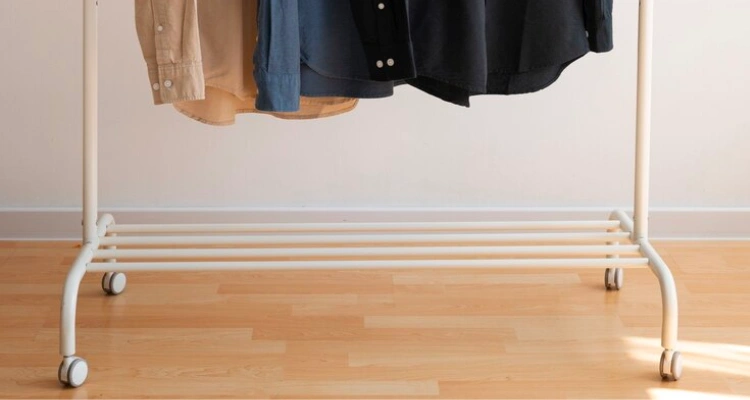
- Look for casters at least 2.5 inches in diameter
- Rubber or PU-coated wheels protect floors and reduce noise
- Plastic wheels are cheaper but prone to breakage and hard to maneuver
Locking Mechanism
- At least two wheels should lock to keep the rack stable
- Locking brakes prevent movement when loading, unloading, or parked on uneven surfaces
Tip: Swivel casters provide smoother movement, especially around corners.
2. Weight Capacity: Don’t Skimp on Strength
Frame Material
- Steel: Durable and can hold heavy items like winter coats or multiple outfits
- Aluminum: Lighter but may wobble under heavy loads
Joint Construction
- Avoid racks with thin plastic joints—they often fail under pressure
- Prefer welded or screw-fastened joints for strength and longevity
Load Limit
- Standard racks should support at least 50–100 lbs (23–45 kg)
- Heavy-duty models can hold 150 lbs+, suitable for boutique or commercial use
3. Width and Height: It’s Not One-Size-Fits-All
Width
- Under 36 inches: Best for small apartments or tight corners
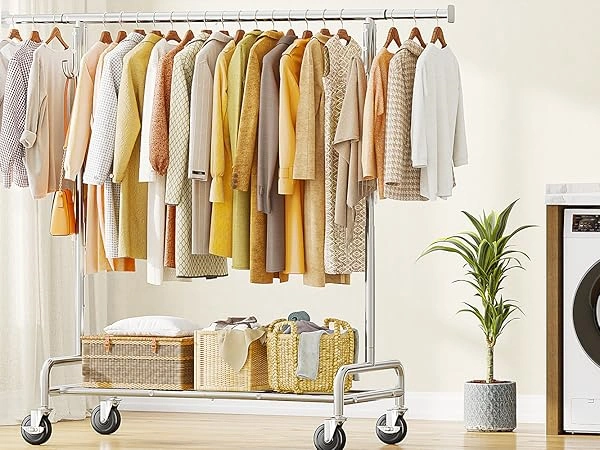
- 36–48 inches: Ideal for everyday use, accommodates 20–30 garments
- Over 48 inches: Best for family use, seasonal storage, or fashion display
Height Adjustability
- Telescoping poles help accommodate long coats, dresses, or gowns
- Lower settings are ideal for kids’ clothing or shirt-only storage
Tip: Always measure your intended space before purchase—including clearance for ceiling fans or sloped ceilings.
4. Foldability and Storage
- Foldable or collapsible racks are great for renters or those with limited storage
- Look for racks that fold flat without tools
- Detachable parts (wheels, crossbars) add convenience for moving or storing
5. Base Design and Balance
- T-shaped bases are more compact but less stable under heavy loads
- H-shaped or crossbar bases distribute weight evenly
- Look for models with reinforced base rods or foot stabilizers
Use Cases That Benefit Most
Small Apartments
- Use foldable, single-bar racks with lockable wheels
Laundry Rooms
- Dual-bar mobile racks with bottom shelves are perfect for air drying and sorting
Fashion Retail or Pop-Ups
- Heavy-duty chrome or matte black finish racks with wide rails make merchandising easier
Events or Photo Shoots
- Easy-to-assemble racks that pack flat but look sleek on camera
Common Mistakes to Avoid
- Buying the cheapest rack without checking weight specs
- Ignoring wheel quality—it directly affects ease of use
- Choosing a rack that’s too wide or too tall for your space
- Forgetting to lock the wheels—one nudge and it’s rolling away!
Final Thoughts: Smart Storage Rolls with You
A mobile garment rack should make your life easier—not add frustration. By focusing on wheels that work, frames that hold up, and dimensions that fit, you’ll avoid the typical pitfalls and enjoy a solution that keeps your clothes organized, your floor clear, and your routine running smoothly.