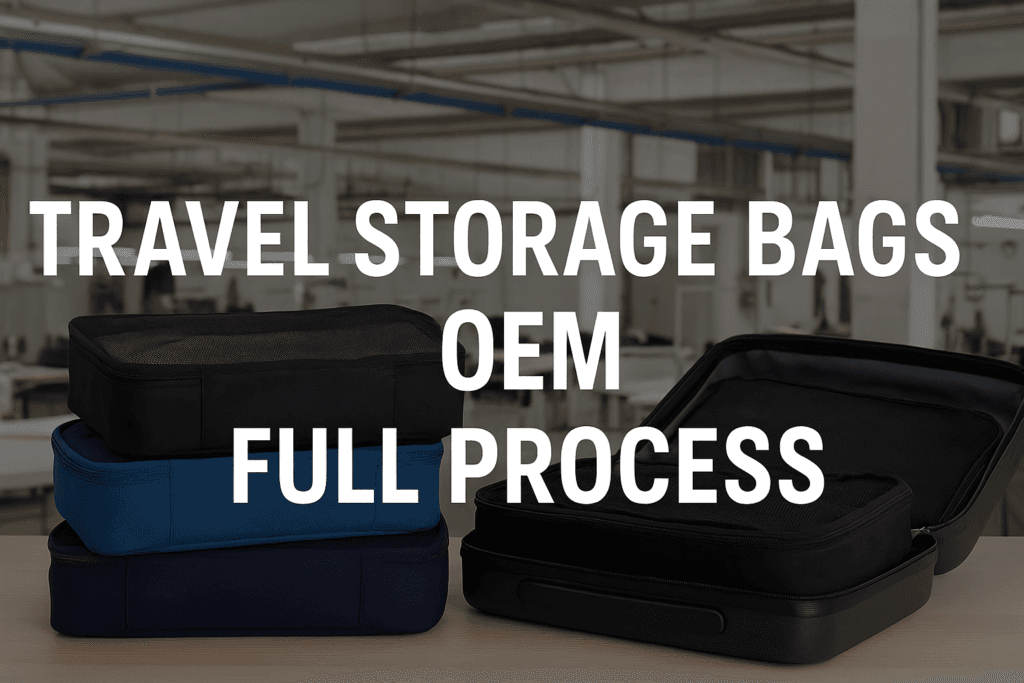
Getting into OEM production for travel storage bags? Great idea. Whether you’re launching a new brand or expanding your product range, understanding the full process helps you avoid delays, surprises, and extra costs.
Let’s break down how it usually works—from idea to delivery.
1. Starting With Your Idea
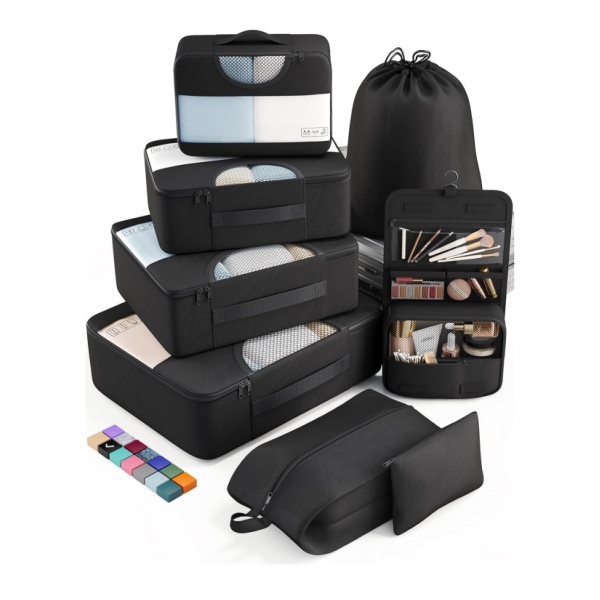
Every OEM project begins with a product concept. You might have a sketch, a reference image, or just a clear goal: a lightweight shoe bag, a hanging toiletry case, or a foldable travel cube.
This is where you communicate what you want the product to do, how it should look, and who it’s for. A reliable supplier will help fill in the gaps and confirm what’s actually doable in production.
2. Choosing the Right Materials
Next, it’s time to select materials. Options like polyester, nylon, RPET, and canvas are common in travel storage bags. The right choice depends on your budget, design goals, and durability expectations.
If you’re planning for wholesale or bulk sales, you’ll want something that balances cost-efficiency with solid build quality.
3. Sampling the Product
Once the concept and materials are clear, the supplier develops a sample. This is a physical prototype based on your design and dimensions.
This step is critical. It’s your chance to review stitching, zippers, compartments, branding placement—everything. Changes are much easier to make now than after mass production begins.

4. Final Quote and Order Confirmation
After the sample is approved, the factory gives you a formal quote. Pricing will depend on order quantity, material specs, printing needs, and packaging.
Most suppliers have a minimum order quantity (MOQ), especially for custom bags. Once you’re happy with the terms, you confirm the order and production gets scheduled.
5. Mass Production
Production usually takes 3 to 6 weeks, depending on order size and factory workload. The fabric is cut, printed (if needed), sewn, and assembled step by step.
A good supplier runs quality checks during each stage—not just at the end. This helps catch small issues before they become big problems.
6. Custom Branding and Packaging
Toward the end of production, branding elements like logo printing, woven labels, hangtags, or custom packaging are added.
This is where the product really starts to feel like *yours*. Whether you’re supplying online stores, retail chains, or promo clients, packaging plays a big role in how your product is received.
7. Inspection and Delivery
Before the bags leave the factory, there’s usually a final inspection—either in-house or done by a third party.
Shipping is arranged based on your preferred terms (FOB, CIF, etc.), and then it’s out the door and on its way to you.
OEM production for travel storage bags is a step-by-step process that works best when you’re clear about your goals and partnered with a manufacturer who knows the drill.
From that first idea to the final shipment, success depends on planning, communication, and quality control. If done right, you’ll end up with a product that reflects your brand and fits your customers—perfectly.